
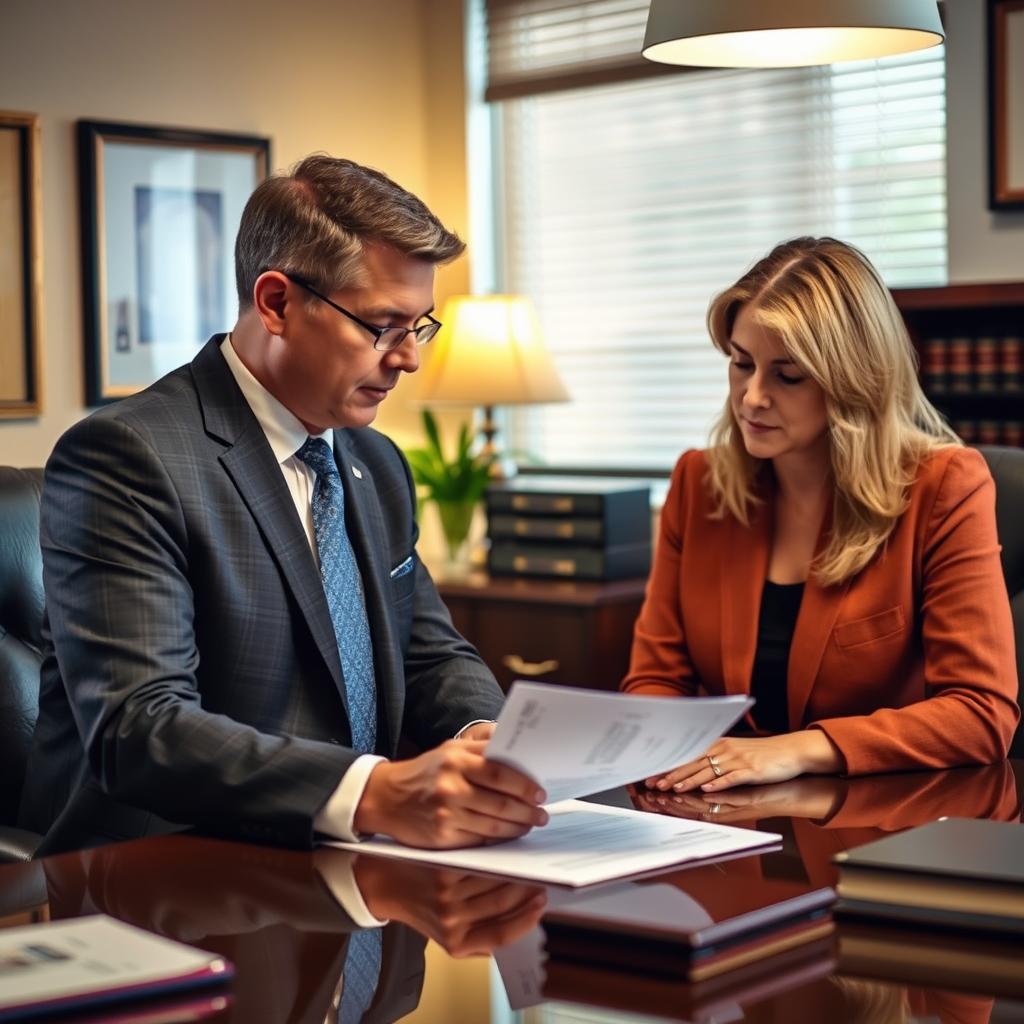
Felony Conviction Divorce Lawyer Caroline County, Virginia
Under Va. Code § 20-91, a felony conviction with imprisonment for one year or more constitutes a fault ground for divorce in Virginia. Law Offices Of SRIS, P.C. has 11 documented results in Caroline County, with favorable outcomes in all reported instances.
Virginia Law on Felony Conviction as Grounds for Divorce
Virginia law recognizes a felony conviction as a fault ground for divorce under Va. Code § 20-91(A)(3). To qualify, the spouse seeking divorce must prove that the other spouse was convicted of a felony and has been incarcerated for at least one year following that conviction. Unlike no-fault divorce, which requires a separation period of six months or one year, a felony conviction divorce has no waiting period. The conviction must be final — meaning all appeals have been exhausted — and the incarceration must be continuous. The court will grant the divorce based on this ground without requiring the parties to live separately for any additional period. Founded in 1997 by Mr. Sris, former prosecutor — Law Offices Of SRIS, P.C. brings 120+ years combined legal experience.
Last verified: April 2026 | Caroline County Circuit Court | Virginia General Assembly — official site
Official Virginia Legal Resources
For the complete statutory text governing divorce grounds in Virginia, including felony conviction provisions, consult the following official government sources:
Insider Perspective on Felony Conviction Divorce in Caroline County
In Caroline County Circuit Court, judges require clear proof that the felony conviction is final and that incarceration has lasted at least one year. We have observed that the court strictly scrutinizes the timing of the conviction relative to the divorce filing.
Prosecutors and opposing counsel often attempt to challenge the validity of the conviction or argue that the incarceration period has not been met. Our experience shows that having certified copies of the conviction order and incarceration records is essential.
The court will not accept a pending appeal or a conviction that is not yet final. You must wait until all appellate remedies are exhausted before filing.
- Obtain certified copies of the felony conviction order from the convicting court.
- Secure official incarceration records showing continuous imprisonment for at least one year.
- File the divorce complaint in Caroline County Circuit Court, citing Va. Code § 20-91(A)(3).
- Serve the complaint on the incarcerated spouse through the correctional facility.
- Attend the hearing with all original documents and a corroborating witness.
- Obtain the final divorce decree once the court confirms the grounds are met.
Legal Consequences and Timelines for Felony Conviction Divorce
In Caroline County, a felony conviction divorce under Va. Code § 20-91(A)(3) carries no additional penalties beyond the divorce itself, but the grounds directly affect property division, spousal support, and custody determinations.
| Offense | Classification | Incarceration | Fine | License Impact | Additional Consequences |
|---|---|---|---|---|---|
| Felony Conviction (Ground for Divorce) | Fault Ground — Va. Code § 20-91(A)(3) | 1+ year imprisonment required | N/A (divorce proceeding) | None directly | Affects equitable distribution, spousal support, and custody |
| No-Fault Divorce (6-month separation) | No-Fault — Va. Code § 20-91(A)(9)(a) | None | Filing fee ~$86 | None | Requires signed separation agreement |
| No-Fault Divorce (1-year separation) | No-Fault — Va. Code § 20-91(A)(9)(b) | None | Filing fee ~$86 | None | Required if minor children involved |
Results may vary.
Why Choose Law Offices Of SRIS, P.C. for Your Felony Conviction Divorce
Founded in 1997 by Mr. Sris, former prosecutor — Law Offices Of SRIS, P.C., “Advocacy Without Borders,” brings 120+ years combined legal experience, 4,739+ documented firm-wide results across VA, MD, DC, NY and NJ, and a favorable-outcome rate above 93%. Mr. Sris personally amended Va. Code § 20-107.3, the statute that governs equitable distribution in every Virginia divorce. This unique legislative experience gives our firm an insider’s understanding of how Virginia divorce law operates in practice. Our team has handled numerous cases involving felony conviction as a ground for divorce, ensuring that clients receive knowledgeable representation case-specific to the specific requirements of Caroline County Circuit Court.
Your Felony Conviction Divorce Lawyer
Our Track Record in Caroline County
Law Offices Of SRIS, P.C. has 11 documented results in Caroline County across all practice areas, with favorable outcomes in all reported instances. While these results span various case types, they demonstrate our firm’s commitment to achieving positive outcomes for clients in Caroline County courts. Results may vary. Our firm-wide record of 4,739+ documented results across VA, MD, DC, NY and NJ reflects our extensive experience and dedication to client advocacy.
Our Location and Service Area
Our location in Fairfax is approximately 45 miles from Caroline County Circuit Court, with access via I-95 and Route 207. We serve clients throughout Caroline County, including the communities of Bowling Green and Carmel Church.
Searching for a “divorce after felony lawyer Caroline County” or “criminal conviction divorce lawyer Caroline County”? We are here to help.
Serving the communities of Bowling Green, Carmel Church, and all of Caroline County.
24/7 phone consultations — (888) 437-7747 — meetings by appointment only.
Law Offices Of SRIS, P.C. — Fairfax
4008 Williamsburg Court, Fairfax, VA 22032
(703) 636-5417 | Toll-Free: (888) 437-7747
By appointment only.
Frequently Asked Questions About Felony Conviction Divorce in Caroline County
How long does a divorce take in Caroline County, Virginia?
It depends. Uncontested divorces in Virginia typically resolve in 2-6 months after filing at Caroline County Juvenile & Domestic Relations District Court (custody/support/protective orders) and Caroline County Circuit Court (divorce/equitable distribution), depending on mandatory separation periods and court calendar. Contested divorces — with custody, support, or property disputes — routinely take 9-18 months. Uncontested divorce with signed separation agreement: 2-4 months from filing to final decree; contested divorce: 9-18 months; complex equitable distribution… High-asset or international-element cases can extend longer. Law Offices Of SRIS, P.C. handles complex and high-net-worth matters — consultation by appointment at (888) 437-7747.
How much does a divorce cost in Caroline County, Virginia?
The Circuit Court filing fee for divorce complaint is approximately $86; sheriff service of process is approximately $12; private process server: $50-$100; pendente lite motion: additional court costs; Guardian ad Litem for custody: typically $500-$2,500+; mediation: $100-$300/hour per party. Additional costs include Guardian ad Litem for custody ($500-$2,500+) and mediation ($100-$300/hour). Mr. Sris personally amended Virginia’s equitable distribution statute (Va. Code § 20-107.3). Cases filed at Caroline County General District Court.
Is Virginia a community property state?
No. Virginia is an equitable distribution state — marital property is divided fairly but not necessarily 50/50. The court considers 11 factors under Va. Code § 20-107.3 (personally amended by Mr. Sris). Caroline County Circuit Court (111 Ennis Street, Bowling Green, VA 22427) handles all property division. Separate property (pre-marriage, inheritance, gifts) is excluded.
How is child custody decided in Caroline County, Virginia?
Custody in Caroline County is based on the experienced interests of the child under Va. Code § 20-124.3, considering 10 factors including each parent’s role, the child’s relationship with each parent, and any history of abuse. Caroline County J&DR Court handles standalone custody. Caroline County Circuit Court handles custody within divorce cases. 11 total documented case results across all practice areas (favorable outcome in all reported instances).
What are the grounds for divorce in Virginia?
No-fault: 6-month separation (no minor children + signed agreement) or 1-year separation. Fault grounds: adultery (no waiting period), cruelty, desertion (1 year), felony conviction (1+ year imprisonment). Filed at Caroline County Circuit Court. Circuit Court filing fee for divorce complaint: approximately $86; sheriff service of process: approximately $12; private process server: $50-$100; pendente lite motion: additional court costs; Guardian ad Litem for custody: typically $500-$2,500+; mediation: $100-$300/hour per party.
How does a Virginia lawyer defend against felony conviction divorce charges?
Defense strategies for felony conviction divorce in Virginia may include challenging evidence, examining procedural compliance, negotiating with prosecutors, and presenting mitigating factors. An experienced attorney evaluates the specific facts under Va. Code § 20-91 (grounds for divorce) to build the strongest possible defense.
What should I do if I am facing felony conviction divorce charges in Virginia?
If facing felony conviction divorce charges in Virginia, contact a family law attorney immediately. Do not discuss the case with anyone except your lawyer. Preserve all relevant documents and evidence. The statute of limitations and court deadlines under Virginia law require prompt action.
What are the penalties for felony conviction divorce in Virginia?
Penalties for felony conviction divorce in Virginia depend on the specific charges, prior record, and circumstances. Under Va. Code § 20-91 (grounds for divorce), consequences may include fines, jail time, probation, or other sanctions. Consult a Virginia family law attorney for case-specific guidance.
Related Resources
Last verified: April 2026