
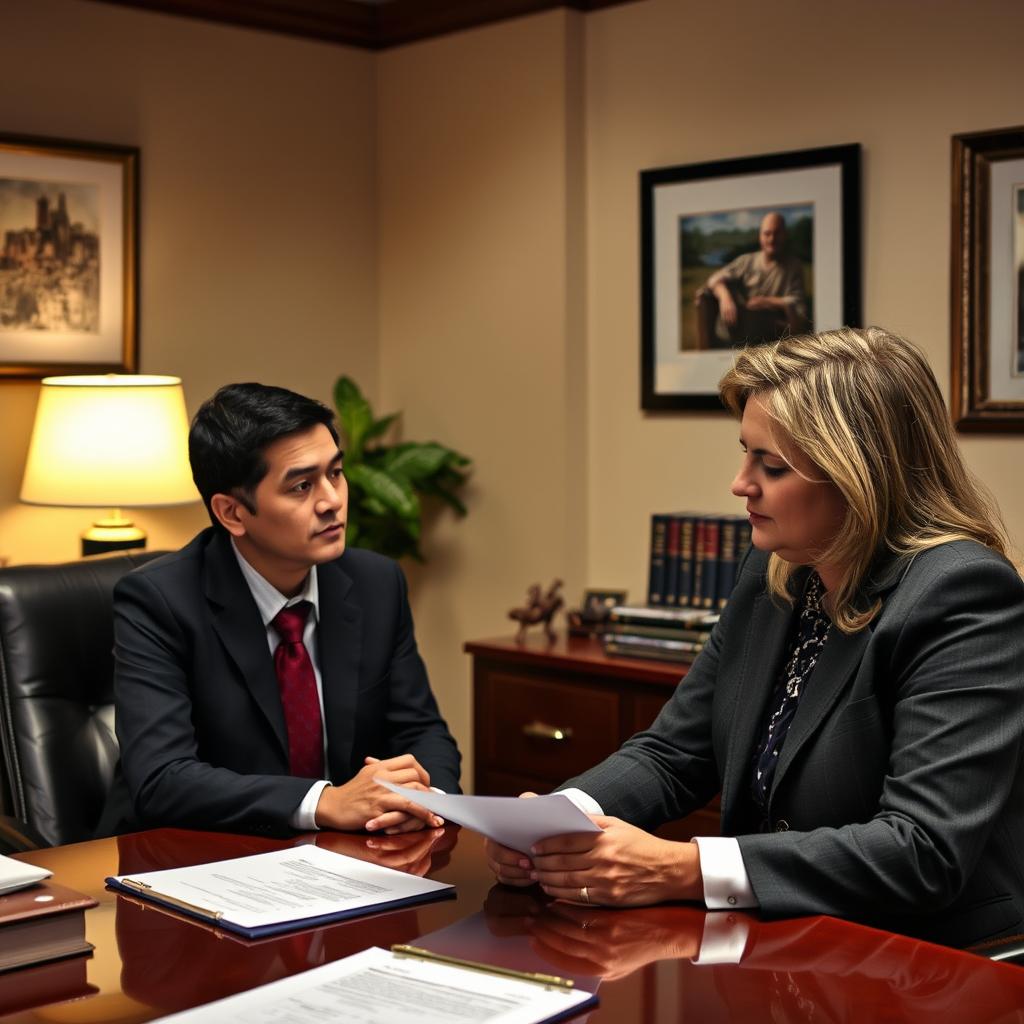
Service Member Divorce Lawyer Prince William County, VA
Service members stationed at Quantico, Fort Belvoir, or the Pentagon who reside in Prince William County and face divorce navigate a legal process shaped by both Virginia Code Title 20 and the federal Servicemembers Civil Relief Act (SCRA). All divorce and equitable distribution matters are heard at the Prince William County Circuit Court, 9311 Lee Avenue, Suite 230, Manassas, while custody, visitation, and child support issues are handled in the Prince William County Juvenile and Domestic Relations District Court. Law Offices Of SRIS, P.C. represents military personnel and their spouses in these proceedings, offering guidance grounded in more than 25 years of Virginia practice. For a consultation, call (888) 437-7747. Law Offices Of SRIS, P.C. — Advocacy Without Borders.
What Service Member Divorce Means in Prince William County, Virginia
Virginia is an equitable distribution state, meaning marital property is divided fairly—though not necessarily equally—based on eleven statutory factors under Virginia law. For service members, that process often involves complex assets such as military retirement pay, Thrift Savings Plan accounts, and Survivor Benefit Plan elections. The Uniformed Services Former Spouses’ Protection Act (USFSPA) permits state courts to divide military disposable retired pay as marital property, and the Prince William County Circuit Court applies Virginia’s equitable distribution principles to determine each spouse’s share.
The SCRA offers active-duty members important procedural safeguards. A court may stay proceedings for up to 90 days—and extend that stay—if military duties materially affect the member’s ability to participate. The SCRA also requires a court to appoint counsel for an absent service member before entering a default judgment and provides protections against default orders in child custody matters. These protections interact with Virginia’s six‑month separation requirement for no‑fault divorce (if no minor children and a signed separation agreement) or one‑year separation otherwise, as well as fault‑based grounds such as adultery and cruelty.
How Mr. Sris and His Of Counsel Handle Service Member Divorce Cases
When a service member or spouse contacts Law Offices Of SRIS, P.C., the initial consultation clarifies the member’s duty status, the grounds for divorce, and the key financial and custody issues. The next step is determining whether the case will benefit from a property settlement agreement negotiated outside court or will require litigation. Mr. Sris and his Of Counsel evaluate each asset—from military pensions to real estate—and work with forensic accountants and valuation attorneys when needed to determine marital and separate property shares under Virginia law.
If custody or visitation is disputed, the team prepares a parenting plan that accounts for the service member’s deployment schedule, training obligations, and the child’s best interests under Va. Code § 20-124.3. Throughout the process, the attorneys handle all filings with the Prince William County Circuit Court and the Juvenile and Domestic Relations District Court, appear at hearings, and communicate directly with opposing counsel or unrepresented spouses. The goal is always a resolution that respects the service member’s career while achieving a fair outcome.
About Mr. Sris and His Of Counsel Team
Mr. Sris, Owner and Founder of Law Offices Of SRIS, P.C., has practiced law since 1997 and is a former prosecutor. Admitted in Virginia, Maryland, the District of Columbia, New Jersey, and New York, he brings a broad jurisdictional perspective to family law matters. Mr. Sris and his Of Counsel team bring over 120 years of combined legal experience, with over 4,739 documented firm-wide results. Results may vary.
Frequently Asked Questions
How does a service member start a divorce in Prince William County?
The service member or spouse files a Complaint for Divorce in the Prince William County Circuit Court. The filing fee varies, and service of process costs about $12 by sheriff or a fee that varies through a private process server. If the parties agree on all terms, they may submit a signed separation agreement and proceed with an uncontested divorce after meeting the applicable separation period. For a no‑fault ground with no minor children and a signed agreement, that separation period is six months; otherwise, it is one year.
What protections does the SCRA offer during a divorce?
The SCRA can delay court proceedings—typically for 90 days, with extensions possible—when the service member’s duties materially hinder participation. It also requires the court to appoint an attorney for an absent service member before entering a default judgment and gives the court discretion to stay custody determinations. These safeguards help ensure the member’s rights are not prejudiced while deployed or on remote assignment. An experienced attorney can request these protections early in the case.
How is military retirement divided in a Virginia divorce?
Virginia treats the marital portion of military retired pay as divisible property under the equitable distribution statute. The court may award a percentage of the disposable retired pay to the non‑member spouse. Properly dividing the pension often requires a detailed court order, sometimes referred to as a military pension division order, to direct the Defense Finance and Accounting Service (DFAS) to make payments. Thrift Savings Plan accounts, survivor benefits, and VA disability pay involve additional legal rules that must be addressed in the decree.
How is child custody handled when a service member is deployed?
Virginia courts determine custody based on the child’s best interests under ten statutory factors, including each parent’s role, the child’s relationships, and any history of abuse. A parent’s deployment schedule is considered, but deployment alone does not change custody permanently. The court may approve a temporary parenting plan that grants a designated family member or other person custody during deployment, with the plan reverting when the service member returns. This approach balances military obligations with the child’s stability. India is not a signatory to the 1980 Hague Convention on Civil Aspects of International Child Abduction.
How long does a military divorce take in Prince William County?
Uncontested divorces with a signed separation agreement often become final within 2 to 4 months after filing. Contested cases, particularly those involving complex property division or custody disputes, typically take 9 to 18 months, though the timeline may extend if the service member is deployed and seeks SCRA stays. Factors such as the availability of forensic accountants, the court’s docket, and the willingness of both parties to negotiate also influence the overall pace.
Do I need a lawyer for a service member divorce?
While you are not required to have an attorney, the intersecting demands of state divorce law, federal military regulations, and SCRA protections make self‑representation risky. Mistakes in pension division, custody arrangements, or default‑judgment safeguards can have lasting financial and family consequences. A lawyer familiar with both Virginia family law and the military‑specific statutes can protect your interests and help you avoid procedural pitfalls. For a consultation, reach Law Offices Of SRIS, P.C. at (888) 437-7747.
Additional family law resources: Fairfax County · Stafford County · Fauquier County · Loudoun County · Arlington County
Authoritative sources: Virginia Code Title 20 (Domestic Relations) · Prince William County Circuit Court · Virginia Judicial System
Attorney advertising. Prior results do not guarantee a similar outcome. Results may vary.
Case results depend on a variety of factors unique to each case.