
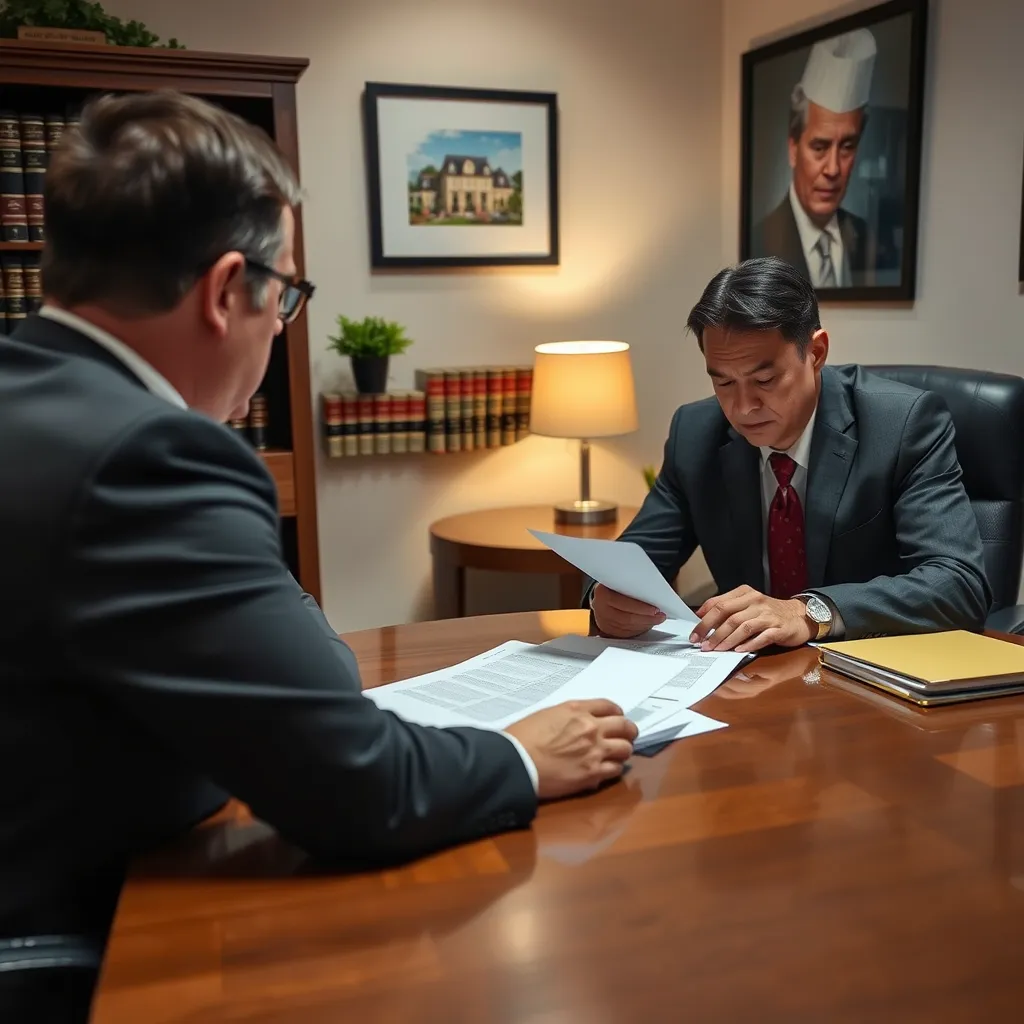
Annulment Lawyer Falls Church, VA
Falls Church annulment proceedings are heard in the Falls Church Circuit Court, located at 300 Park Avenue, Suite 151W, Falls Church, VA 22046. An annulment is a legal determination that a marriage was invalid from its inception—unlike a divorce, which ends a valid marriage. In Virginia, annulment grounds are set out in Va. Code § 20‑89.1, and the Circuit Court has exclusive jurisdiction over annulment suits. When children or support issues are involved, the Falls Church Juvenile and Domestic Relations District Court may address custody, visitation, and support during the pendency of the case. The process requires careful drafting of the complaint, proper service on the other spouse, and an evidentiary hearing if the matter is contested. Mr. Sris and his Of Counsel at Law Offices Of SRIS, P.C. Appear in Falls Church courts on annulment matters. To speak with an attorney about your situation, call (888) 437‑7747. Law Offices Of SRIS, P.C. – Advocacy Without Borders.
Falls Church Court Guide for Annulment Proceedings
An annulment action in Falls Church is filed in the Circuit Court. The courthouse is at 300 Park Avenue, Suite 151W, Falls Church, VA 22046. The Falls Church Circuit Court is part of Virginia’s Seventeenth Judicial District and shares its address with the Falls Church General District Court. While the General District Court handles traffic and misdemeanor matters, the Circuit Court is the proper venue for annulment, divorce, and equitable distribution. If the annulment involves minor children, the Juvenile and Domestic Relations District Court—also located in the same building—may enter temporary custody and support orders. Parties should direct filings to the Circuit Court clerk’s office. For procedural questions or current filing requirements, contact the clerk’s office directly or reach Law Offices Of SRIS, P.C. at (888) 437‑7747.
Local Process Steps for an Annulment in Falls Church
Initiating an annulment in Falls Church follows a structured path. The party seeking annulment must first establish that at least one spouse has been a bona fide resident and domiciliary of Virginia for the six months immediately preceding the filing (Va. Code § 20‑97). A complaint for annulment is then prepared and filed with the Falls Church Circuit Court. The complaint must allege a specific statutory ground—such as bigamy, fraud, mental incapacity, or duress—under Va. Code § 20‑89.1. The defendant spouse must be served with process. If the defendant resides outside Virginia, service is governed by the long‑arm statute or the Hague Service Convention where applicable.
After service, the defendant has a period to respond. If the annulment is uncontested, the plaintiff may present evidence, including corroborating testimony, to satisfy the court that the ground exists. Contested annulments proceed through discovery, negotiations, and possibly trial. Throughout the case, either party may request pendente lite relief for temporary support, custody, or exclusive use of the marital residence. The court schedules hearings on its calendar; the length of the process depends on case complexity, court scheduling, and whether the matter is settled or tried. Mr. Sris and his Of Counsel guide clients through each step, from evaluating the viability of the annulment ground to presenting evidence at the final hearing.
What the Court Considers in a Falls Church Annulment
The Falls Church Circuit Court examines whether the marriage is void or voidable under Virginia law. Grounds for a void marriage include bigamy, incest, or failure to comply with licensing requirements. Voidable marriages can be annulled on grounds such as fraud that goes to the essence of the marital relationship, duress, mental incapacity, or impotence. The court will also consider whether the petitioning spouse was aware of the defect at the time of the marriage and whether the parties cohabited after discovery, as cohabitation may waive the right to annulment in some circumstances. Because annulment affects property division, spousal support, and custody, the court may also apply equitable distribution principles under Va. Code § 20‑107.3 and best‑interest custody factors under § 20‑124.3. Each case turns on its specific facts, and experienced legal guidance helps present the relevant evidence persuasively.
Mr. Sris and His Of Counsel — Representation in Annulment Matters
Mr. Sris, Owner and Founder of Law Offices Of SRIS, P.C., has practiced since 1997 and is admitted in Virginia, Maryland, the District of Columbia, New Jersey, and New York. His background as a former prosecutor provides insight into courtroom advocacy and evidence assessment. Mr. Sris and his Of Counsel bring over 120 years of combined legal experience, backed by 4,739+ documented firm-wide results. Results may vary. The firm’s approach to annulment cases involves a detailed factual investigation, careful drafting of the complaint, exploration of settlement possibilities, and, when necessary, vigorous presentation at trial. Because no two marriages are alike, legal strategy is tailored to the specific ground and the client’s objectives.
Frequently Asked Questions About Annulment in Falls Church
What is the difference between an annulment and a divorce in Virginia?
An annulment declares a marriage void from the beginning, as though it never legally existed. A divorce terminates a valid marriage. Annulments require proof of a specific defect existing at the time of the wedding, while divorce is based on separation or fault after the marriage. Grounds for annulment are narrower and harder to establish.
What grounds allow an annulment in Virginia?
Under Va. Code § 20‑89.1, annulment may be granted for bigamy, incest, mental incapacity, fraud, duress, impotence, or if a spouse was underage without proper consent. The ground must exist at the time of marriage. The court will evaluate the evidence presented to determine whether the marriage is void or voidable.
Do I need to have lived in Virginia to get an annulment in Falls Church?
Yes. Va. Code § 20‑97 requires at least one spouse to be an actual bona fide resident and domiciliary of Virginia for at least six months before filing. If you live in Falls Church or elsewhere in Virginia, you meet this requirement. If neither spouse lives in Virginia, you may need to file in another jurisdiction.
How long does an annulment take in Falls Church?
The timeline varies. An uncontested annulment, where the parties agree and the ground is clear, may move faster than a contested case. Court scheduling, the complexity of the issues, and whether minor children or property division are involved all affect duration. Mr. Sris and his Of Counsel work to move cases forward efficiently while protecting the client’s position.
Will an annulment affect child custody and support?
Yes. If the couple has children, the Falls Church Juvenile and Domestic Relations District Court or the Circuit Court can determine custody, visitation, and support. Even if the marriage is annulled, both parents retain rights and obligations toward their children. The court will apply Virginia’s best‑interest factors under Va. Code § 20‑124.3.
What if my spouse does not want an annulment?
An annulment can proceed as a contested matter. The petitioning spouse must prove the statutory ground at a hearing. The defendant spouse has the opportunity to contest the allegations. A contested annulment may involve discovery, witness testimony, and legal argument. An experienced attorney can assess the viability of the claim and prepare the case for trial.
Can a marriage be annulled after many years?
It depends on the ground. Some defects, such as bigamy, may be raised at any time. For voidable grounds like fraud, the petitioning spouse must act promptly after discovering the defect. Cohabitation after discovery can also bar annulment. A detailed evaluation of your specific situation is necessary.
Does Virginia recognize annulments granted in other countries?
Under the lex loci celebrationis doctrine, a marriage validly contracted in another jurisdiction is presumptively recognized by U.S. Courts, subject to narrow public‑policy exceptions. Recognition of a foreign annulment depends on whether it would be recognized under Virginia comity principles. If the marriage was solemnized abroad and one party seeks annulment in Virginia, consult an attorney to analyze the validity of the marriage and the applicability of Virginia law.
How do I get started with an annulment in Falls Church?
The first step is a consultation to determine whether a viable ground exists. An attorney will review the facts, explain the legal standard, and discuss the likely timeline and process. To schedule a consultation with Mr. Sris and his Of Counsel at Law Offices Of SRIS, P.C., call (888) 437‑7747.
For a full statutory analysis of annulment in Virginia, visit Law Offices Of SRIS, P.C. — Virginia Family Law Overview. For client‑strategy guidance, see Arlington Virginia Laws.
Attorney advertising. Prior results do not guarantee a similar outcome.
Case results depend on a variety of factors unique to each case.
Attorney responsible for this advertising: Mr. Sris.
Results may vary.
? 1997-2026 Law Offices Of SRIS, P.C.