
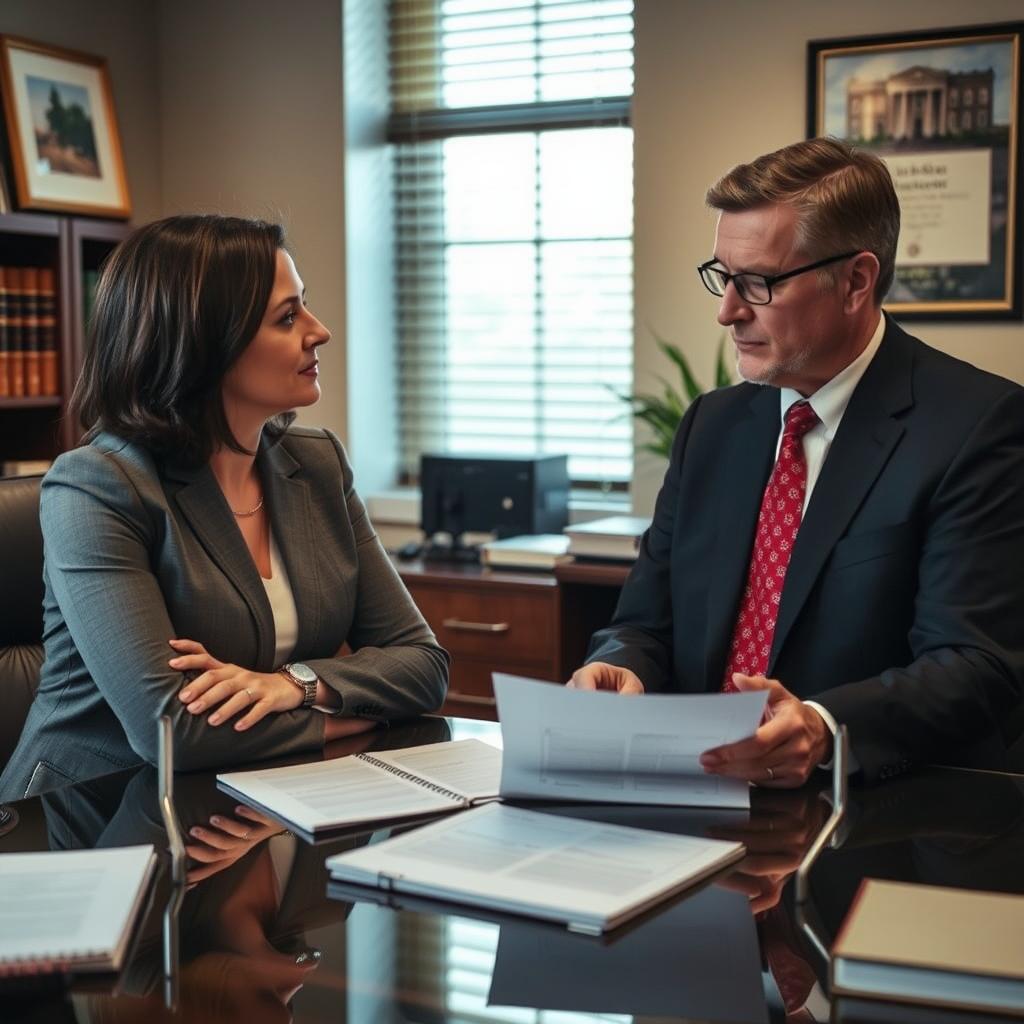
Armed Forces Divorce Lawyer Prince William County, VA
You are serving your country at Quantico, Fort Belvoir, or another installation near Prince William County when your spouse tells you they want a divorce. Suddenly, on top of your military obligations, you face questions about custody, support, and how your pay and retirement will be divided. At Law Offices Of SRIS, P.C., Mr. Sris and his Of Counsel team understand the added strain of military life and how Virginia’s equitable distribution laws intersect with federal rules like the Servicemembers Civil Relief Act. Founded in 1997, the firm concentrates on family law matters, including armed forces divorce, and has documented thousands of case results across all practice areas. Reach our location at (888) 437-7747 to schedule a consultation. Law Offices Of SRIS, P.C. — Advocacy Without Borders.
Strategy Options for a Military Divorce in Prince William County
Every military divorce starts with a fundamental choice: negotiate a separation agreement or litigate. When a service member and spouse can resolve all issues—property division, support, custody—a signed separation agreement can shorten the process substantially. In Prince William County, the Circuit Court in Manassas handles the divorce itself, while the Juvenile and Domestic Relations (J&DR) District Court addresses standalone custody, visitation, and child support matters. If disputes remain, a contested divorce moves through the Circuit Court, where equitable distribution takes center stage. Virginia is not a community property state; the court divides marital assets fairly but not necessarily 50/50, weighing factors including each spouse’s contributions and the duration of the marriage.
Mr. Sris and his Of Counsel evaluate the unique military considerations early: the service member’s duty station, deployment schedule, and whether the Servicemembers Civil Relief Act (SCRA) may stay proceedings. They also assess how a military pension—often the largest marital asset—will be classified and divided. Strategies may include seeking temporary support pendente lite through the Prince William County Circuit Court, negotiating a comprehensive property settlement agreement that addresses Survivor Benefit Plan elections, or, when necessary, moving forward with a contested hearing. The focus remains on protecting the service member’s career and securing a fair outcome while working toward resolution as efficiently as the court’s calendar allows.
What to Expect: The Divorce Process in Prince William County
A divorce in Prince William County begins with filing a complaint at the Prince William County Circuit Court, located at 9311 Lee Avenue, Suite 230, Manassas, VA 20110. Virginia requires at least one party to be a resident and domiciliary of the Commonwealth for six months before filing. The complaint sets out the grounds for divorce—whether no-fault based on a separation period (six months with no minor children and a signed agreement, or one year otherwise) or a fault ground such as adultery, cruelty, or desertion. Once filed and served, the court may enter pendente lite orders addressing temporary support, custody, and use of the marital home while the case proceeds. Discovery follows, during which both sides exchange financial information, and, in complex cases, forensic accountants may value business interests or military benefits.
For an uncontested divorce where all issues have been settled in a separation agreement, the process can move relatively quickly once the mandatory separation period has been met. A final hearing before the Circuit Court judge may require only one corroborating witness. Contested divorces, particularly those involving significant military assets or contentious custody disputes, take longer. Our firm helps clients navigate each phase—from filing the complaint through discovery, settlement negotiations, and, if needed, trial. Throughout, we keep clients informed about what the Prince William County courts typically require, so there are no surprises at the final decree hearing.
Penalties, Consequences, and Equitable Distribution
The term “penalties” does not strictly apply in a civil divorce, but the consequences of a poorly handled military divorce can be severe. Virginia’s equitable distribution law allows the court to classify and value all marital property, including military retired pay, Thrift Savings Plan accounts, and other benefits earned during the marriage. The court considers eleven statutory factors when deciding how to divide assets and debts. A service member’s pension is often a critical issue, and a divorce decree that does not properly address a former spouse’s share of military retired pay can create long-term financial obligations. Additionally, child support is calculated under Virginia’s guidelines based on combined gross income, and spousal support may be awarded after considering the factors under Virginia law. An armed forces divorce can also affect a service member’s security clearance or career progression if allegations of misconduct surface. Our role is to present a thorough case to the court, whether negotiating a settlement or advocating at trial, to help protect our client’s interests.
Attorney Credentials for Armed Forces Clients
Mr. Sris founded Law Offices Of SRIS, P.C. in 1997 and concentrates his practice on family law and civil litigation. He is a former prosecutor with experience in trial work and brings that courtroom familiarity to every family law matter he handles. Mr. Sris is admitted in Virginia, Maryland, the District of Columbia, New Jersey, and New York. His Of Counsel team includes attorneys with extensive family law and litigation backgrounds, and together they bring over 120 years of combined legal experience and 4,739+ documented firm-wide results. Results may vary. For Prince William County armed forces divorce matters, Mr. Sris and his Of Counsel appear regularly in the Circuit Court and J&DR District Court and understand the procedural nuances that can accelerate or complicate a service member’s case.
Frequently Asked Questions
How long does a military divorce take in Prince William County, Virginia?
Uncontested divorces with a signed separation agreement can typically resolve within 2–4 months after filing once the mandatory separation period has been met. Contested divorces often take 9–18 months or longer, depending on issues such as custody, support, and the complexity of dividing military benefits. Each case is different, and the timeline is driven by the court’s calendar and the parties’ willingness to reach agreement. For guidance on your specific situation, reach Law Offices Of SRIS, P.C. at (888) 437-7747.
How is my military pension divided in a Virginia divorce?
Military retired pay is considered marital property to the extent it was earned during the marriage and before separation. Virginia’s equitable distribution law governs division. The court may award a percentage of the marital share to the non-service-member spouse, often through a domestic relations order. The Uniformed Services Former Spouses’ Protection Act (USFSPA) allows state courts to treat disposable retired pay as divisible property. To discuss the details of your matter, contact Law Offices Of SRIS, P.C. at (888) 437-7747.
Can a deployment delay my Prince William County divorce?
Yes. Under the Servicemembers Civil Relief Act (SCRA), active-duty service members can request a stay of court proceedings if their military duties materially affect their ability to participate. A Prince William County judge will consider the length of deployment and the impact on the case schedule. Mr. Sris and his Of Counsel can help file the necessary motion and propose a timeline that respects both the court’s calendar and the service member’s obligations.
How is child custody decided when one parent is in the military?
Virginia courts determine custody based on the best interests of the child, considering factors such as the child’s relationship with each parent, each parent’s ability to meet the child’s needs, and any history of family abuse. A parent’s military service—including deployment—does not automatically disqualify them from custody. A custody order may include provisions for virtual visitation and a parenting plan that accommodates the service member’s schedule. Prince William County J&DR District Court handles standalone custody cases. For a consultation, reach Mr. Sris and his Of Counsel at (888) 437-7747.
What grounds for divorce are available to service members in Virginia?
Virginia recognizes both no-fault and fault grounds. No-fault divorce is available after six months of separation if the parties have no minor children and have signed a separation agreement, or after one year of separation otherwise. Fault grounds include adultery, cruelty, willful desertion for one year, and felony conviction with imprisonment of more than one year. Adultery is a no-waiting-period ground and can affect support and equitable distribution. Mr. Sris and his Of Counsel can advise which ground best fits your situation.
For more resources on family law in nearby counties, you may find these pages helpful: our Fairfax County Family Law Lawyer, Stafford County Family Law Lawyer, Fauquier County Family Law Lawyer, Loudoun County Family Law Lawyer, and Arlington County Family Law Lawyer.
Outbound primary sources: Virginia divorce grounds (Va. Code § 20-91) · Virginia equitable distribution · Prince William County Circuit Court
Attorney advertising. Prior results do not guarantee a similar outcome. Results may vary. Attorney responsible for this advertising: Mr. Sris.
Case results depend on a variety of factors unique to each case.