
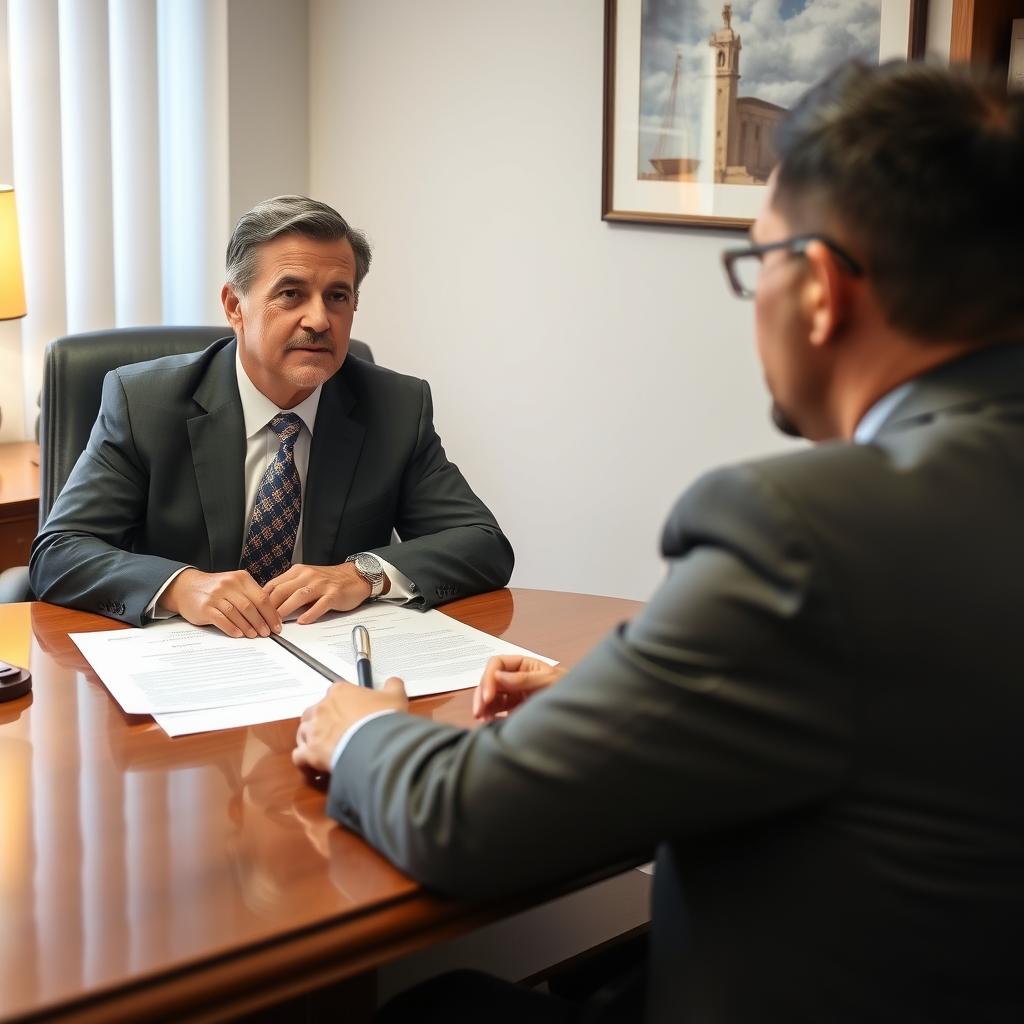
Beach Military Divorce Lawyer Prince William County, VA
Divorce involving a military service member presents unique challenges — custody arrangements, support obligations, and property division can intersect with federal protections, deployment schedules, and the division of military retirement benefits. A beach military divorce lawyer in Prince William County, Virginia, focuses on these intersecting legal issues, representing service members or their spouses in family law matters that arise near Quantico, Fort Belvoir, and other installations. Whether a divorce is uncontested or contested, the process must account for the Servicemembers Civil Relief Act (SCRA), the Uniformed Services Former Spouses’ Protection Act (USFSPA), and the equitable‑distribution framework of the Commonwealth. Mr. Sris and his Of Counsel at Law Offices Of SRIS, P.C. Practice in these matters. To discuss your situation, reach our Fairfax location at (888) 437‑7747. Law Offices Of SRIS, P.C. — Advocacy Without Borders.
Military Divorce in Prince William County, Virginia
Prince William County is home to a significant military population, and its courts regularly hear divorces involving active‑duty personnel, reservists, and retirees. The Prince William County Circuit Court — located at 9311 Lee Avenue, Suite 230, in Manassas — has exclusive original jurisdiction over divorce and equitable distribution. Related custody, visitation, and child‑support matters are heard in the Prince William County Juvenile and Domestic Relations District Court. These two courts operate within the Thirty‑first Judicial District, and practitioners appearing there must navigate both state statutes and the federal overlay that applies to military families.
Virginia is an equitable‑distribution state. Under Va. Code § 20‑107.3, marital property is divided fairly but not necessarily equally, after the court considers eleven statutory factors. For a military divorce, the classification of a military pension, Thrift Savings Plan account, or other service‑connected benefits often becomes a central issue. The SCRA can delay proceedings if a service member’s duties materially affect the ability to participate, and the USFSPA governs whether and how a state court may divide military retired pay. Mr. Sris and his Of Counsel are experienced in both the civilian and military‑specific dimensions of Virginia family law, and they appear regularly at the Prince William County courts.
How Mr. Sris and His Of Counsel Handle Military Divorce Cases
Every military divorce begins with a thorough review of the facts — where the parties are stationed, whether a separation agreement exists, the nature and value of military benefits, and any custody or support concerns. The firm identifies potential SCRA stay issues early and works to keep the matter moving while safeguarding each client’s rights. When the parties can reach agreement, a marital settlement agreement is prepared and submitted to the Circuit Court for approval; when litigation is necessary, the team presents evidence and argues the equitable‑distribution factors before the judge. The goal is always a resolution that accounts for both the present circumstances and the long‑term financial and custodial implications.
The process typically begins with a consultation to assess grounds for divorce — no‑fault based on separation (Va. Code § 20‑91(9)) or, where applicable, fault grounds such as adultery or cruelty. A complaint is filed in the Prince William County Circuit Court, and the opposing party is served. Pendente lite motions for temporary support or custody may be necessary. Throughout, the firm pays close attention to military‑specific issues: how a retirement division order (often accomplished through a qualified domestic relations order) will work, the impact of a service member’s deployment on parenting time, and the availability of benefits for a former spouse under the 20/20/20 or 20/20/15 rules. Every case is driven by the particular facts; Mr. Sris and his Of Counsel do not apply one template to all military divorces.
About Mr. Sris and His Of Counsel Team
Mr. Sris, Owner and Founder of Law Offices Of SRIS, P.C., has practiced since 1997. A former prosecutor, he brings courtroom experience to every matter the firm handles. He is admitted in Virginia, Maryland, the District of Columbia, New Jersey, and New York. Mr. Sris testified before the Virginia House Courts of Justice Committee in support of 2019 HB 635 (chief patron Del. David Bulova). His practice concentrates in family law, criminal defense, and related areas. On family‑law matters, he works alongside a team of Of Counsel attorneys — each engaged through Excella, none are firm employees. The collective group has documented extensive case experience across multiple jurisdictions.
Mr. Sris and his Of Counsel bring over 120 years of combined legal experience with 4,739+ documented firm-wide results. Results may vary. The Of Counsel attorneys who assist in Prince William County family‑law matters are experienced litigators who understand the local courts and the military‑legal landscape. Together, the team focuses on resolving divorce, custody, support, and property‑division disputes efficiently, while protecting the interests of service members and their families.
Frequently Asked Questions
How does a military divorce differ from a civilian divorce in Virginia?
A military divorce must address federal laws such as the SCRA, which can stay proceedings while a service member is deployed, and the USFSPA, which controls division of military retired pay. Virginia’s equitable‑distribution statute still applies, but the process often involves additional steps — like identifying the marital share of a pension or coordinating with a service member’s command. Mr. Sris and his Of Counsel are experienced in these overlapping frameworks.
Where do I file for divorce if I am stationed in Prince William County?
If either spouse meets Virginia’s six‑month residency requirement, the divorce complaint is filed in the Prince William County Circuit Court at 9311 Lee Avenue, Suite 230, Manassas. Custody and support matters initially go to the Prince William County Juvenile and Domestic Relations District Court when they arise outside of a pending divorce. The firm’s Fairfax location serves clients throughout the county.
Can I get a divorce while my spouse is deployed?
Yes, but the SCRA may delay the case if the deployed spouse’s military duties materially affect the ability to participate. A service member can also voluntarily waive SCRA protections to proceed. Mr. Sris and his Of Counsel can help evaluate whether a stay is likely and how to move forward while respecting both parties’ rights.
How is a military pension divided in a Virginia divorce?
Under the USFSPA, a Virginia court may treat disposable retired pay as marital property subject to equitable distribution. The marital share is often calculated based on the number of years of marriage overlapping with the period of creditable military service. A domestic relations order (often a military‑qualifying court order) is used to direct payment from the Defense Finance and Accounting Service. The firm works with pension‑valuation attorneys when necessary.
What if my spouse lives in another state or overseas?
Virginia can exercise jurisdiction over a divorce if at least one party resides in and is domiciled in Virginia for six months prior to filing. Service of process on a non‑resident or overseas spouse follows specific rules — personal service, acceptance of service, or, if needed, alternative service through court order. The firm handles service issues routinely and can advise on the most efficient approach.
Does the court favor the service member or the non‑military spouse in custody decisions?
Custody decisions in Virginia are gender‑neutral and based on the best interests of the child under Va. Code § 20‑124.3, considering ten statutory factors. Neither military status nor deployment automatically penalizes a parent. The court will evaluate each parent’s role, the child’s relationship with each parent, and the ability to foster a continuing relationship. Mr. Sris and his Of Counsel present evidence on these factors.
What if I want to modify custody or support after the divorce?
Virginia courts may modify custody, visitation, and support if there has been a material change in circumstances since the last order. For military families, a permanent change of station or return from deployment can be such a change. The original court — typically the Prince William County Circuit Court or J&DR Court — retains jurisdiction. The firm handles post‑divorce modifications as part of its family‑law practice.
How much does a military divorce cost in Prince William County?
Fees vary depending on whether the divorce is uncontested, contested, involves complex property issues, or requires expert witnesses. Court filing fees apply, and attorney fees are discussed at an initial consultation. Mr. Sris and his Of Counsel will provide an estimate after reviewing the case. For guidance on your particular situation, reach Law Offices Of SRIS, P.C. at (888) 437‑7747.
Can a civilian spouse keep military benefits after divorce?
Entitlement to military benefits after divorce depends on the length of the marriage overlapping with the service member’s creditable service. Under the 20/20/20 rule, a former spouse may retain full commissary, exchange, and TRICARE benefits; under the 20/20/15 rule, one year of transitional medical coverage may apply. These rules are federal, not state, and an experienced attorney can help evaluate eligibility.
Do I need a lawyer for a military divorce in Prince William County?
While you are not required to have an attorney, a military divorce involves intersecting state and federal laws that can affect retirement benefits, custody arrangements, and support obligations. Having experienced counsel helps ensure that your rights are protected and that any agreements are properly drafted. For a consultation, reach Mr. Sris and his Of Counsel at (888) 437‑7747.
Additional Family Law Resources: Fairfax County family law representation · Stafford County divorce and custody matters · Fauquier County family law attorneys · Loudoun County divorce practice · Arlington County military divorce assistance
Primary authority references: Virginia Code Title 20 (Domestic Relations) · Prince William County Circuit Court
Attorney advertising. Prior results do not guarantee a similar outcome. Results may vary.
Case results depend on a variety of factors unique to each case.