
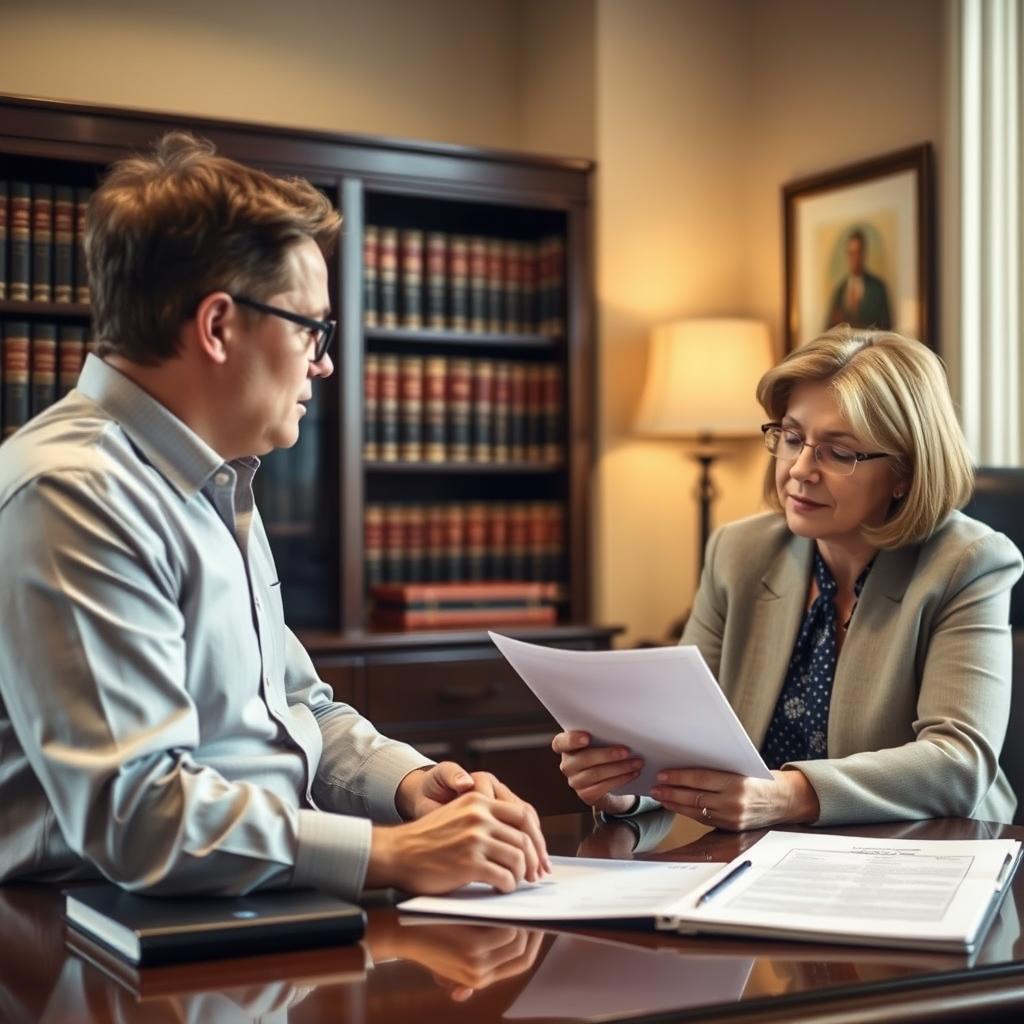
Catholic Annulment Lawyer Prince William County, VA
You were married in the Catholic Church, but you now believe your marriage was never sacramentally valid. That realization often leads to a two-track process: a civil annulment in the Prince William County Circuit Court, located at 9311 Lee Avenue in Manassas, and a Catholic Church annulment—a declaration of nullity—handled by the diocese tribunal. The two proceedings are separate, but they can intersect when property division, spousal support, and child custody are involved. A civil annulment under Virginia law (Va. Code § 20-89.1) treats the marriage as void or voidable based on specific legal grounds, while the Church process examines whether the sacrament was ever truly present. Law Offices Of SRIS, P.C., founded in 1997, represents clients facing the civil side of this journey in Prince William County and throughout Virginia. Mr. Sris, a former prosecutor, and his Of Counsel team work to guide you through the statutory requirements with a clear understanding of how the outcome can affect your civil rights and how it may relate to the Church’s own process. To schedule a consultation, call (888) 437-7747.
What Catholic Annulment Means in Prince William County
A Catholic annulment is two distinct legal and religious journeys that often run at the same time. In the civil realm, an annulment is a court order that declares a marriage void from the beginning—as if no valid marriage ever existed—provided specific grounds under Virginia Code § 20-89.1 are proved. Common civil grounds include bigamy, incest, mental incapacity, fraud, duress, or impotency. The Prince William County Circuit Court has exclusive original jurisdiction over annulment suits, meaning your case must be filed at the historic courthouse at 9311 Lee Avenue, Suite 230, in Manassas. Unlike a divorce, which ends a valid marriage, a civil annulment treats the marriage as a legal nullity, and this distinction can significantly affect how property and debts are handled after the union is dissolved.
The Catholic Church’s annulment process—formally called a declaration of nullity—proceeds under canon law through the diocesan tribunal. The Church tribunal examines whether the marriage was sacramentally valid according to Catholic teaching, focusing on factors such as consent, psychological capacity, or the intention to remain faithful. The civil annulment often serves as a prerequisite for the Church process, because the diocese typically requires that the parties be no longer legally married before it will accept a petition for a declaration of nullity. As a Catholic annulment lawyer in Prince William County, Mr. Sris can handle the state-court proceeding while you focus on the Church’s timeline, ensuring the civil findings are properly documented and that any child custody, support, or division of assets arising from the relationship is addressed in accordance with Virginia law.
How Mr. Sris and His Of Counsel Handle Annulment Cases
When you contact Law Offices Of SRIS, P.C., the first step is a private consultation to review your situation and determine whether a civil annulment is available under Virginia law. Mr. Sris and his Of Counsel team will gather the relevant facts—marriage certificate, the exact date and location of the ceremony, and any evidence that points to a legal impediment at the time of the marriage. The team then prepares and files a Complaint for Annulment in the Prince William County Circuit Court and arranges for proper service on the other party. Throughout the proceeding, Mr. Sris and his Of Counsel work to keep you informed of each step and to coordinate with the Church tribunal as needed, especially if the diocese requires proof of a civil annulment before it will schedule a hearing on the religious petition.
In the courtroom, the firm focuses on presenting the facts clearly so the judge can determine whether the grounds for annulment have been met. Because an annulment can affect spousal support, child custody, and the division of property differently than a divorce would, Mr. Sris and his Of Counsel pay close attention to the secondary legal consequences. The timeline for a civil annulment varies by case complexity and the court’s calendar; a matter that is uncontested may proceed more quickly than one that requires an evidentiary hearing. All the while, you receive regular updates and are never left to guess about the status of the case or the next court date.
About Mr. Sris and His Of Counsel Team
Mr. Sris, Owner and Founder of Law Offices Of SRIS, P.C., has been practicing since 1997 and brings the discipline of a former prosecutor to every family law matter he handles. He has appeared in courts throughout Virginia, Maryland, the District of Columbia, New Jersey, and New York, and he personally works with each client to develop a strategy that fits the unique circumstances of an annulment. Mr. Sris testified before the Virginia House Courts of Justice Committee in support of 2019 HB 635 (chief patron Del. David Bulova), reflecting his deep engagement with Virginia family law. Alongside him, the firm’s Of Counsel team contributes decades of trial experience and a thorough understanding of how civil annulment intersects with related issues such as custody and equitable distribution. Mr. Sris and his Of Counsel bring over 120 years of combined legal experience, with 4,739+ documented firm-wide results. Results may vary.
Frequently Asked Questions
What is the difference between a civil annulment and a Catholic annulment?
A civil annulment is a legal proceeding in state court that declares a marriage void or voidable under Virginia law, as if it never existed. It addresses civil rights—property division, spousal support, and custody—and is granted only when specific statutory grounds are proved. A Catholic annulment is a religious process before a Church tribunal that examines whether the marriage was sacramentally valid according to canon law. The two proceedings are separate, but the Catholic diocese often requires that a civil annulment or divorce be finalized before it will consider a petition for a declaration of nullity. An experienced family law attorney can handle the civil side while you engage with the Church process.
What are the grounds for a civil annulment in Virginia?
Virginia Code § 20-89.1 sets out the grounds for an annulment. A marriage may be void from the start if it was bigamous, incestuous, or entered into by someone who lacked the mental capacity to consent. It may be voidable—meaning the court can declare it void after a hearing—if there was fraud, duress, impotency, or if one party was under the legal age. The petitioner must prove the ground existed at the time of the wedding. Because the standard of proof is different from a divorce, it is important to have an attorney who can evaluate the evidence and present it effectively to the Circuit Court. The judge ultimately decides whether the marriage is declared a nullity.
Do I need a lawyer for the Catholic annulment process?
The Catholic annulment itself is handled by the Church tribunal and does not require a civil attorney; many petitioners work directly with the diocese’s advocate or canonist. However, because the diocese usually asks that the parties be no longer legally married, you will likely need a civil annulment or divorce first. A family law attorney can obtain the civil annulment in Prince William County Circuit Court, provide the necessary court orders and documentation to the tribunal, and ensure that any property, support, or custody matters are resolved in a way that does not conflict with Church teachings. Having a lawyer coordinate the civil side can simplify the overall process and reduce anxiety during a difficult time.
How does the Catholic annulment process work?
After a civil annulment or divorce is final, you contact your diocese’s tribunal to begin a petition. A Church advocate or canon lawyer helps you draft a narrative describing why the marriage was sacramentally invalid. The tribunal gathers testimony, reviews documents, and holds a hearing. The focus is on whether both parties freely gave valid consent and whether there were impediments such as lack of proper form, psychological incapacity, or an intention against permanence or fidelity. The process is confidential and separate from any state-court proceeding. While the attorney does not appear before the Church tribunal, he or she can supply certified copies of the civil annulment decree and help frame issues that may be relevant to both venues.
How long does the annulment process take in Prince William County?
There is no fixed timeline for a civil annulment; the schedule depends on the complexity of the grounds, the readiness of the parties, and the Prince William County Circuit Court’s calendar. An uncontested annulment that is supported by clear evidence may move more quickly than one that requires a full evidentiary hearing. The Catholic annulment process has its own timeline, which varies by diocese and the specific facts under review. Mr. Sris and his Of Counsel work to keep the civil proceeding on track, respond promptly to court deadlines, and supply any documentation the tribunal requests without unnecessary delay so that you can move forward with both the legal and spiritual aspects of your situation.
Can I obtain a civil annulment if I have children or property with my spouse?
Yes. A civil annulment can still be granted even if children were born of the marriage or if the couple accumulated assets together. However, an annulment treats the marriage as void ab initio, which can affect how property is divided and how spousal support is determined. The court retains authority to decide custody, visitation, and child support under Virginia’s best-interests standard. Mr. Sris and his Of Counsel help clients understand these nuances before filing, so you can make an informed decision about whether an annulment or a divorce better fits your long-term goals. The outcome for any children involved is always guided by what serves the child’s welfare under Va. Code § 20-124.3.
For guidance on your specific situation, reach Law Offices Of SRIS, P.C. at (888) 437-7747.
Our firm also serves neighboring communities. For family law representation in other Northern Virginia jurisdictions, we invite you to learn more about our work in Fairfax County, Stafford County, Loudoun County, and Arlington County.
Primary Virginia sources:
Virginia Code Title 20 (Domestic Relations) ·
Virginia Courts
Attorney advertising. Prior results do not guarantee a similar outcome. Results may vary.
Case results depend on a variety of factors unique to each case.