
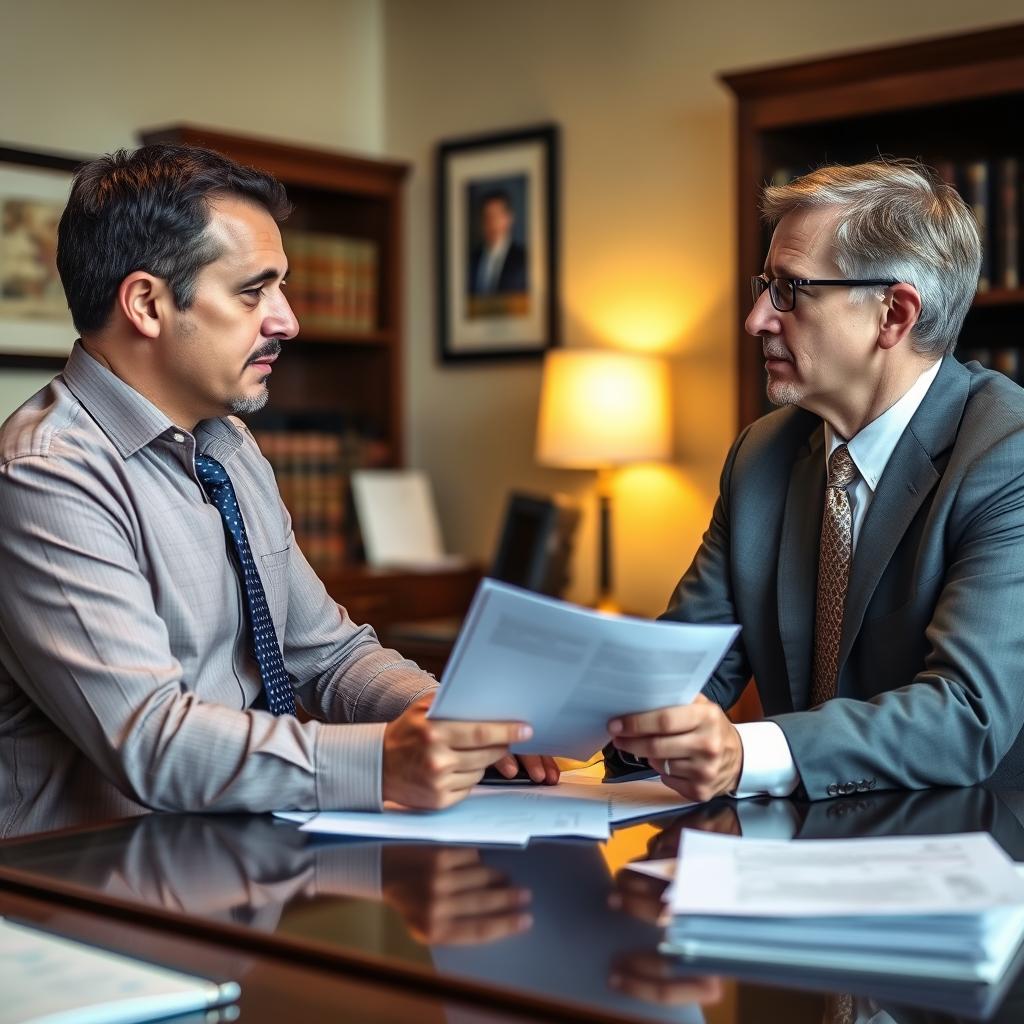
Continuing Criminal Enterprise lawyer Manassas Park, VA
Facing a federal continuing criminal enterprise charge in Manassas Park, Virginia, means confronting a prosecution that carries some of the harshest penalties in the federal system — mandatory minimum prison terms, no possibility of parole, and the full weight of the U.S. Attorney’s Office and federal investigative agencies behind the case. The charge, brought under 21 U.S.C. § 848, targets individuals alleged to have organized, supervised, or managed a continuing series of federal drug-trafficking violations in concert with five or more other persons and from which they derived substantial income. Because these cases are built on months or years of investigative work by the FBI, DEA, IRS Criminal Investigation, and ATF, they require a defense team that understands federal procedure from investigation through sentencing.
Law Offices Of SRIS, P.C. – Advocacy Without Borders.
Law Offices Of SRIS, P.C., practicing since 1997, represents people in Manassas Park and throughout Northern Virginia who are under investigation or have been indicted for federal continuing criminal enterprise charges. While the federal courthouse for this area is the U.S. District Court for the Eastern District of Virginia — with its Alexandria division handling many Northern Virginia cases — the defense work begins long before the first court appearance. Our firm’s Fairfax location serves clients from Manassas Park and the surrounding communities, and we are available to consult on complex federal allegations. Reach Law Offices Of SRIS, P.C. at (888) 437-7747 to request a consultation.
What Continuing Criminal Enterprise Means in Manassas Park
A continuing criminal enterprise charge is often referred to as the federal “kingpin” statute. It is distinct from a standard drug-conspiracy prosecution. To convict under 21 U.S.C. § 848, the government must prove beyond a reasonable doubt that the defendant engaged in a continuing series of federal drug-trafficking offenses, that they acted as an organizer, supervisor, or manager of five or more other persons involved in the enterprise, and that they obtained substantial income or resources from the criminal activity. It is a charge reserved for those the government believes played a leadership role in a significant ongoing drug operation.
For a resident of Manassas Park — a city within the Washington, D.C. Metropolitan area and part of the Thirty-first Judicial District of Virginia — a federal indictment means the case will be heard in the U.S. District Court for the Eastern District of Virginia. The Alexandria division is the usual venue for Manassas Park defendants, although certain matters may be heard in the Richmond or Norfolk divisions. Federal court procedures differ markedly from the state-court process that Manassas Park residents might encounter at the Manassas Park General District Court on Lee Avenue. Federal cases proceed under the Federal Rules of Criminal Procedure, the U.S. Sentencing Guidelines, and the Speedy Trial Act. There is no parole in the federal system, a fact that makes the stakes for a CCE defendant exceptionally high. A conviction can carry a mandatory minimum sentence of 20 years and, for repeat offenders, a life sentence. The government’s prosecutorial resources and investigative depth are considerable, and the federal conviction rate across all districts exceeds 90 percent.
The defense approach must therefore be tailored to the realities of federal practice in the Eastern District of Virginia. This includes litigating discovery motions, challenging the admissibility of wiretap evidence, surveillance, and cooperating-witness testimony, and, where appropriate, contesting the statutory elements of the CCE charge — such as whether the defendant truly occupied the supervisory role the statute requires. Pretrial detention is a serious concern in CCE cases, and the government will often seek to keep the accused in custody pending trial. A practical defense strategy starts with a swift and thorough review of the charges and the evidence the government intends to present.
How Mr. Sris and His Of Counsel Handle Continuing Criminal Enterprise Cases
Mr. Sris and his Of Counsel bring extensive combined legal experience to federal criminal defense, including representation in continuing criminal enterprise matters in the Eastern District of Virginia. Results may vary. in any new matter. The team’s approach is collaborative and case-specific, drawing on Mr. Sris’s background as a former prosecutor and the firm’s deep familiarity with federal court practice across the jurisdictions where the firm’s attorneys are admitted — Virginia, Maryland, the District of Columbia, New Jersey, and New York.
From the moment a potential client contacts the firm, the immediate priorities are to understand the scope of the government’s investigation, preserve the client’s rights during any custodial or non-custodial interview, and determine whether cooperation, a deferred-prosecution agreement, or preparing for trial is the most realistic path. In CCE cases, the defense often involves extensive motion practice: challenging the sufficiency of the indictment, attacking the reliability of cooperating witnesses, and raising procedural and constitutional issues related to searches, seizures, and electronic surveillance. The sentencing phase presents its own challenges, as the U.S. Sentencing Guidelines for CCE offenses are severe and a skilled presentation of mitigating factors — often through detailed sentencing memoranda and the presentation of character witnesses — can impact the eventual sentence.
Because a CCE charge usually involves co-defendants and a large volume of discovery, the firm works efficiently to manage the logistical demands of a complex federal case. Mr. Sris and his Of Counsel coordinate with forensic experts, investigators, and, when the facts warrant, expert witnesses who can address drug-quantity calculations, financial analysis, and other technical aspects of the prosecution’s case. Every step from arraignment through post-trial motions is handled with an understanding of the federal criminal process and the particular practices of the judges and prosecutors in the Eastern District of Virginia.
About Mr. Sris and His Of Counsel Team
Mr. Sris, Owner and Founder of Law Offices Of SRIS, P.C., has been practicing since 1997 and is a former prosecutor. His earlier prosecutorial experience gives him insight into how the government constructs and pursues a continuing criminal enterprise case, including the use of grand jury proceedings, mandatory minimums, and the tools the prosecution employs to flip cooperating witnesses. Mr. Sris is admitted in Virginia, Maryland, the District of Columbia, New Jersey, and New York. He testified before the Virginia House Courts of Justice Committee in support of 2019 HB 635 (chief patron Del. David Bulova). Mr. Sris and his Of Counsel team handle the firm’s federal criminal defense matters, combining Mr. Sris’s litigation background with the collective knowledge of experienced attorneys who have appeared in federal courts across the firm’s footprint. The firm maintains a Fairfax location at 4008 Williamsburg Court, Fairfax, VA 22032, and serves clients in Manassas Park and throughout Northern Virginia by appointment.
All non-Sris attorneys practice as Of Counsel, a structure that allows the firm to assemble the right professionals for each matter without the inefficiencies of a large-firm hierarchy. The team’s focus is on thorough preparation, attention to the client’s personal circumstances, and active advocacy within the boundaries of ethical practice.
Frequently Asked Questions
What is a continuing criminal enterprise charge?
A continuing criminal enterprise charge is a federal felony under 21 U.S.C. § 848 that targets individuals accused of managing a major drug-trafficking operation. The government must prove that the defendant supervised at least five other people in a continuing series of drug offenses and derived substantial income from the activity. It carries a mandatory minimum prison sentence of 20 years and, for defendants with a prior CCE conviction, a mandatory life sentence, and there is no parole in the federal system.
What should I do if I am under investigation for a federal drug offense in Manassas Park?
If you believe you are under federal investigation for a drug offense, you should not speak with law enforcement without legal counsel present. Exercise your right to remain silent and request to speak with an attorney. Contact a federal criminal defense attorney who is familiar with the U.S. District Court for the Eastern District of Virginia immediately. Early intervention can affect the direction an investigation takes and can protect your interests before charges are filed. For a consultation, reach Mr. Sris and his Of Counsel at (888) 437-7747.
How does a federal criminal case differ from a state case in Virginia?
Federal charges are prosecuted by the U.S. Attorney’s Office rather than a local Commonwealth’s Attorney. The procedural framework — the Federal Rules of Criminal Procedure, the U.S. Sentencing Guidelines, and the Speedy Trial Act — is different from Virginia state practice. Federal sentencing guidelines are advisory but influential, and there is no parole for federal inmates. The investigative resources of federal agencies are often substantial, and federal conviction rates remain very high, making experienced defense counsel critical from the outset.
Can I be released on bail while facing a federal CCE charge in the Eastern District of Virginia?
Pretrial release in federal drug cases, especially continuing criminal enterprise charges, is difficult to obtain. The court will consider whether you are a flight risk and a danger to the community. The government may also argue that the statutory presumption in favor of detention applies because of the nature of the offense and the potential sentence. A detention hearing will be held shortly after your initial appearance, and your attorney can present evidence and argument to seek release under conditions that satisfy the court’s concerns. The outcome depends on the specific facts of your case.
What happens at sentencing for a continuing criminal enterprise conviction?
Sentencing under the U.S. Sentencing Guidelines for a CCE offense is severe. The court will calculate an advisory guideline range based on the offense level, which is influenced by drug quantity, your role in the offense, any acceptance of responsibility, and other factors. The judge may depart or vary from the guidelines, but the statutory mandatory minimum of 20 years (life for repeat offenders) sets the floor. Your attorney will present mitigating evidence, such as your background, family circumstances, and the nature of your involvement, to argue for a sentence within the statutory range that is as low as the law permits. The judge has discretion to impose a sentence above the mandatory minimum but may not go below it unless the government files a motion for substantial assistance.
How can I find a continuing criminal enterprise lawyer near Manassas Park?
Look for a federal criminal defense attorney who is experienced with the U.S. District Court for the Eastern District of Virginia, who is licensed to practice in Virginia, and who has a background in complex drug cases and federal sentencing. The firm’s Fairfax location serves clients in Manassas Park, and you can discuss your situation by calling (888) 437-7747. Consultations are by appointment only, and the firm’s phones are answered 24 hours a day, seven days a week.
For additional resources, you may also review the following federal criminal defense pages:
Federal criminal defense lawyer in Fairfax County,
Federal criminal defense lawyer in Prince William County, and
Federal criminal defense lawyer in Manassas (City).
Last reviewed: July 2026
Attorney advertising. Prior results do not guarantee a similar outcome.
Results may vary.
Case results depend on a variety of factors unique to each case.