
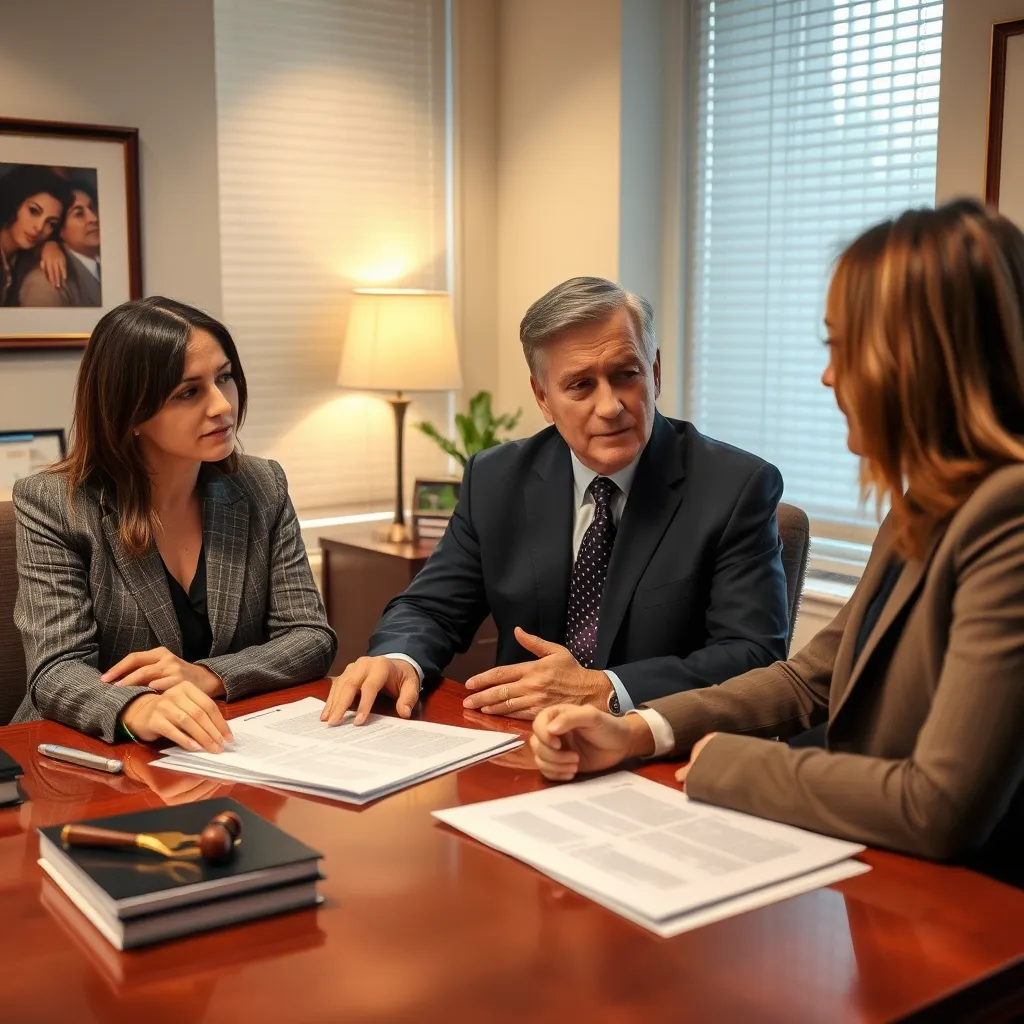
Desertion Divorce Lawyer Falls Church, VA
Falls Church Courts That Handle Desertion Divorce
Desertion divorce cases in Falls Church are filed in the Falls Church Circuit Court, located at 300 Park Avenue, Suite 151W, Falls Church, VA 22046. This court has original jurisdiction over all divorce matters, including equitable distribution and spousal support, under Va. Code § 20-96. The companion Juvenile & Domestic Relations District Court at the same address handles custody, visitation, and support issues that may arise during the divorce. Our firm appears regularly in both courts and is familiar with local filing practices and judicial expectations.
Law Offices Of SRIS, P.C. — Advocacy Without Borders.
Falls Church is an independent city within the 17th Judicial Circuit. The Circuit Court shares the building with the General District Court, though each operates on distinct dockets. Because Falls Church is a compact jurisdiction, court personnel and local practitioners often develop familiarity with recurring procedural preferences. We bring that locality-specific awareness to every desertion divorce case we handle.
How Desertion Divorce Proceeds in Falls Church
Under Virginia law, willful desertion or abandonment for one year is a fault-based ground for divorce from the bond of matrimony (Va. Code § 20-91). A spouse seeking a desertion divorce files a Complaint in the Falls Church Circuit Court alleging the desertion, the one-year period, and the required six-month residency. The defendant spouse must be served with the Complaint, and the case then moves through the Circuit Court docket.
If the desertion ground is contested, the case may proceed to an ore tenus hearing or trial where testimony and evidence are presented. If the parties agree to proceed on the desertion ground without dispute, an uncontested hearing before a judge may be scheduled. Pendente lite motions for temporary support or custody can be filed in the Juvenile & Domestic Relations Court while the Circuit Court divorce is pending.
The Falls Church Circuit Court requires at least one corroborating witness to support the grounds for divorce, including the fact and duration of desertion. A separation agreement resolving all property and support issues can streamline the final decree, though the court still must find the statutory ground satisfied.
What to Expect in a Falls Church Desertion Divorce Hearing
In our practice, the Falls Church Circuit Court approaches fault-based divorces with attention to the statutory elements. The judge will expect clear testimony establishing the date of desertion, the intent to abandon the marriage, and the continuous one-year period. Documentary evidence—such as correspondence, financial records showing separate living arrangements, or testimony from a corroborating witness—may be presented to meet the burden of proof.
The court’s docket is managed by the clerk’s office, and hearing dates are set according to the court’s calendar. While the timeline varies by case complexity and court availability, an uncontested desertion divorce with a signed separation agreement can often be resolved within a few months after filing. Contested cases take longer. Mr. Sris and his Of Counsel are prepared to present the required evidence efficiently and to address any challenges that arise during the proceeding.
Legal Representation for Desertion Divorce in Falls Church
Mr. Sris, Owner and Founder of Law Offices Of SRIS, P.C., has handled family law matters in Virginia since the firm’s founding in 1997. He is admitted in Virginia, Maryland, the District of Columbia, New Jersey, and New York. His Of Counsel team contributes over 120 years of combined legal experience across multiple practice areas, with 4,739+ documented firm-wide results. Results may vary.
For a desertion divorce in Falls Church, our firm offers representation informed by decades of courtroom experience. We assist clients in gathering evidence, preparing pleadings, and presenting the case at hearing. Mr. Sris testified before the Virginia House Courts of Justice Committee in support of 2019 HB 635 (chief patron Del. David Bulova), which addressed equitable distribution procedures—an issue that often intersects with fault-ground divorces.
Frequently Asked Questions
What is desertion divorce in Virginia?
Desertion divorce is a fault-based ground under Va. Code § 20-91. It requires proof that one spouse willfully abandoned the marriage without justification for at least one year. The spouse filing for divorce must demonstrate the desertion was continuous and intentional, not merely a separation by mutual agreement.
How long must the desertion last before filing in Falls Church?
Virginia law requires one full year of willful desertion before the ground is complete. The clock starts when the deserting spouse leaves. Even if the couple has been living apart longer, the court needs evidence that the separation was without the other spouse’s consent and with intent to abandon the marriage.
Do I need a corroborating witness for a desertion divorce in Falls Church?
Yes. Virginia courts, including the Falls Church Circuit Court, generally require at least one corroborating witness to testify in support of the divorce grounds—unless the court permits the matter to proceed on affidavits. A witness who can confirm the date and circumstances of the desertion is often essential.
Can a desertion divorce be contested in Falls Church?
Yes. If the defendant spouse disputes the allegation of desertion, the case becomes contested. The court will hold hearings to weigh evidence and testimony. The outcome depends on the credibility of the evidence presented, and a lawyer can help build a persuasive case or defend against a desertion claim.
What if the deserting spouse returns briefly during the one-year period?
A brief return may or may not reset the one-year clock, depending on the circumstances. If the return was temporary and the intent to abandon persisted, the court may still find continuous desertion. The facts of each case determine the outcome, and legal guidance is advisable.
How are property and support handled in a desertion divorce?
Virginia is an equitable distribution state, meaning marital property is divided fairly based on statutory factors, not necessarily 50/50. Spousal support and child custody are addressed separately, often in the Juvenile & Domestic Relations Court if pendente lite orders are needed. A separation agreement can resolve these matters by mutual consent.
Where can I find a desertion divorce lawyer in Falls Church?
Our firm represents clients in desertion divorce cases in the Falls Church Circuit Court. Reach Law Offices Of SRIS, P.C. at (888) 437-7747 to request a consultation. Meetings are by appointment at our Fairfax Location, which serves the Falls Church area.
Can I get a divorce on desertion grounds if we later signed a separation agreement?
Yes. A separation agreement does not erase the fault ground. You may still allege desertion in the Complaint, and the court can grant the divorce on that basis if the one-year desertion is proved. The agreement can resolve property and support, but the ground remains distinct from the agreement.
Related practice pages: Family Law Lawyer Fairfax County · Family Law Lawyer Fairfax · Family Law Lawyer Prince William County
Attorney advertising. Prior results do not guarantee a similar outcome.
Results may vary. Each case is unique; consult an attorney about your individual situation.
Case results depend on a variety of factors unique to each case.