
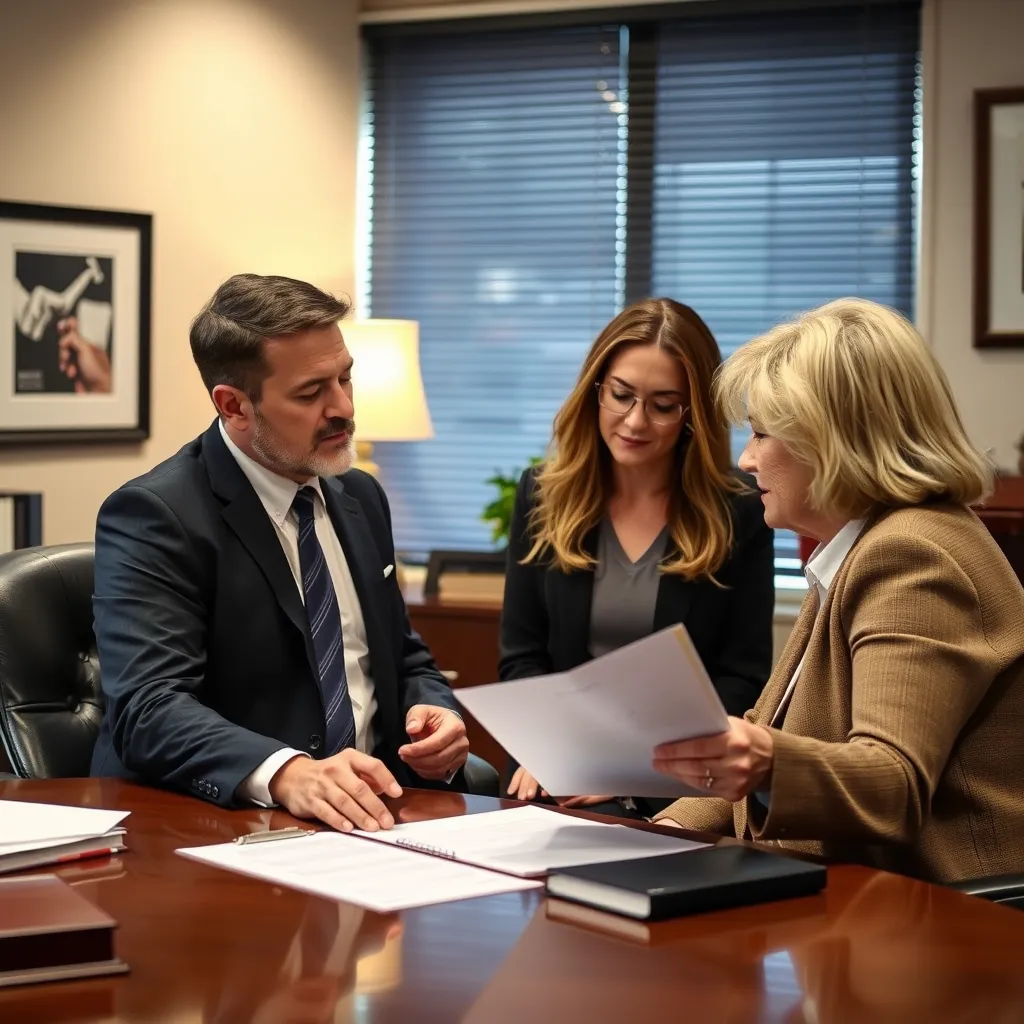
Desertion Divorce Lawyer Manassas, VA
Your spouse walked out a year ago. Not after a fight, not with a warning — just gone. For twelve months you have been left in the Manassas townhouse with the mortgage, the children’s schedules, and the gnawing question of what comes next. In Virginia, willful desertion or abandonment for one year is a fault-based ground for divorce under Va. Code § 20-91. If you are living that reality, you do not need to navigate it alone. Mr. Sris and his Of Counsel team at Law Offices Of SRIS, P.C. represent clients in desertion divorce matters throughout the Manassas area. Reach our firm at (888) 437-7747 to schedule a consultation. Law Offices Of SRIS, P.C. — Advocacy Without Borders.
How We Approach Desertion Divorce Cases in Manassas
Every desertion divorce is rooted in a specific set of facts: when the spouse left, whether the separation was truly willful, and whether you have had no contact for the statutory period. Our approach begins with listening. We ask the questions the Manassas Circuit Court will want answered: Is there a written record of the abandonment? Did your spouse provide any financial support? Have you had any communication that could break the required one-year period? Once we understand your situation, we identify the most direct path to a final decree — whether that means filing on the fault ground of desertion, pursuing a no-fault alternative if a separation agreement is possible, or facing a contested proceeding where the other side disputes the abandonment.
Virginia is an equitable distribution state (Va. Code § 20-107.3). In a desertion divorce, the court will classify and divide marital property after considering the statutory factors. Mr. Sris personally testified before the Virginia House Courts of Justice Committee in support of 2019 HB 635 (chief patron Del. David Bulova), which revised subsection (g) of that same equitable distribution statute. That experience informs how our team handles property division — from the family home near the Manassas VRE station to retirement accounts built over years of marriage. We bring a working knowledge of the statutory framework to every case, and we prepare each matter as though it will be tried, even when settlement is the likely outcome.
What to Expect in a Desertion Divorce Proceeding
A desertion divorce begins with the filing of a Complaint in the Circuit Court at 9311 Lee Avenue, Suite 230, Manassas, VA 20110. Virginia law requires that at least one party be a resident and domiciliary of the Commonwealth for six months before the suit is commenced (Va. Code § 20-97). Because desertion is a fault ground, you must prove the elements — that your spouse willfully left, that the desertion has continued for one year, and that there was no justification or your consent. The court will likely require a corroborating witness, someone who can attest to the facts, before granting the divorce.
Once the Complaint is served, the case proceeds according to the court’s calendar. If your spouse contests the allegation of desertion, the matter moves toward trial, where the judge hears evidence and decides whether the ground is established. If the case is uncontested, you may be able to present your evidence at a hearing without a prolonged trial. Throughout, the court may enter temporary orders concerning custody, support, and use of the marital residence. Mr. Sris and his Of Counsel handle each stage — from the initial filing through any pendente lite motions and, if necessary, trial. We explain the process in plain terms and keep you informed of deadlines and what the court expects.
The Legal Landscape: Desertion Divorce Under Virginia Law
Willful desertion, as articulated in Va. Code § 20-91, is the voluntary departure of one spouse from the marital home without the consent of the other and without justification, coupled with the intent to abandon the marriage. The one-year period must be continuous. If the deserting spouse returns and resumes the marital relationship, even briefly, the clock may reset. Virginia courts examine the totality of the circumstances, and a finding of desertion can affect not only the divorce itself but also the division of marital property and an award of spousal support. A spouse found at fault may face financial consequences in the equitable distribution calculation.
In the Manassas area, these matters are heard in the Thirty-first Judicial District. The Manassas Circuit Court has exclusive jurisdiction over divorce, while the Juvenile and Domestic Relations District Court handles standalone custody, visitation, child support, and protective orders. It is common for a family law case to involve proceedings in both courts. Our firm appears regularly in both, and we know the procedural requirements: from the need for a properly drafted Complaint to the mechanics of presenting testimony and exhibits at a hearing. While every case is unique, the statutory framework provides the guideposts, and we apply them to your specific circumstances. For a full statutory breakdown, see our comprehensive analysis on the main firm site.
Attorney Credentials
Mr. Sris, Owner and Founder of Law Offices Of SRIS, P.C., founded the firm in 1997. He is a former prosecutor and is admitted to practice in Virginia, Maryland, the District of Columbia, New Jersey, and New York. His legislative involvement includes testifying before the Virginia House Courts of Justice Committee in support of 2019 HB 635 (chief patron Del. David Bulova), which became the 2019 revision to Va. Code § 20-107.3(g). Mr. Sris keeps a personal caseload small, ensuring that the complex family law matters he handles — including desertion divorces — receive careful attention.
Mr. Sris is supported by an Of Counsel team that collectively brings over 120 years of combined legal experience and over 4,739 documented firm-wide results. Results may vary. The Of Counsel attorneys work collaboratively on cases, drawing on backgrounds that include prior service as a state prosecutor, a law enforcement officer, and a CPS contract attorney. When you reach our firm, you gain access to a team that approaches your desertion divorce with thorough preparation and respect for the details that matter to the Manassas courts.
Frequently Asked Questions
What exactly qualifies as desertion for divorce in Virginia?
A spouse deserts the marriage when they leave the marital home voluntarily, without your consent, and without legal justification, with the intent to end the marriage. The abandonment must continue uninterrupted for at least one year before you can file on that ground. A temporary separation, a spouse who leaves after being locked out, or a separation by mutual agreement generally does not meet the standard. We can review the facts of your situation and help you determine whether the evidence supports a desertion claim.
Do I have to prove my spouse deserted me, or can I use a different ground?
You may choose any ground for divorce that fits your circumstances. If you have been separated for one year (or six months with a written separation agreement and no minor children), you can file a no-fault divorce under Va. Code § 20-91(9). However, proving desertion may affect property division and spousal support. We discuss the advantages and disadvantages of each option with you before you decide which ground to assert.
Will my desertion divorce be contested?
It depends on your spouse’s response. If your spouse agrees that they deserted the marriage, the case may proceed uncontested. If they dispute the claim — for example, by arguing that you consented to the separation or that they had good cause to leave — the divorce becomes contested. In a contested desertion case, we prepare for trial, gathering evidence such as text messages, emails, financial records, and witness testimony to prove the elements of desertion.
How does desertion affect property division in Virginia?
Virginia is an equitable distribution state, meaning the court divides marital property fairly but not necessarily equally. A finding that your spouse deserted the marriage can be one of the factors the judge weighs when deciding how to divide assets and debts. In some cases, a fault ground can also influence an award of spousal support. We explain how the equitable distribution factors apply to your specific marital estate.
What if my spouse left but still sends money?
Financial support alone does not necessarily negate desertion. The key questions are whether the spouse intended to abandon the marital relationship and whether the separation was willful and without justification. A spouse who sends money but otherwise severs all ties and has no intention of returning may still be found to have deserted the marriage. The court looks at the totality of the circumstances, not just financial contributions.
How do I start a desertion divorce in Manassas?
The first step is to discuss your situation with an attorney. We meet with you to understand the timeline, gather evidence, and determine whether desertion is the appropriate ground. If it is, we prepare and file a Complaint for Divorce in the Manassas Circuit Court, serve your spouse, and guide you through each stage of the proceeding. To discuss the details of your matter, contact Law Offices Of SRIS, P.C. at (888) 437-7747.
For more information, explore our other family law pages serving the Northern Virginia region:
Fairfax County Family Law ·
Prince William County Family Law ·
Manassas Park Family Law ·
Fairfax City Family Law ·
Falls Church Family Law
Authoritative Virginia sources:
Virginia Code Title 20 – Domestic Relations ·
Manassas Circuit Court ·
Virginia Judicial System
Attorney advertising. Prior results do not guarantee a similar outcome. Results may vary. Law Offices Of SRIS, P.C. | Fairfax Location — 4008 Williamsburg Court, Fairfax, VA 22032 | (703) 636-5417 | Toll-free (888) 437-7747. By appointment only.
Case results depend on a variety of factors unique to each case.