
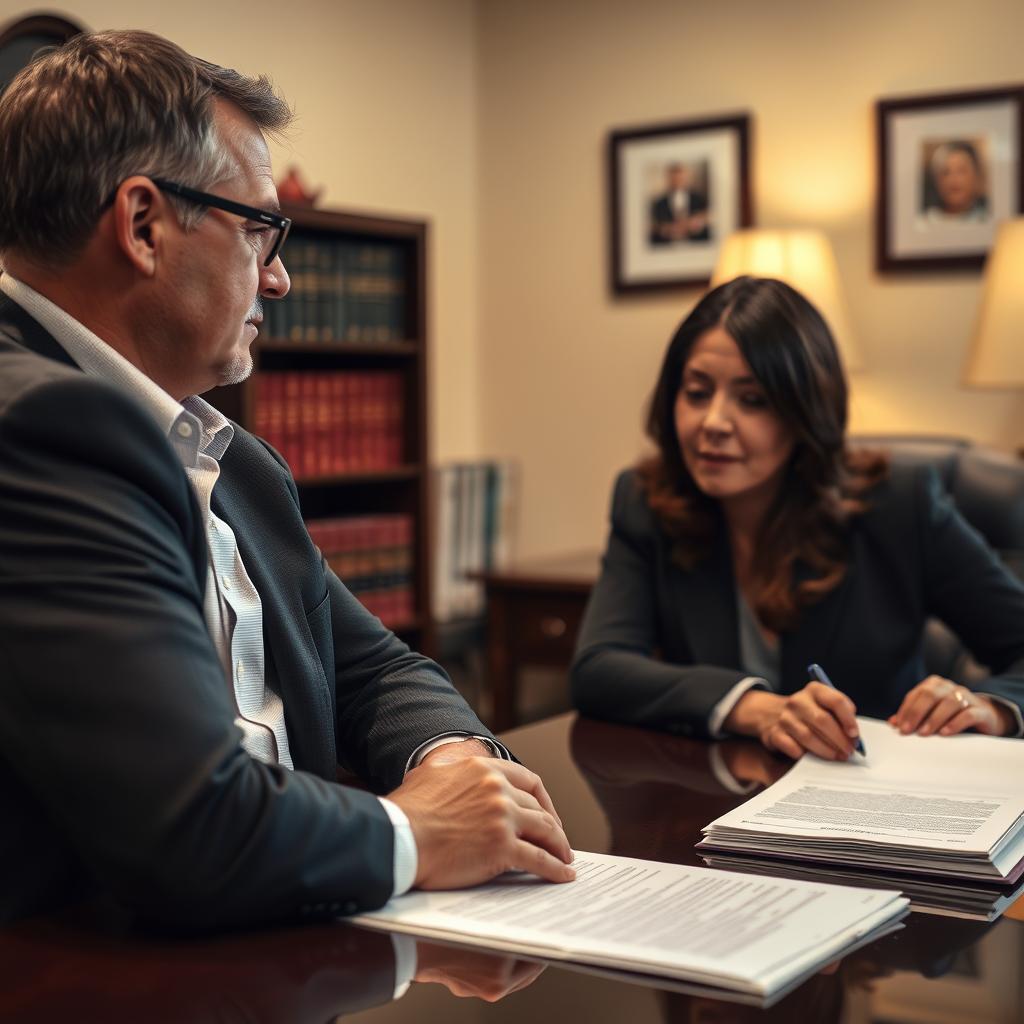
Destruction or Falsification of Records lawyer Fairfax County, VA
Federal charges for destruction or falsification of records can arise from a wide range of investigations — from a bankruptcy audit to a corporate fraud inquiry conducted by the FBI or the IRS Criminal Investigation division. When the U.S. Attorney’s Office for the Eastern District of Virginia files these charges, the matter proceeds in the Alexandria division of the U.S. District Court, where federal sentencing guidelines apply and parole was abolished decades ago. If you are facing an allegation under 18 U.S.C. § 1519 or a related record‑tampering statute, the investigation may already be underway before you learn of it. At Law Offices Of SRIS, P.C., Mr. Sris and his Of Counsel bring extensive combined legal experience to defending clients in federal criminal matters in Fairfax County, Virginia. To discuss your situation, call (888) 437‑7747. Law Offices Of SRIS, P.C. – Advocacy Without Borders.
What Destruction or Falsification of Records Means in Fairfax County, Virginia
Federal statutes treat the destruction, alteration, or falsification of records as serious obstructive conduct, often prosecuted alongside fraud, money laundering, or public‑corruption counts. The U.S. Attorney’s Office for the Eastern District of Virginia — one of the most active federal prosecutors’ offices in the country — typically brings these cases after an investigation by agencies such as the FBI, DEA, IRS‑CI, or ATF. Because Fairfax County sits within the Alexandria division, any resulting indictment, pretrial detention hearing, and trial occur at the federal courthouse on Courthouse Square in Alexandria. Federal sentencing guidelines and mandatory minimums, where applicable, apply. There is no parole in the federal system, and good‑time credit is strictly limited.
The factual scenarios behind a record‑destruction charge vary widely. A business owner might shred documents after receiving a federal subpoena. An employee might alter internal reports that are later sought in a grand jury investigation. A person in financial distress might delete electronic files connected to a bankruptcy proceeding. In each situation, federal prosecutors must prove that the accused knowingly acted with the intent to impede, obstruct, or influence a federal matter. Mr. Sris and his Of Counsel examine every element of the government’s proof — including whether a federal proceeding was reasonably foreseeable and whether the person acted with the required mental state. Clients in Fairfax County and across Northern Virginia benefit from defense counsel who understands how the Eastern District’s judges handle pretrial motions and sentencing arguments.
How Mr. Sris and His Of Counsel Handle Federal Record‑Related Charges
Federal record‑tampering cases demand early engagement. Before an indictment is returned, the government may already have executed search warrants, seized digital devices, and interviewed current or former employees. Mr. Sris and his Of Counsel work to intervene at the investigation stage wherever possible — monitoring grand jury subpoena compliance, preserving evidence the government may not have secured, and ensuring that any statements made by the client are given with experienced counsel present. If charges are already pending, the defense examines the chain of custody for documents, the reliability of forensic images, and the sufficiency of the government’s proof on each statutory element.
Strategic options depend on the specific facts. Sometimes the core question is whether the allegedly destroyed record was actually required to be kept under a specific federal regulation. Other cases turn on whether the accused acted “knowingly” or merely negligently. Mr. Sris and his Of Counsel assess every avenue, from filing a motion to suppress evidence obtained in violation of the Fourth Amendment to negotiating a resolution that limits exposure under the sentencing guidelines. Because federal judges in the Eastern District of Virginia apply the guidelines carefully and often impose sentences at or near the advisory range, meticulous preparation at the sentencing phase is essential. The defense presents the client’s full personal and professional history, any acceptance of responsibility, and, when applicable, cooperation that may support a downward departure.
About Mr. Sris and His Of Counsel Team
Mr. Sris, Owner and Founder of Law Offices Of SRIS, P.C., established the firm in 1997 and has practiced in Virginia, Maryland, the District of Columbia, New Jersey, and New York. A former prosecutor, he brings insight into how the government constructs its criminal cases. Mr. Sris testified before the Virginia House Courts of Justice Committee in support of 2019 HB 635 (chief patron Del. David Bulova). His Of Counsel team shares his commitment to thorough case preparation and has handled federal matters across multiple jurisdictions. Together, Mr. Sris and his Of Counsel bring extensive combined legal experience. Results may vary.
Frequently Asked Questions
How does a Virginia lawyer defend against destruction or falsification of records charges?
Defense strategies may include challenging the government’s evidence on intent and knowledge, examining whether the documents were covered by a specific statutory duty, and scrutinizing the chain of custody. A federal criminal lawyer also evaluates procedural compliance, negotiates with prosecutors, and presents mitigating factors. Mr. Sris and his Of Counsel review each case under the relevant sections of Title 18 of the U.S. Code to build the strongest available defense. For a consultation, reach Mr. Sris and his Of Counsel at (888) 437‑7747.
What should I do if I am facing destruction or falsification of records charges in Virginia?
Contact a federal criminal defense attorney immediately. Do not discuss the case with anyone except your lawyer, and preserve all documents and electronic records that could be relevant. Federal investigators often act quickly, and statements made early can have significant consequences. Early legal guidance is critical to protecting your rights throughout the investigation and any subsequent prosecution.
What are the penalties for destruction or falsification of records in Virginia?
Penalties depend on the specific federal statute charged, the defendant’s criminal history, and the circumstances of the offense. Under the U.S. Sentencing Guidelines, a conviction can result in imprisonment, supervised release, fines, and restitution. There is no parole in the federal system. A federal criminal lawyer can evaluate the potential sentencing range and explain any mandatory minimum provisions that may apply.
What is the difference between state and federal charges for record destruction?
Federal charges are prosecuted by the U.S. Attorney’s Office in U.S. District Court and are governed by the Federal Rules of Criminal Procedure and the U.S. Sentencing Guidelines. State charges, by contrast, are brought in Virginia’s General District or Circuit Courts under the Code of Virginia. Federal cases generally carry more severe sentencing ranges, and parole was abolished in the federal system. A lawyer experienced in federal court practice is essential when facing a federal indictment.
Can I be charged in federal court for destroying records that were part of a state proceeding?
Yes, if the records related to a matter within federal jurisdiction — such as a bankruptcy case, a federal agency investigation, or a matter involving federal funds. Federal jurisdiction can also arise if the alleged conduct crossed state lines or involved communication providers, financial institutions, or other entities regulated by federal law. Mr. Sris and his Of Counsel analyze the jurisdictional basis for the charge early in the case.
Is it possible to avoid an indictment in a federal record‑destruction case?
Early intervention can sometimes persuade federal prosecutors not to seek an indictment, particularly when the evidence of intent is weak or when the client cooperates in a broader investigation. The decision to charge rests with the U.S. Attorney’s Office, but experienced defense counsel can present legal arguments, mitigating facts, and documentary evidence at the investigative stage. Every situation is different, and past results do not guarantee a similar outcome.
For related federal defense resources in the Northern Virginia region, see our Federal Criminal Lawyer Prince William County, VA, Stafford County, VA, Fauquier County, VA, Loudoun County, VA, and Arlington County, VA pages.
Authoritative sources: United States Code: Title 18 | U.S. District Court for the Eastern District of Virginia | U.S. Attorney’s Office — Eastern District of Virginia
Attorney advertising. Prior results do not guarantee a similar outcome.
Results may vary.
Case results depend on a variety of factors unique to each case.