
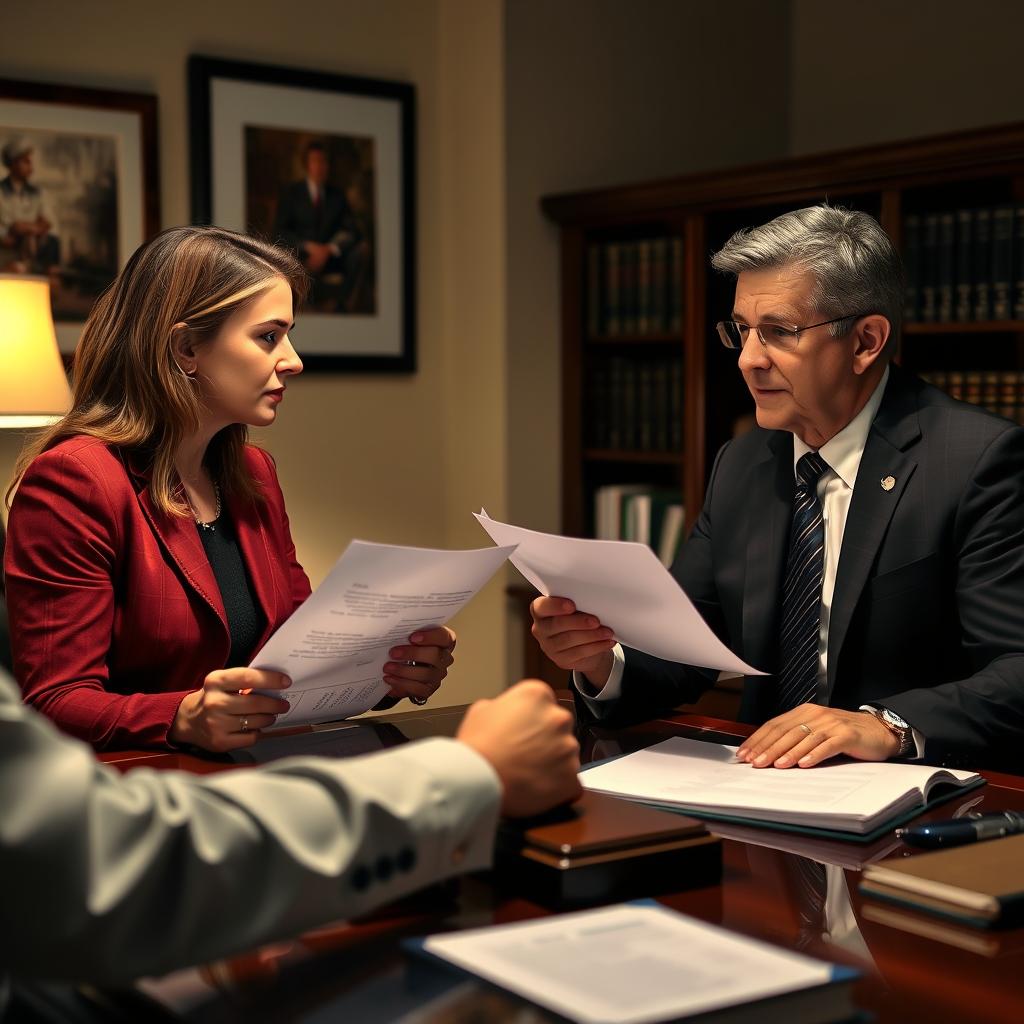
False Statements to a Federal Agent lawyer Fairfax, VA
A federal charge under 18 U.S.C. § 1001 for making a false statement to a federal agent is a serious felony offense. If convicted, you face up to five years in federal prison, substantial fines, and a permanent criminal record. Investigations often originate from interviews with agents of the FBI, DEA, IRS‑CI, ATF, or other federal agencies. In Fairfax, Virginia, cases are prosecuted by the U.S. Attorney’s Office for the Eastern District of Virginia, a jurisdiction known for its strict enforcement and high conviction rates. Whether the alleged false statement occurred during a consensual interview, in a written document, or as part of a larger investigation, the government devotes significant resources to these prosecutions. If you are under investigation or have already been charged, immediate legal representation is critical. Early intervention can shape whether an indictment is returned, whether pretrial detention is sought, and what plea options may be available. Law Offices Of SRIS, P.C., founded in 1997, serves clients in Fairfax County, Fairfax City, and throughout Northern Virginia. Mr. Sris, Owner and Founder, and his Of Counsel team handle federal criminal matters, including charges under § 1001. With extensive combined legal experience, the firm provides strategic defense tailored to the unique circumstances of each case. The firm’s Fairfax location is available by appointment. Contact us at (888) 437‑7747 for a consultation.
What False Statements to a Federal Agent Means in Fairfax
Federal law prohibits knowingly and willfully making any materially false, fictitious, or fraudulent statement or representation in any matter within the jurisdiction of the executive, legislative, or judicial branch of the United States. Unlike many fraud offenses, a violation of 18 U.S.C. § 1001 does not require proof of materiality; even an immaterial false statement can sustain a conviction. Common scenarios include lying to an FBI agent during a voluntary interview, providing false information on a federal form, or making a misrepresentation in a written statement to a government agency.
In Fairfax, the proximity to Washington, D.C., places residents and businesses under the scrutiny of numerous federal agencies with a presence in Northern Virginia. The FBI’s Washington Field Office, DEA field divisions, and IRS Criminal Investigation units routinely conduct interviews and investigations that touch Fairfax County and the independent City of Fairfax. A seemingly casual conversation with an agent can quickly become the basis for a felony charge. Cases are adjudicated in the U.S. District Court for the Eastern District of Virginia, whose Alexandria Division handles most Fairfax-area matters. That court is known for its “rocket docket” pace, which means defendants and their counsel must be prepared to move quickly once an indictment is unsealed. Because the government often has months or years to build a case before charges are filed, mounting an effective defense requires prompt action by a lawyer who understands the procedural landscape of the Eastern District of Virginia and the federal sentencing guidelines.
How Mr. Sris and His Of Counsel Handle Federal False Statement Cases
From the moment a client becomes aware of a federal investigation, Mr. Sris and his Of Counsel take steps to protect the client’s rights and preserve critical evidence. This begins with a thorough assessment of the alleged statement—its content, context, and the circumstances under which it was made. Defenses often turn on whether the statement was actually false, whether the accused acted “knowingly and willfully,” or whether the statement fell outside federal jurisdiction. The team also examines whether the agent’s questioning complied with constitutional safeguards and whether any exculpatory evidence exists.
Early engagement with the U.S. Attorney’s Office can sometimes persuade prosecutors not to seek an indictment or to agree to pretrial release conditions that avoid detention. When an indictment is returned, Mr. Sris and his Of Counsel challenge the government’s evidence through motion practice, discovery review, and, if necessary, trial. The firm’s experience in the Eastern District of Virginia allows it to navigate the court’s fast-track scheduling, the expectations of its judges, and the sentencing guidelines that apply after Booker. Because there is no parole in the federal system, every sentencing factor—including acceptance of responsibility and potential departures under the guidelines—is carefully preserved. The firm’s approach is thorough, defensive, and rooted in an understanding of how federal prosecutors build their cases.
About Mr. Sris and His Of Counsel Team
Mr. Sris is a former prosecutor who founded Law Offices Of SRIS, P.C. in 1997. He is admitted to practice in Virginia, Maryland, the District of Columbia, New Jersey, and New York. Over nearly three decades, he has handled complex federal criminal matters and has testified before the Virginia House Courts of Justice Committee in support of 2019 HB 635 (chief patron Del. David Bulova). His prosecutorial background gives him valuable insight into the government’s charging decisions and trial strategies.
Mr. Sris is supported by a team of Of Counsel attorneys who bring extensive combined legal experience, including backgrounds as former prosecutors and former law enforcement officers. This collective experience allows the firm to evaluate cases from multiple angles—examining evidentiary weaknesses, procedural irregularities, and opportunities for negotiated resolutions—while always preparing for the possibility of trial. The firm’s Fairfax location serves clients in Fairfax County, Fairfax City, and surrounding communities by appointment.
Frequently Asked Questions
What is the penalty for making false statements to a federal agent?
A conviction under 18 U.S.C. § 1001 carries a maximum sentence of five years in federal prison, a fine, and up to three years of supervised release. The actual sentence depends on the U.S. Sentencing Guidelines, which calculate a range based on the offense level, any specific offense characteristics, and the defendant’s criminal history. Because there is no parole in the federal system, time served is the actual sentence imposed. An experienced federal criminal lawyer can work to minimize exposure by arguing for a downward departure or for a sentence below the guideline range when mitigating factors are present. For guidance on your specific situation, reach Law Offices Of SRIS, P.C. at (888) 437‑7747.
How does a Virginia lawyer defend against false statement charges?
Defense strategies often involve challenging whether the statement was actually false, whether the defendant acted with the required “knowing and willful” intent, or whether the statement was made in a matter within federal jurisdiction. Other approaches include arguing that the statement was literally true, that it was the result of a mistake or faulty memory rather than intentional deception, or that the government obtained the statement in violation of the defendant’s Fifth Amendment rights. In some cases, the defense can show that the statement was not material to the agency’s function, though materiality is not an element. An experienced attorney will scrutinize the investigative record and develop a strategy tailored to the facts. To discuss the details of your matter, contact Law Offices Of SRIS, P.C. at (888) 437‑7747.
What should I do if I am contacted by a federal agent?
If a federal agent contacts you—whether by phone, at your home, or at your workplace—you should politely decline to answer questions without an attorney present. Anything you say can be used against you in a criminal prosecution, even if you believe you are being truthful. You are not required to speak to law enforcement, and invoking your right to counsel cannot be held against you. Do not attempt to explain or clarify the situation on your own. Preserve any relevant documents and avoid discussing the matter with family, friends, or colleagues. Then contact a federal criminal defense lawyer immediately. For a consultation, reach Mr. Sris and his Of Counsel at (888) 437‑7747.
How do federal sentencing guidelines apply in Fairfax?
The U.S. Sentencing Guidelines apply to all federal criminal cases, including false statement offenses. The guidelines are advisory after the Supreme Court’s decision in United States v. Booker, but judges in the Eastern District of Virginia still consult them heavily. The guideline range is determined by the offense level (which can increase if the offense involved multiple false statements, sophisticated means, or obstruction of justice) and the defendant’s criminal history category. In addition to incarceration, the court may impose a period of supervised release, restitution, and special assessments. An experienced lawyer can advocate for a sentence below the guidelines when warranted. To discuss your case, contact Law Offices Of SRIS, P.C. at (888) 437‑7747.
Do I need a lawyer for a federal false statement investigation?
Yes. A federal investigation is not a situation to navigate without counsel. Even before an indictment, an attorney can communicate with investigators on your behalf, advise you on how to respond to subpoenas, and work to prevent the filing of charges altogether. If charges are filed, the stakes are high: a felony conviction can affect your employment, professional licenses, immigration status, and civil rights. An experienced federal criminal defense lawyer can identify weaknesses in the government’s case and negotiate for favorable outcomes. The earlier you involve counsel, the more options may be available. Reach Law Offices Of SRIS, P.C. at (888) 437‑7747 to schedule a consultation.
Related pages: Fairfax County Federal Criminal Defense | Falls Church Federal Criminal Lawyer | Prince William County Federal Criminal Attorney
Attorney advertising. Prior results do not guarantee a similar outcome. Results may vary.
Case results depend on a variety of factors unique to each case.