
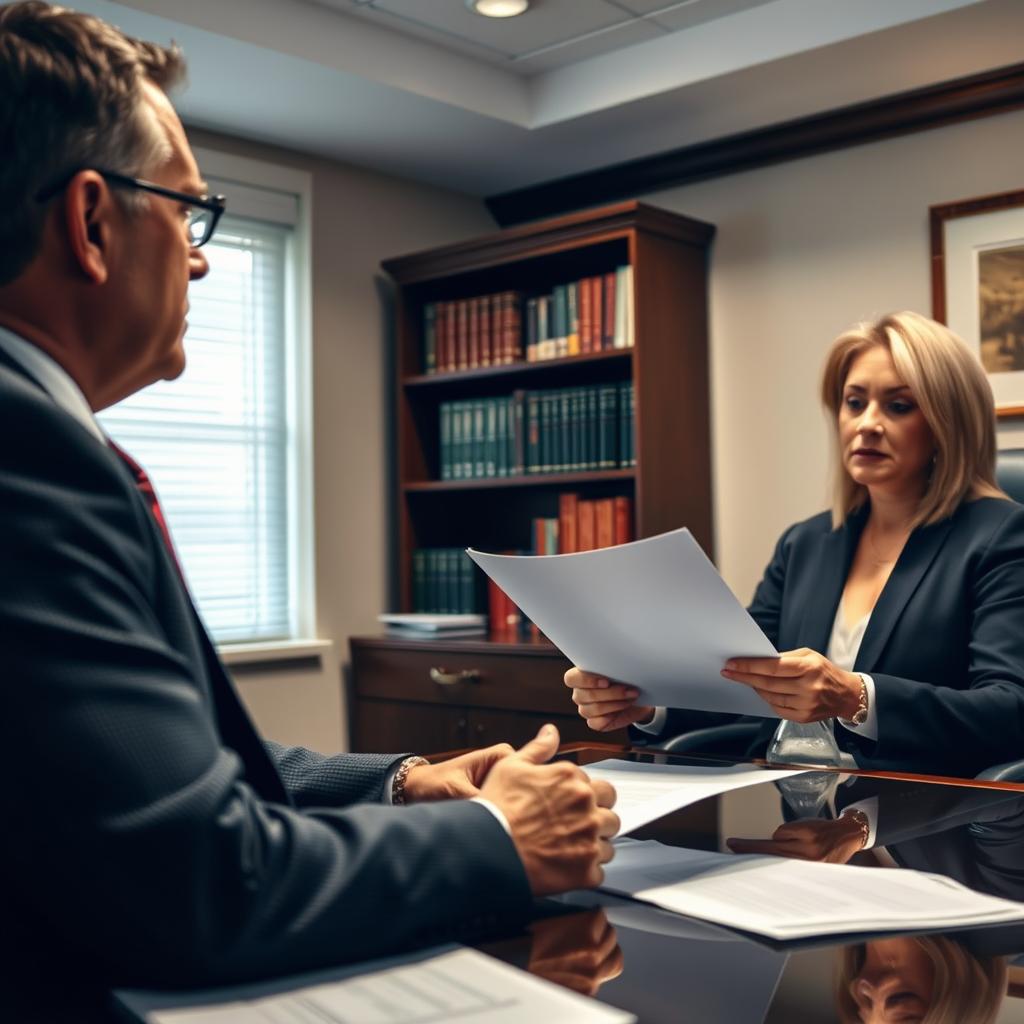
False Statements to a Federal Agent lawyer Falls Church, VA
Federal charges for making false statements to a government agent, prosecuted under 18 U.S.C. § 1001, carry the potential for significant penalties and require a defense grounded in federal criminal procedure. Law Offices Of SRIS, P.C., founded in 1997, represents individuals in Falls Church, Virginia, and throughout the Eastern District of Virginia who are under investigation or facing indictment for allegedly making materially false, fictitious, or fraudulent statements or representations in any matter within the jurisdiction of the executive, legislative, or judicial branch of the United States. Mr. Sris, Owner and Founder, brings experience as a former prosecutor to each federal defense matter. Reach our firm at (888) 437-7747 to request a consultation. Law Offices Of SRIS, P.C. – Advocacy Without Borders.
What the government must prove in a § 1001 case in Falls Church, Virginia
To obtain a conviction, federal prosecutors must establish beyond a reasonable doubt that the defendant (1) knowingly and willfully (2) made a false, fictitious, or fraudulent statement or representation (3) concerning a material matter (4) within the jurisdiction of a federal department or agency. Materiality is an element of the offense; the statement need not have actually influenced the agency, but it must have had a natural tendency to influence or be capable of influencing. In the U.S. District Court for the Eastern District of Virginia, where Falls Church matters are heard, federal prosecutors often bring § 1001 charges in connection with FBI interviews, IRS-CI investigations, DHS or ICE questioning, and procurement or grant certifications. A misstatement made to a federal agent—even if not under oath—can support a felony charge punishable by up to five years’ imprisonment, a fine, and a term of supervised release. Results may vary.
Because the statement must be material, a defense may challenge whether the alleged falsehood could have affected the agency’s decision-making. An experienced federal criminal attorney also examines whether the statement was literally true, whether it was made knowingly, and whether the government respected the defendant’s procedural protections during the investigatory phase. Mr. Sris and his Of Counsel evaluate each case under the Federal Sentencing Guidelines, considering offense-level adjustments, criminal history, and any cooperation or acceptance-of-responsibility credits that may reduce exposure.
Federal criminal process in Falls Church and the Eastern District of Virginia
Federal false-statement investigations often begin quietly—an administrative audit, a law enforcement interview, or a grand jury subpoena. Defendants may not realize they are targets until they receive a target letter from the U.S. Attorney’s Office or are arrested. Once charges are filed, the matter proceeds in the U.S. District Court for the Eastern District of Virginia, Alexandria Division, which serves Falls Church and Northern Virginia. Proceedings include an initial appearance before a U.S. Magistrate Judge, a detention hearing, arraignment, discovery, pretrial motions, trial, and, if convicted, sentencing. The Speedy Trial Act and local rules impose deadlines, but complex federal cases often involve extended pretrial litigation.
Sentencing follows the U.S. Sentencing Guidelines, which are advisory post-Booker but remain highly influential. For § 1001, the base offense level depends on the nature and scope of the false statement. Enhancements may apply if the offense involved a sophisticated means, abuse of public trust, or substantial monetary loss. Acceptance of responsibility can lower the guideline range. A federal sentence includes no parole; good-time credit may reduce time served. Mr. Sris and his Of Counsel examine the Presentence Investigation Report, object to inaccuracies, and present mitigating evidence at the sentencing hearing. Results may vary. each case is unique.
Frequently Asked Questions
What is the difference between state and federal false statement charges?
Federal false statement charges are prosecuted by the U.S. Attorney under 18 U.S.C. § 1001 and carry generally harsher sentencing guidelines with no parole. State charges, such as making a false report to a Virginia police officer, fall under Virginia Code and are prosecuted in Virginia General District or Circuit Court. An experienced federal defense attorney is critical when facing federal charges.
How does a Virginia lawyer defend against false statements to a federal agent charges?
Defense strategies for false statements to a federal agent in Virginia may include challenging whether the statement was materially false, whether it was knowingly made, whether the defendant’s statements were voluntary, and whether the government complied with procedural requirements. An experienced attorney evaluates the specific facts under 18 U.S.C. § 1001 to build the strong $1. Contact Law Offices Of SRIS, P.C. at (888) 437-7747 to discuss your matter.
What should I do if I am facing false statements to a federal agent charges in Falls Church?
If you are facing false statements to a federal agent charges in Falls Church, contact a federal criminal attorney immediately. Do not discuss the case with anyone except your lawyer. Preserve all relevant documents and evidence. Prompt action is important because early engagement before indictment can materially affect the course of the case.
What are the penalties for false statements to a federal agent in Virginia?
Penalties for false statements to a federal agent in Virginia depend on the specific charges, prior record, and circumstances. Under 18 U.S.C. § 1001, a conviction may result in up to five years of imprisonment, a fine, and a term of supervised release. The Federal Sentencing Guidelines determine the actual sentencing range. Consult a Virginia federal criminal attorney for case-specific guidance.
Do I need a lawyer for a federal false statement investigation in Falls Church?
Yes. Federal agents may attempt to interview you before charges are filed. Statements you make in such an interview can become the basis for a § 1001 charge. Retaining counsel early allows the attorney to communicate with the investigating agency on your behalf, evaluate your exposure, and work to prevent an indictment. Law Offices Of SRIS, P.C. — (888) 437-7747, by appointment only.
How do federal sentencing guidelines work in Falls Church, Virginia?
Federal sentencing at the U.S. District Court for the Eastern District of Virginia follows the U.S. Sentencing Guidelines, a points-based calculation using offense level and criminal history category. While advisory since Booker (2005), guidelines strongly influence sentencing. Mandatory minimum statutes override downward departures in many drug, firearm, and child exploitation offenses. Acceptance of responsibility, substantial assistance (§ 5K1.1), and safety-valve eligibility materially reduce exposure.
What is the role of materiality in a § 1001 defense?
Materiality is a key element. If the statement could not have influenced a federal agency’s decision—even if false—the government may not be able to prove a § 1001 violation. A defense attorney scrutinizes the record to determine whether the alleged falsehood was capable of affecting the matter within the agency’s jurisdiction.
Can a false statement to a federal agent be prosecuted even if it was not under oath?
Yes. Section 1001 does not require that the statement be sworn. It applies to any knowingly false statement made in any matter within federal jurisdiction, including oral statements to FBI, DEA, or other federal agents during an interview, or written statements on federal forms. An apparently casual misstatement can lead to a federal felony charge.
How does a false statement case differ from perjury?
Federal perjury under 18 U.S.C. § 1621 involves a false material declaration made under oath in an official proceeding. Section 1001 covers a broader range of false statements, including those not made under oath, so long as they relate to a matter within federal jurisdiction. Both carry serious penalties and require a tailored defense.
Can I be charged under § 1001 for a statement that was only misleading, not literally false?
Potentially yes if the statement was materially false or fraudulent. The government does not need to show the statement was factually impossible; it can be an expression of a half-truth or a misleading omission if it is material and made knowingly. An attorney can argue that the statement was literally true or not material.
Where are federal false statement cases heard for Falls Church defendants?
Federal false statement cases for Falls Church, Virginia, are typically prosecuted in the U.S. District Court for the Eastern District of Virginia, Alexandria Division, located at 401 Courthouse Square, Alexandria, VA. The U.S. Attorney’s Office for the Eastern District of Virginia handles these prosecutions. Our Fairfax Location serves clients in these federal matters. Contact us at (888) 437-7747.
What should I bring to a consultation about a federal false statement charge?
Bring any documents you have related to the investigation—subpoenas, target letters, search warrant materials, notes of any conversations with agents, and a list of potential witnesses. Do not bring anything that contains privileged communications. For a consultation, reach Mr. Sris and his Of Counsel at (888) 437-7747.
About Mr. Sris and His Of Counsel Team
Mr. Sris, Owner and Founder of Law Offices Of SRIS, P.C., has practiced since 1997 and is admitted in Virginia, Maryland, the District of Columbia, New Jersey, and New York. As a former prosecutor, he understands how the government builds its case under § 1001 and works to identify weaknesses in the prosecution’s proof. Mr. Sris testified before the Virginia House Courts of Justice Committee in support of 2019 HB 635 (chief patron Del. David Bulova). He and his Of Counsel bring extensive combined legal experience. Results may vary.
The firm’s Of Counsel team includes attorneys with extensive experience in federal criminal defense and familiarity with the Eastern District of Virginia. They work collaboratively with Mr. Sris to prepare motions, challenge evidence, and develop sentencing mitigation. The firm has documented case results across all practice areas since 1997. To discuss the details of your matter, contact Law Offices Of SRIS, P.C. at (888) 437-7747.
Primary sources: 18 U.S.C. § 1001 · Virginia Judicial System · U.S. District Court, Eastern District of Virginia
Attorney advertising. Prior results do not guarantee a similar outcome. Case results depend on a variety of factors unique to each case. Attorney responsible for this advertising: Mr. Sris. Results may vary. Law Offices Of SRIS, P.C., Fairfax Location — 4008 Williamsburg Court, Fairfax, VA 22032. By appointment only. (888) 437-7747.