
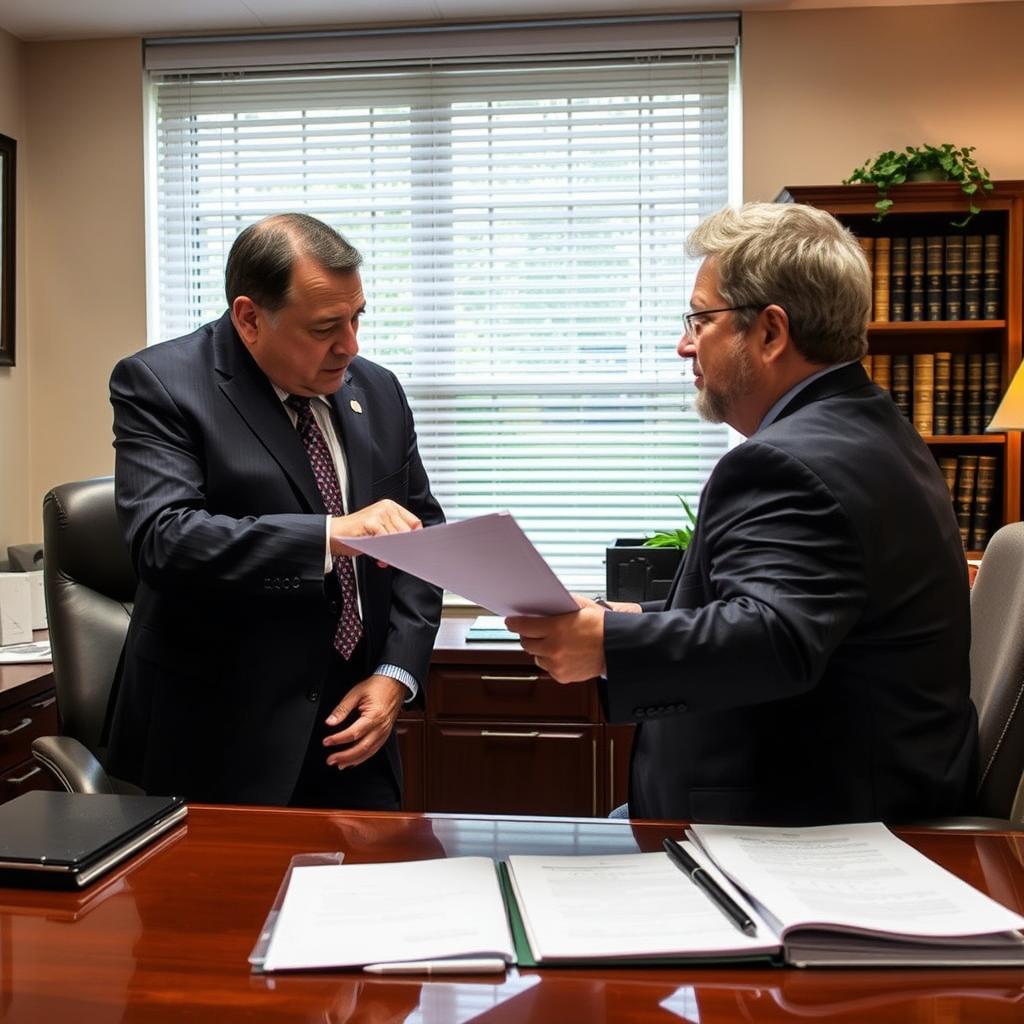
Money Laundering lawyer Fairfax County, VA
Federal money laundering charges under 18 U.S.C. § 1956 carry a maximum penalty of 20 years per count — and federal prosecutors in the Eastern District of Virginia (EDVA), which covers Fairfax County, pursue these cases actively. A conviction under this statute requires the government to prove that a financial transaction involved the proceeds of a specified unlawful activity and that the defendant acted with intent to promote further criminal conduct, conceal the source of funds, evade reporting requirements, or avoid a transaction‑reporting obligation. The U.S. Attorney’s Office in Alexandria prosecutes money laundering matters arising in Fairfax County, often in tandem with charges such as wire fraud, drug trafficking, or conspiracy. Because the federal system has no parole and the U.S. Sentencing Guidelines exert strong influence even after United States v. Booker, the stakes are exceptionally high. Law Offices Of SRIS, P.C. focuses its federal criminal defense practice in EDVA and throughout Virginia, bringing decades of combined experience to money laundering defense. For a consultation, call (888) 437‑7747.
Law Offices Of SRIS, P.C. – Advocacy Without Borders.
What Money Laundering Means in Fairfax County
Money laundering cases in Fairfax County fall under federal — not state — jurisdiction. The U.S. District Court for the Eastern District of Virginia, one of the fastest dockets in the country, hears these prosecutions at the Albert V. Bryan Courthouse in Alexandria, just minutes from Fairfax County. Federal investigative agencies, including the FBI, DEA, IRS‑Criminal Investigation, and Homeland Security Investigations, routinely target financial transactions that pass through Northern Virginia’s banks, businesses, and real‑estate markets. Because Fairfax County sits at the intersection of the Dulles Technology Corridor and the Washington, D.C., metropolitan economy, transactions of all sizes — from wire transfers to cryptocurrency exchanges — may draw federal scrutiny.
In practice, a money laundering charge in Fairfax County often accompanies an underlying “specified unlawful activity” such as wire fraud, health care fraud, narcotics distribution, or public corruption. Federal law does not require a separate conviction for the predicate offense; the government need only show that the funds derived from one of the statutorily enumerated crimes. The case proceeds under the Federal Rules of Criminal Procedure, usually beginning with a grand jury indictment. Pretrial motions, discovery disputes, suppression hearings, and negotiations under the U.S. Sentencing Guidelines all unfold in the Eastern District, where local practice and the court’s “rocket docket” reputation place a premium on early, strategic engagement by defense counsel. Law Offices Of SRIS, P.C. Appears regularly in EDVA and understands the procedural rhythms that affect money laundering prosecutions in this district.
How Mr. Sris and His Of Counsel Handle Money Laundering Cases
Defending a federal money laundering charge requires a coordinated response from the moment a target letter, search warrant, or subpoena surfaces. Mr. Sris and his Of Counsel begin by securing the client’s Fifth and Sixth Amendment rights during any investigative contact. The team then analyzes the government’s financial records, tracing the alleged illicit funds and examining whether the government can prove the required nexus between the transaction and a specified unlawful activity. Often, the defense will challenge the sufficiency of the tracing evidence, contest the mental state element (intent to conceal or promote), or argue that the transaction falls within a statutory safe harbor.
If an indictment is returned, the focus shifts to pretrial motion practice — seeking to suppress evidence obtained through flawed warrants, challenging the indictment’s specificity, or moving to exclude prejudicial financial summaries. Throughout the process, Mr. Sris and his Of Counsel engage with the U.S. Attorney’s Office to explore resolution options while simultaneously preparing every aspect of the case for trial. At sentencing, the team presents a comprehensive mitigation narrative under 18 U.S.C. § 3553(a), addresses the advisory Guidelines calculation, and argues for downward departures where applicable, such as acceptance of responsibility or, when authorized, substantial assistance under § 5K1.1.
About Mr. Sris and His Of Counsel Team
Mr. Sris, Owner and Founder of Law Offices Of SRIS, P.C., is a former prosecutor with extensive federal and state criminal trial experience. Since founding the firm in 1997, he has concentrated his practice on serious criminal defense, including federal money laundering, conspiracy, and fraud matters in the Eastern District of Virginia and across the Commonwealth. His Of Counsel team includes attorneys with dedicated federal case experience, and together they bring over 120 years of combined legal experience and have achieved 4,739+ documented firm-wide results. Results may vary.
Every federal matter is prepared with the same rigor — meticulous review of discovery, independent financial analysis, and readiness for trial. Mr. Sris and his Of Counsel appear regularly in EDVA for arraignments, detention hearings, pretrial conferences, and jury trials. The firm’s Fairfax Location, at 4008 Williamsburg Court, Fairfax, VA 22032, provides convenient access for clients in Fairfax County and Northern Virginia. Appointments are by appointment only; call (888) 437‑7747 to schedule.
Frequently Asked Questions
How do federal sentencing guidelines work in Fairfax County, Virginia, for a money laundering conviction?
Federal sentencing at U.S. District Court for the Eastern District of Virginia follows the U.S. Sentencing Guidelines — a points‑based calculation using the offense level and criminal history category. While advisory since Booker (2005), the Guidelines strongly influence the sentence. The base offense level for money laundering under § 2S1.1 is tied to the value of the laundered funds; enhancements apply for sophisticated means, leadership role, or obstruction. Mandatory minimums are not typical for standalone money laundering but may arise from predicate drug or fraud offenses. Acceptance of responsibility can reduce the offense level, and substantial assistance under § 5K1.1 may produce a below‑Guidelines sentence. There is no parole in the federal system.
What is the difference between state and federal money laundering charges?
Federal charges are prosecuted by the U.S. Attorney with generally harsher penalties and no parole. State money laundering statutes in Virginia exist (Va. Code § 18.2‑246.3) but are rarely charged; most financial‑crime prosecutions in Fairfax County proceed federally because of the broader investigative tools, interstate financial nexus, and heavier sentencing exposure. Federal conviction rates exceed 90%. Retaining an experienced federal defense attorney early is critical.
Do I need a federal criminal defense lawyer for a money laundering investigation in Fairfax County?
Yes. Federal investigations by the FBI, IRS‑CI, or DEA in Fairfax County can result in indictment if not addressed early. Retaining counsel before charges are filed can influence whether the case is charged, which charges are brought, and whether the client can cooperate under a proffer agreement. Federal practice has distinct rules — pretrial detention standards, discovery obligations, and sentencing procedures — that differ from Virginia state court. Early engagement with experienced federal counsel at Law Offices Of SRIS, P.C. is essential. Call (888) 437‑7747.
How does a Virginia lawyer defend against money laundering charges?
Defense strategies for federal money laundering in Virginia may include challenging the tracing of funds to a specified unlawful activity, contesting the government’s proof of intent, examining the reliability of financial records and witness testimony, and scrutinizing the legality of search warrants or electronic surveillance. In cases where the government’s evidence is strong, counsel may focus on negotiating a favorable plea to a lesser charge or securing cooperation credit. Each case turns on its unique financial trail and the specific conduct alleged. An experienced federal defense attorney evaluates all procedural and substantive avenues under 18 U.S.C. § 1956.
What should I do if I am facing money laundering charges in Fairfax County?
If you are facing money laundering charges in Fairfax County, contact a federal criminal defense attorney immediately. Do not discuss the case with anyone except your lawyer. Preserve all financial records, communications, and documents — do not destroy anything. Federal prosecutors move quickly in the Eastern District of Virginia, and the right legal strategy must be developed from the outset. Law Offices Of SRIS, P.C. can be reached 24 hours a day at (888) 437‑7747.
What is federal criminal court and how is it different from state court in Virginia?
Federal criminal cases in Virginia are prosecuted by U.S. Attorneys in U.S. District Court and carry harsher sentencing guidelines than state charges. There is no parole in the federal system. The rules of evidence, discovery, and procedure are governed by the Federal Rules of Criminal Procedure, not the Virginia Code. The Eastern District of Virginia operates a “rocket docket” — cases move faster than in many other districts. Law Offices Of SRIS, P.C. handles federal defense in EDVA and can explain the differences during a consultation: (888) 437‑7747.
Attorney advertising. Prior results do not guarantee a similar outcome.
Case results depend on a variety of factors unique to each case.
Results may vary.