
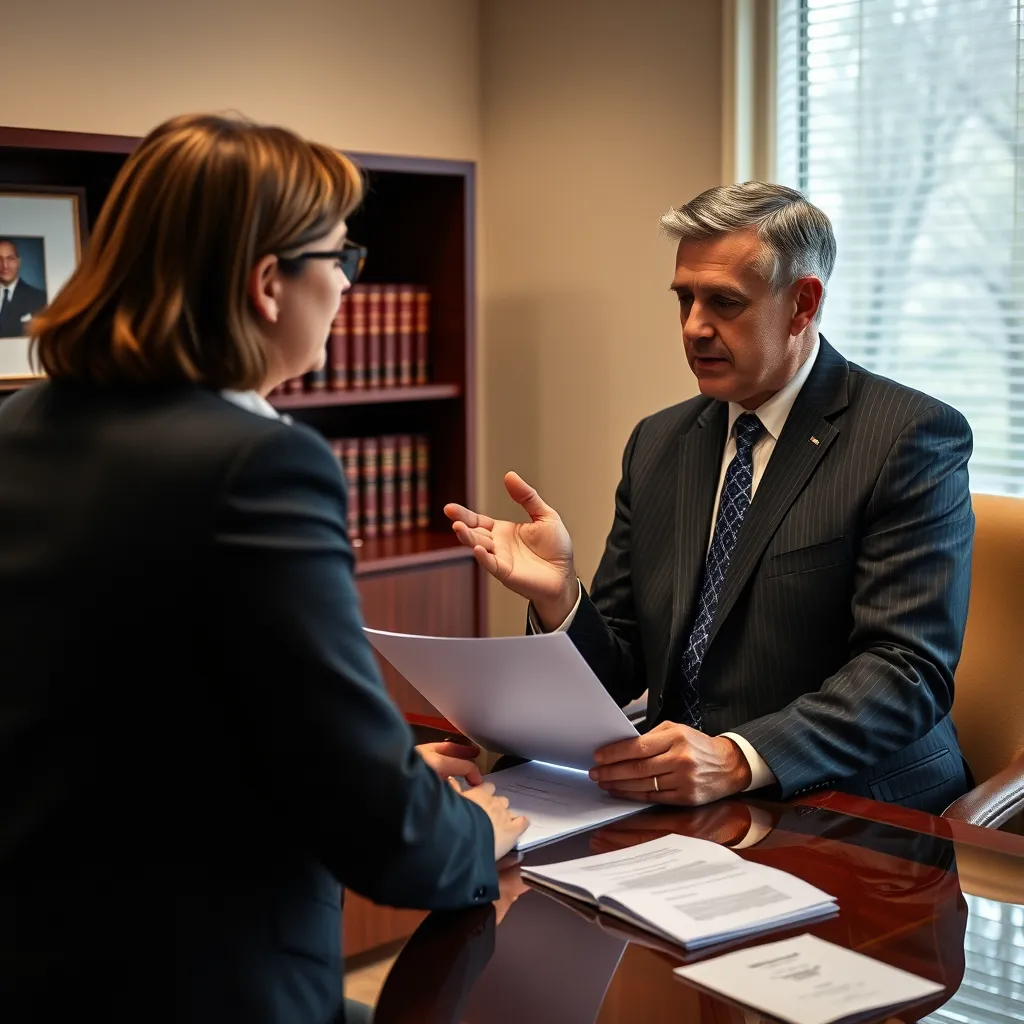
Recognition Of Foreign Divorce Lawyer Manassas Park, VA
When a marriage has ended through divorce proceedings in another country, a Virginia court may need to formally acknowledge the foreign decree before it can be given full legal effect in the Commonwealth. The process of recognition of a foreign divorce involves demonstrating to the court that the overseas proceeding was conducted fairly, that the issuing tribunal had proper jurisdiction, and that the outcome is consistent with Virginia public policy. In Manassas Park, these cases are heard at the Prince William County Circuit Court, located at 9311 Lee Avenue in Manassas, which serves the City of Manassas Park within the Thirty-first Judicial District. Law Offices Of SRIS, P.C. assists clients throughout the recognition process, from gathering certified documentation abroad to preparing a petition that presents the foreign decree in a form acceptable to the Virginia judiciary. Mr. Sris and his Of Counsel team bring substantial family law experience to these matters. To discuss your situation, reach Law Offices Of SRIS, P.C. at (888) 437-7747. Law Offices Of SRIS, P.C. – Advocacy Without Borders.
What Recognition Of Foreign Divorce Means in Manassas Park
Virginia courts apply the doctrine of international comity when deciding whether to honor a divorce decree from another country. Rather than re‑litigate the divorce grounds, the court examines whether the foreign tribunal had both subject‑matter and personal jurisdiction over the parties, and whether the divorce contravenes Virginia’s fundamental public policy. A divorce validly obtained abroad is presumptively entitled to recognition, but the petitioner bears the burden of establishing the decree’s authenticity and the foreign court’s jurisdictional basis. In the Manassas Park area, the Prince William County Circuit Court exercises original jurisdiction over all matters ancillary to divorce, including a petition to enforce or recognize a foreign dissolution.
The recognition inquiry is fact‑sensitive. Courts consider whether the foreign proceeding afforded the parties due process, whether any objection to jurisdiction was waived, and whether the divorce decree is final under the law of the issuing country. Because Virginia is an equitable distribution state under Va. Code § 20‑107.3, recognition of the divorce does not automatically resolve outstanding property‑division questions; if the foreign decree did not fully address marital assets, the parties may need to seek an equitable distribution order in the Virginia forum. Manassas Park residents who obtained a divorce abroad before relocating to Virginia often need recognition to remarry, to update estate plans, or to clarify their marital status for immigration purposes. Working with counsel familiar with the Circuit Court’s practices can help ensure the petition is supported by the documentation and legal argument the court expects.
How Mr. Sris and His Of Counsel Handle Recognition of Foreign Divorce Cases
Mr. Sris and his Of Counsel take a methodical approach to foreign‑divorce recognition matters. The first step is a thorough review of the overseas divorce decree and the law of the issuing country to assess whether the foreign court exercised jurisdiction that Virginia courts will respect. The team then identifies the documentation required to support the petition—certified copies of the decree, proof of service on the other party, certified translations when the decree is in a language other than English, and any evidence of the foreign court’s jurisdictional basis. Once the record is assembled, a petition is filed in the Prince William County Circuit Court seeking an order recognizing the foreign divorce.
If the other spouse is contesting recognition or if the foreign proceeding had procedural irregularities, the matter may require an evidentiary hearing. In those situations, counsel presents documentary evidence and argument to demonstrate that the foreign court’s process was fundamentally fair. When the foreign decree also addresses property division, Mr. Sris and his Of Counsel evaluate whether the division order is eligible for enforcement under the uniform act governing foreign‑country money judgments or through common‑law comity. Throughout the process, the team communicates with the client about what the court requires and what to expect at each stage. Every matter is handled with attention to the individual’s circumstances, and the firm works to achieve a practical resolution that allows the client to move forward.
About Mr. Sris and His Of Counsel Team
Mr. Sris, Owner and Founder of Law Offices Of SRIS, P.C., has practiced law since 1997 and is admitted in Virginia, Maryland, the District of Columbia, New Jersey, and New York. A former prosecutor, he brings a practical understanding of courtroom procedure to family law matters. Mr. Sris testified before the Virginia House Courts of Justice Committee in support of 2019 HB 635 (chief patron Del. David Bulova). He works alongside a team of experienced Of Counsel attorneys who concentrate in family law and related fields. Together, Mr. Sris and his Of Counsel bring over 120 years of combined legal experience, backed by 4,739+ documented firm-wide results. Results may vary.
Frequently Asked Questions
What is the legal standard for recognizing a foreign divorce decree in Virginia?
Virginia courts apply the principle of comity when deciding whether to give effect to a divorce obtained in another country. The petitioner must show that the foreign tribunal had proper jurisdiction over the parties and the subject matter, and that the divorce is not repugnant to Virginia public policy. The decree is presumed valid if the foreign proceeding provided fundamental fairness and due process. The burden lies with the party seeking recognition to present certified documentation and proof of jurisdiction. Because each matter turns on its own facts, working with an attorney experienced in international family law matters can help present the strongest possible petition under Virginia law.
Do I need a Virginia lawyer to seek recognition of my foreign divorce?
You are not required to hire an attorney, but navigating the recognition process without legal guidance can be challenging. The Prince William County Circuit Court expects a properly drafted petition supported by authenticated documents, translations if needed, and persuasive legal argument. A lawyer familiar with the court’s procedures can help gather the necessary evidence, anticipate potential objections, and present the matter efficiently. For many clients, the peace of mind that comes from having counsel handle service issues, certified‑document requirements, and the hearing itself makes the investment worthwhile. Consultations are available by appointment at (888) 437‑7747.
How does the recognition process work in the Manassas Park area?
A petition for recognition of a foreign divorce is filed with the Prince William County Circuit Court at 9311 Lee Avenue in Manassas. The court schedules a hearing, at which the petitioner presents certified copies of the foreign decree and any supporting evidence. If the other spouse resides abroad and service of process is necessary, counsel can discuss options that comply with the Hague Service Convention or Virginia’s alternative‑service rules. Once the judge determines that the foreign decree meets the comity standard, an order recognizing the divorce is entered. The timeline varies depending on court scheduling and whether the matter is contested.
What documents are typically needed to seek recognition of a foreign divorce in Virginia?
The core document is a certified copy of the foreign divorce decree, often with an apostille or the equivalent certification. If the decree is in a language other than English, a certified translation must accompany the petition. Proof that the respondent was served with process in the foreign proceeding is also relevant, as it helps establish that the foreign court had personal jurisdiction. Additional evidence, such as a certificate of no appeal or an affidavit from foreign counsel regarding the finality of the decree, may be requested by the court. An attorney can identify the specific documents that the Circuit Court will expect based on the country where the divorce was granted.
Can a foreign divorce be recognized if the divorce was not obtained on no‑fault grounds?
Yes. A foreign divorce based on fault grounds—such as adultery or cruelty—may still be recognized in Virginia as long as the proceeding was conducted under a legal framework that is fundamentally fair and does not violate Virginia’s core public policy. The critical inquiry is not the label the foreign jurisdiction used for the divorce grounds, but whether the court had jurisdiction and afforded due process. If the foreign divorce was granted on a basis that would be completely impermissible under Virginia law, a judge may decline recognition, but such situations are uncommon. Each case is evaluated on its own merits.
Once the foreign divorce is recognized, what happens with property division?
Recognition of a foreign divorce decree determines marital status—the parties are no longer married—but it does not automatically settle all financial matters. If the foreign decree included a property‑division order, that order may be enforced in Virginia through a separate proceeding under comity or the Uniform Foreign‑Country Money Judgments Recognition Act, provided the foreign court had jurisdiction and the order is final. If the foreign divorce did not address property, one spouse may file a complaint for equitable distribution under Va. Code § 20‑107.3 in the Circuit Court. Because property‑division issues can be complex, it is advisable to discuss the specific facts with counsel.
Family law representation in adjacent communities: Fairfax County family lawyer • Fairfax City family lawyer • Falls Church family lawyer • Prince William County family lawyer • Manassas City family lawyer
Virginia legal resources: Virginia Code Title 20 (Domestic Relations) • SCC Business Entity Filings • Virginia Courts
Attorney advertising. Prior results do not guarantee a similar outcome. Results may vary.
Case results depend on a variety of factors unique to each case.