
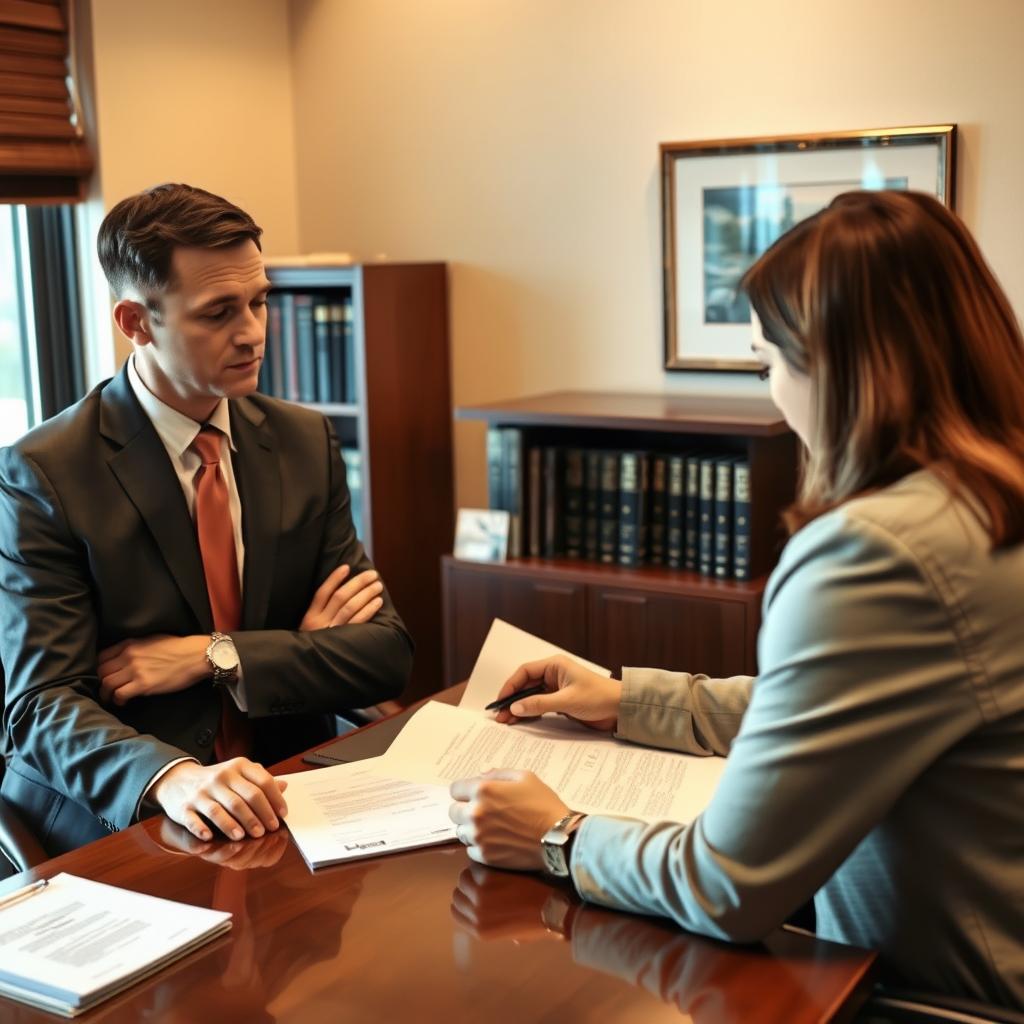
Refusal Lawyer Fairfax, VA
If you refused a breath or blood test after a DUI stop in Fairfax, Virginia, your driver’s license is at immediate risk. Under Virginia’s implied consent law, a refusal can trigger a civil license suspension—and, depending on your record, a criminal charge. The attorneys at Law Offices Of SRIS, P.C. represent clients facing refusal allegations at the Fairfax County General District Court and the Fairfax City General District Court. Mr. Sris and his Of Counsel bring extensive combined legal experience to refusal cases, and they work to challenge the refusal finding and protect your driving privileges. To discuss your situation, reach Law Offices Of SRIS, P.C. at (888) 437-7747. Law Offices Of SRIS, P.C. – Advocacy Without Borders.
What Breath Test Refusal Means in Fairfax, Virginia
Virginia law treats a refusal to submit to a breath or blood test as a separate legal proceeding from any underlying DUI charge. Under Va. Code § 18.2‑268.3, every driver who operates a motor vehicle on a Virginia public highway is deemed to have consented to a chemical test after a lawful DUI arrest. When an officer has probable cause and follows the statutory procedures, an unreasonable refusal triggers immediate administrative consequences. The case is heard in the General District Court of the jurisdiction where the stop occurred—for many Fairfax drivers, that means the Fairfax County General District Court on Chain Bridge Road or the Fairfax City General District Court on Armstrong Street.
Because a refusal case involves both an administrative license suspension and a potential criminal charge, a single court date can affect two separate tracks. The suspension period, the driver’s record, and the possibility of jail time all depend on the offense number and the specifics of the stop. The firm’s attorneys regularly appear at both Fairfax County and Fairfax City courts and understand how the local judiciary handles refusal dockets.
Under Va. Code § 18.2‑268.3, a first-offense unreasonable refusal is a civil violation resulting in a one-year license suspension; a second offense within 10 years is a Class 2 misdemeanor; and a third or subsequent offense is a Class 1 misdemeanor carrying up to 12 months in jail and a $2,500 fine.
Source: Va. Code § 18.2‑268.3. Virginia Law
Reviewed by Mr. Sris, admitted in VA/MD/DC/NJ/NY.
How Mr. Sris and His Of Counsel Handle Refusal Cases
Refusal cases hinge on whether the officer followed the precise steps required by the implied consent statute. Mr. Sris and his Of Counsel examine the traffic stop, the arrest, and the reading of the refusal form to identify procedural deficiencies. If the officer failed to give a complete advisory, lacked probable cause to make the arrest, or did not properly document the refusal, the civil suspension may be challenged. The same analysis applies if a criminal refusal charge has been brought.
The process at the Fairfax County General District Court or Fairfax City General District Court generally begins with an arraignment and a bench trial date set by the court. Because a refusal case may proceed alongside a DUI charge, the firm’s attorneys work to coordinate defenses so that the outcome of one proceeding does not harm the other. Throughout the case, Mr. Sris and his Of Counsel pursue a strategy aimed at preserving the client’s driving privileges and minimizing points, fines, and any risk of incarceration.
About Mr. Sris and His Of Counsel Team
Law Offices Of SRIS, P.C. was founded in 1997 by Mr. Sris, a former prosecutor who now leads the firm as Owner and Founder. He is admitted in Virginia, Maryland, the District of Columbia, New Jersey, and New York. Mr. Sris testified before the Virginia House Courts of Justice Committee in support of 2019 HB 635 (chief patron Del. David Bulova). His background as a former prosecutor informs the firm’s approach to traffic and criminal defense matters.
Mr. Sris and his Of Counsel bring extensive combined legal experience to refusal and traffic cases. The Of Counsel attorneys have firsthand experience from prior roles in prosecution and law enforcement, which provides valuable insight when evaluating the evidence in a refusal matter. The firm’s Fairfax location serves clients from Fairfax City, Fairfax County, and surrounding Northern Virginia communities. Results may vary.
Frequently Asked Questions
What is a breath test refusal in Virginia?
A breath test refusal in Virginia is a driver’s failure to submit to a chemical test after being arrested for DUI, as required by the implied consent law (Va. Code § 18.2‑268.3). The refusal is treated as a separate legal matter. A first refusal results in an automatic one-year administrative license suspension. A second refusal within ten years is a criminal misdemeanor, and a third or subsequent refusal is a Class 1 misdemeanor that carries the possibility of jail time and a permanent criminal record.
Can I still drive after a refusal in Fairfax?
After a refusal, your license is suspended administratively, but you may be able to request a restricted license depending on your record and the circumstances. The administrative suspension is separate from any criminal charge. An experienced attorney can review whether the refusal was properly documented and whether you qualify for a restricted license that allows driving to work, school, or medical appointments. The court decides eligibility based on the facts of the case.
Do I need a lawyer for a refusal case in Fairfax?
You are not required to hire an attorney, but a refusal case has serious consequences—license suspension, fines, and potentially a criminal record—and defending it without legal representation is risky. An attorney can examine whether the stop and arrest were legal, whether the officer complied with the implied consent procedure, and whether the refusal form was correctly read. Because a refusal often accompanies a DUI charge, having counsel coordinate both matters can help protect your driving record and reduce total penalties.
What happens at a refusal hearing in Fairfax General District Court?
The hearing is typically a bench trial before a General District Court judge, where the Commonwealth must prove that the arrest was lawful, the officer advised you of the implied consent law, and you unreasonably refused the test. The judge hears evidence from the officer and may consider your testimony and any relevant documents. If the refusal is found to be unreasonable, the court enters the civil suspension and, for second or later offenses, may impose a criminal sentence. An attorney can cross-examine the officer and present evidence challenging the refusal finding.
How long does a refusal license suspension last in Virginia?
A first-offense unreasonable refusal results in a one-year license suspension under Va. Code § 18.2‑268.3. Subsequent refusals carry longer suspensions and may add jail time. The suspension begins immediately when the Division of Motor Vehicles processes the refusal paperwork. A restricted license may be available, but eligibility varies. Because the suspension is administrative, it is separate from any DUI-related suspension. Consulting an attorney early can help you explore options for limited driving privileges.
What should I do immediately after being cited for refusal in Fairfax?
Contact a traffic attorney at once and request a copy of the police report and the refusal form from the officer. Do not discuss the case with anyone except your lawyer. The clerk’s office will schedule a court date at either the Fairfax County General District Court or the Fairfax City General District Court, depending on where the stop occurred. The timeline for filing motions is short, so it is important to seek legal guidance promptly. For a consultation, reach Law Offices Of SRIS, P.C. at (888) 437-7747.
Traffic lawyer Fairfax County, VA ·
Traffic lawyer Fairfax City, VA ·
DUI lawyer Fairfax, VA ·
Reckless driving lawyer Fairfax, VA
Virginia Code § 18.2‑268.3 — Implied consent and refusal penalties ·
Virginia Judicial System — Court schedules and information
Attorney advertising. Prior results do not guarantee a similar outcome. Results may vary.
Reviewed by Mr. Sris, Owner and Founder. Admitted in Virginia, Maryland, District of Columbia, New Jersey, and New York. Practicing since 1997.
Case results depend on a variety of factors unique to each case.