
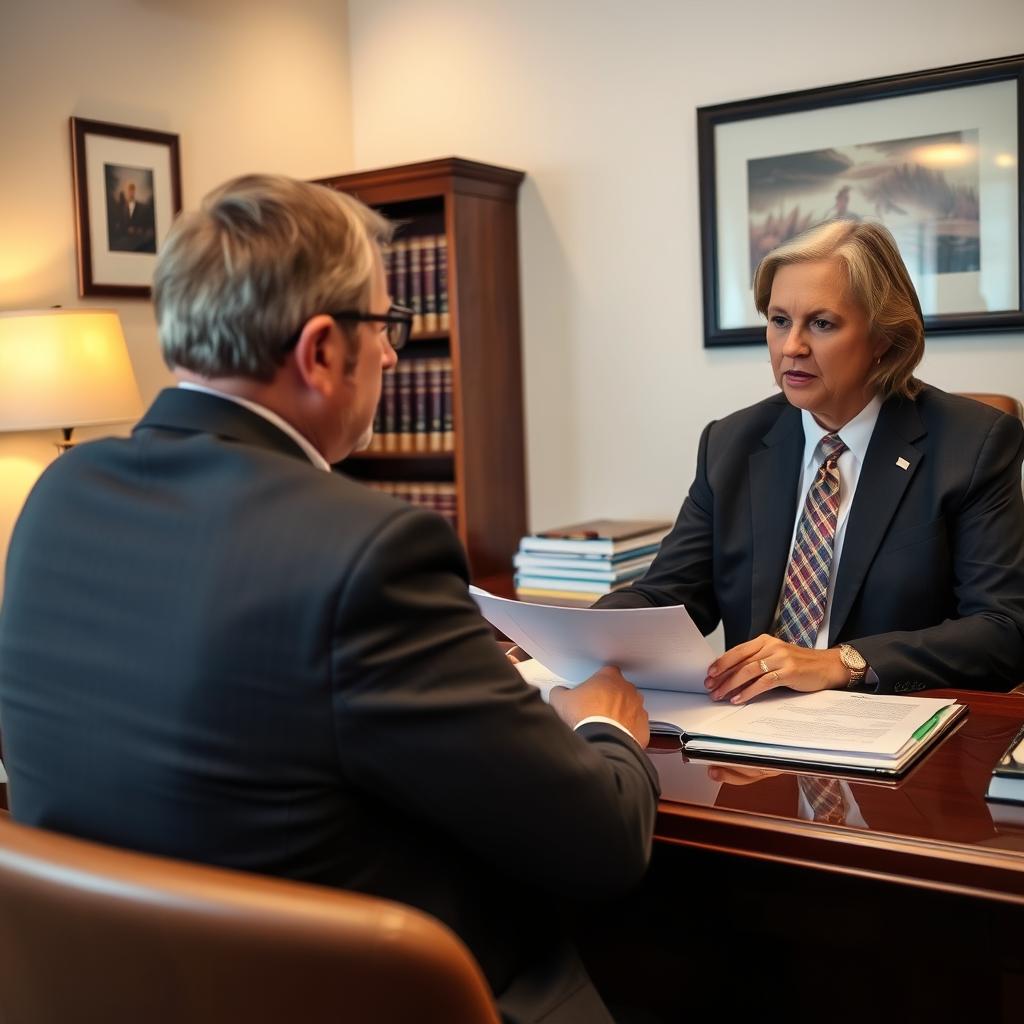
Retirement Account Division Lawyer Fairfax County, VA
Dividing retirement accounts during a divorce in Fairfax County, Virginia, requires careful attention to state equitable‑distribution rules. Whether the assets include a 401(k), IRA, military pension, or a government defined‑benefit plan, the classification, valuation, and division of those accounts can affect long‑term financial stability. Mr. Sris and his Of Counsel at Law Offices Of SRIS, P.C. represent spouses in Fairfax County and throughout Virginia in matters involving retirement account division. They work to identify the marital share of each account, pursue qualified domestic relations orders where necessary, and present the financial picture to the court under Virginia Code § 20‑107.3. For a consultation about your retirement‑division concerns, call (888) 437‑7747. Law Offices Of SRIS, P.C. – Advocacy Without Borders.
How Retirement Account Division Works in Fairfax County, Virginia
Virginia is an equitable‑distribution state, not a community‑property state. When a marriage ends, the Fairfax County Circuit Court—which has exclusive jurisdiction over divorce and property division—identifies which assets are marital, which are separate, and how they should be divided fairly. Retirement accounts earned during the marriage are generally considered marital property, while the portion accumulated before marriage or after separation may be separate. The court considers the statutory factors in Virginia Code § 20‑107.3, along with contributions of each spouse, the length of the marriage, and the tax consequences of any division.
Many retirement plans cannot be divided by a simple court order. A qualified domestic relations order—often called a QDRO—is typically required for plans governed by the Employee Retirement Income Security Act, such as 401(k)s and traditional pensions. The QDRO instructs the plan administrator to pay a portion of the benefits directly to the former spouse. IRAs, by contrast, can often be transferred incident to divorce without a QDRO, but the timing and documentation still demand precision. Military retirement pay is handled under the Uniformed Services Former Spouses’ Protection Act, while federal civil‑service pensions follow separate statutory frameworks. Mr. Sris and his Of Counsel evaluate the specifics of each plan and prepare the necessary orders for submission to the Fairfax County Circuit Court.
Frequently Asked Questions
What is retirement account division in a Fairfax County divorce?
Retirement account division is the process of identifying, valuing, and assigning the marital share of pensions, 401(k)s, IRAs, military retirement, and deferred‑compensation plans when a marriage is dissolved. Under Virginia Code § 20‑107.3, the Fairfax County Circuit Court classifies the accounts, determines what portion was earned during the marriage, and distributes that portion equitably. The court may also order a QDRO to implement the division for certain types of plans.
Does Virginia law treat all retirement accounts the same way?
No. Defined‑contribution plans such as 401(k)s and 403(b)s are valued as of the date of the evidentiary hearing or a mutually agreed date, while defined‑benefit pensions require a calculation of the marital coverture fraction. IRAs can usually be transferred by court order without a separate QDRO, but careful tax reporting is necessary. Military retirement is governed by the 10‑year rule for direct payment, and federal civil‑service benefits follow the Office of Personnel Management’s procedures. Each type of account is approached differently.
What is a QDRO, and when is one needed in Fairfax County?
A qualified domestic relations order is a court order that assigns a portion of an ERISA‑governed retirement plan to an alternate payee—typically the former spouse. In Fairfax County divorces, a QDRO is required for 401(k)s, most corporate pensions, and some 403(b) plans. The order must be approved by the plan administrator after it is signed by a judge. Mr. Sris and his Of Counsel draft QDROs that comply with both Virginia law and the plan’s requirements.
How is the marital share of a retirement account calculated?
The marital share is generally the portion earned during the marriage. For a defined‑contribution plan, the account balance on the date of marriage is subtracted from the balance on the valuation date, and any passive gains or losses during that period are factored in. For a defined‑benefit pension, the marital share is often expressed as a coverture fraction: the number of months the plan was earned during the marriage over the total months of service. The court then applies equitable‑distribution factors to decide how much of the marital share each spouse receives.
Can retirement accounts be divided without a QDRO in Virginia?
In some cases, yes. IRAs can be divided through a transfer incident to divorce, documented by the divorce decree without a separate QDRO. Additionally, spouses may agree to offset the value of a retirement account by awarding other assets of equivalent value—such as equity in the marital home—instead of splitting the account itself. This approach can simplify the property division and avoid QDRO expenses, but it requires careful valuation to ensure the exchange is equitable.
What if my spouse’s retirement account was started before our marriage?
Only the portion earned during the marriage is marital property. The pre‑marital portion remains the account holder’s separate property. However, any appreciation on that separate portion during the marriage is also separate if it is passive; active appreciation generated by marital effort may be considered marital. In Fairfax County, a forensic analysis or tracing may be needed to separate the pre‑marital and marital components, particularly for complex plans or high‑net‑worth estates.
How does military retirement division work in Fairfax County?
Military retired pay is divided under the Uniformed Services Former Spouses’ Protection Act. For direct payment from the Defense Finance and Accounting Service, the marriage must have lasted at least ten years overlapping with at least ten years of creditable military service. Even if direct payment is not available, the court can still award a share of the retirement as part of equitable distribution and order the service member to pay it directly. Mr. Sris and his Of Counsel work with military families to secure the former spouse’s interest.
What about federal civilian pensions like FERS or CSRS?
Federal Employees Retirement System and Civil Service Retirement System benefits are divided through a court order acceptable for processing by the Office of Personnel Management. The order must meet specific regulatory requirements, including the formula for the former spouse’s share and provisions for survivor benefits. Mr. Sris and his Of Counsel prepare orders that comply with OPM’s rules and coordinate with the agency to ensure proper administration.
Do I need an attorney to handle retirement division in my Fairfax County divorce?
While Virginia law does not require an attorney, retirement division involves complex statutory and plan‑specific rules. Mistakes in a QDRO, a valuation miscalculation, or a missed asset can cause significant financial harm that is difficult to fix after the divorce is final. An experienced family‑law attorney can help ensure that the division is properly documented and that your rights under Virginia Code § 20‑107.3 are protected. For guidance on your specific situation, reach Law Offices Of SRIS, P.C. at (888) 437‑7747.
How can a Fairfax County lawyer help with hidden or undervalued retirement assets?
Discovery in a divorce includes the right to obtain account statements, plan documents, and employment records. If one spouse conceals a retirement account or undervalues it, an attorney can subpoena records, depose the account holder, and if necessary retain a forensic accountant to trace the assets. In Fairfax County Circuit Court, the court may consider a spouse’s failure to disclose as a factor in the equitable‑distribution analysis and may award a larger share of the known assets to the other spouse.
About Mr. Sris and His Of Counsel Team
Mr. Sris, Owner and Founder of Law Offices Of SRIS, P.C., has practiced family law since 1997. He is a former prosecutor and testified before the Virginia House Courts of Justice Committee in support of 2019 HB 635 (chief patron Del. David Bulova), which revised the equitable‑distribution statute addressing retirement‑plan division. Mr. Sris and his Of Counsel bring over 120 years of combined legal experience and have achieved 4,739+ documented firm-wide results. Results may vary. They represent clients in Fairfax County Circuit Court and throughout Virginia on matters involving retirement accounts, QDROs, and complex property division. To discuss the details of your matter, contact Law Offices Of SRIS, P.C. at (888) 437‑7747.
Primary‑source authority: Virginia Code Title 20 (Domestic Relations) · Fairfax County Circuit Court · Va. Code § 20‑107.3 (Equitable Distribution)
Attorney advertising. Prior results do not guarantee a similar outcome. Results may vary.
Case results depend on a variety of factors unique to each case.