
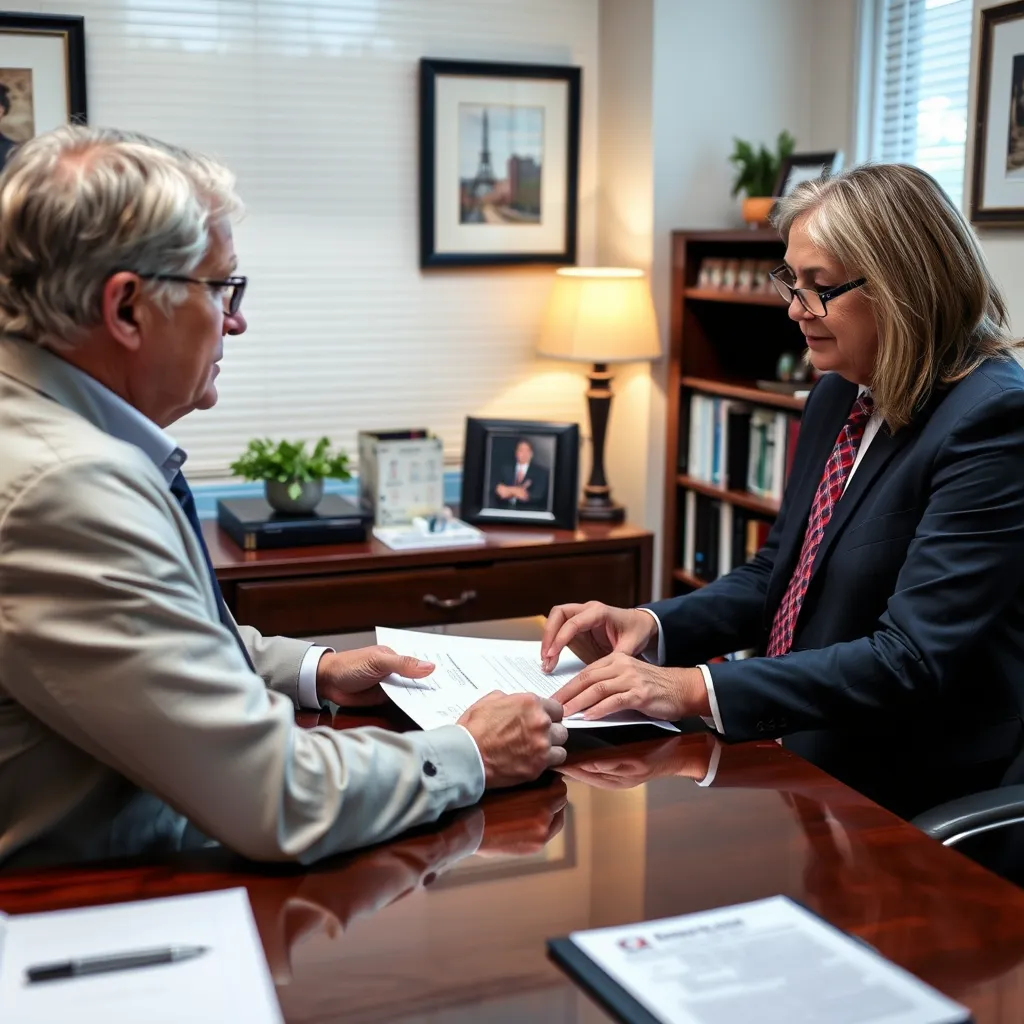
Retirement Account Division Lawyer Fairfax, VA
When a marriage ends in Fairfax, Virginia, dividing retirement accounts requires a clear understanding of Virginia’s equitable distribution statutes and the local court practices that shape how pensions, 401(k)s, IRAs, and other retirement assets are valued and distributed. At Law Offices Of SRIS, P.C., Mr. Sris and his Of Counsel concentrate a substantial portion of their family law practice on the division of retirement accounts in divorce proceedings, working with clients throughout Fairfax and the surrounding communities to identify and protect marital retirement interests. Because retirement division involves both property classification under Va. Code § 20-107.3 and the procedural requirements for Qualified Domestic Relations Orders, having experienced counsel who understands how Fairfax County Circuit Court handles these matters can make a significant difference. To discuss the division of your retirement accounts, reach Law Offices Of SRIS, P.C. at (888) 437-7747. Law Offices Of SRIS, P.C. – Advocacy Without Borders.
What Retirement Account Division Means in Fairfax, Virginia
Virginia is an equitable distribution state, not a community property state. Under Va. Code § 20-107.3, the court classifies property as marital, separate, or hybrid and then divides the marital estate fairly—though not necessarily equally—after considering eleven statutory factors. Retirement accounts accrued during the marriage are generally treated as marital property subject to division, while contributions made before marriage or after separation may be separate property. In Fairfax, all divorce, equitable distribution, and spousal support matters proceed in the Fairfax County Circuit Court, located at 4110 Chain Bridge Road, Fairfax, VA 22030. Matters involving standalone custody, visitation, child support, and protective orders are heard in the Fairfax County Juvenile and Domestic Relations District Court.
The division of retirement accounts frequently requires a Qualified Domestic Relations Order (QDRO) for plans governed by the Employee Retirement Income Security Act (ERISA). The QDRO instructs the plan administrator to pay a portion of the benefits directly to the alternate payee (the former spouse). For non-ERISA plans—such as government pensions, military retirement, and many IRAs—different instruments or procedures may apply. Mr. Sris and his Of Counsel work with financial professionals familiar with Fairfax County courts to prepare QDROs and other division instruments that comply with Virginia law and the requirements of the specific retirement plan. Because the Fairfax County Circuit Court retains jurisdiction over equitable distribution until a QDRO is accepted by the plan and approved by the court, the process requires careful attention to detail.
How Mr. Sris and His Of Counsel Handle Retirement Division Cases
When a client comes to the firm with retirement accounts at issue, Mr. Sris and his Of Counsel take a step-by-step approach. First, they identify all retirement assets held by both spouses—401(k) and 403(b) accounts, traditional and Roth IRAs, SEP and SIMPLE plans, federal and military pensions, state and local government retirement systems, and deferred compensation arrangements. They then work with the client to determine the marital and separate portions of each account using historical statements and plan-specific formulas. If the account includes both pre-marital and marital contributions, tracing and valuation are essential to ensure that only the marital portion is subject to division.
Next, the attorney evaluates whether division is appropriate under the eleven equitable distribution factors set out in Va. Code § 20-107.3(E), including the duration of the marriage, the contributions of each spouse to the well-being of the family, and the tax consequences of each proposed distribution method. In many cases, the parties can reach agreement on the division of retirement accounts through negotiation or mediation, and the resulting agreement is incorporated into a property settlement agreement. When agreement is not possible, Mr. Sris and his Of Counsel present the valuation evidence and advocate for a division that reflects the client’s interests at trial in the Fairfax County Circuit Court.
About Mr. Sris and His Of Counsel Team
Mr. Sris, Owner and Founder of Law Offices Of SRIS, P.C., has practiced family law in Virginia since founding the firm in 1997. He is admitted in Virginia, Maryland, the District of Columbia, New Jersey, and New York. Mr. Sris testified before the Virginia House Courts of Justice Committee in support of 2019 HB 635 (chief patron Del. David Bulova), which revised the equitable distribution statute governing retirement plan division. His experience with the legislative and practical aspects of retirement account division guides the firm’s representation of clients in Fairfax.
Mr. Sris is supported by a team of Of Counsel attorneys who concentrate in family law and related practice areas. Together, Mr. Sris and his Of Counsel bring over 120 years of combined legal experience. Results may vary. Mr. Sris and his Of Counsel have documented 4,739+ case results across all practice areas since 1997.
Frequently Asked Questions
How are retirement accounts divided in a Virginia divorce?
In Virginia, retirement accounts are divided through the equitable distribution process under Va. Code § 20-107.3. The Fairfax County Circuit Court classifies the accounts as marital or separate, determines the marital share, and then divides the marital portion fairly after considering statutory factors. For ERISA plans, a Qualified Domestic Relations Order (QDRO) is typically required. For non-ERISA plans such as government pensions or IRAs, different procedures apply. An experienced family law attorney can help you understand how the law applies to your specific accounts and work toward a fair division.
Do I need a QDRO to divide a 401(k) in Fairfax?
Generally, yes. Most private-employer retirement plans, including 401(k) and 403(b) accounts, are governed by ERISA and require a QDRO to divide benefits incident to divorce. The QDRO must meet both the plan’s requirements and Virginia law. The Fairfax County Circuit Court supervises QDROs in divorce matters and must approve the order before it is submitted to the plan administrator. Working with an attorney who understands both the state-law framework and the plan-specific rules can help avoid delays and post-divorce disputes.
What happens to a military pension in a Fairfax divorce?
Military retirement pay is treated as marital property subject to division under the Uniformed Services Former Spouses’ Protection Act (USFSPA). A Fairfax court may divide the marital portion of a service member’s disposable retired pay as part of equitable distribution. The division is accomplished through a court order that meets the requirements of the Defense Finance and Accounting Service (DFAS). Because Virginia is an equitable distribution state, division is based on fairness, not automatic 50-50 division. Mr. Sris and his Of Counsel have experience with military divorce and can address the intersection of USFSPA and Virginia law.
Can retirement accounts be divided without going to court?
Yes. Many spouses in Fairfax resolve retirement account division through negotiation or mediation and incorporate the terms into a written separation agreement. The agreement can specify how each account will be divided, how the marital share will be calculated, and who will prepare any required QDROs. The agreement is then presented to the Fairfax County Circuit Court for approval as part of the uncontested divorce. Reaching an agreement can reduce the time and expense associated with litigation, but it is important to work with counsel who can ensure the agreement adequately protects your retirement interests.
How is the marital portion of a retirement account calculated?
Virginia courts generally measure the marital portion of a defined-contribution account by comparing the account balance at the start of the marriage to the balance at the date of separation—or sometimes the date of the divorce hearing. Any increase in value during the marriage that is attributable to contributions or passive growth is classified as marital property. For defined-benefit plans such as pensions, the marital share is often expressed as a fraction based on the number of months the marriage overlapped with the service period. The specific method depends on the plan type and the facts of the case.
Are IRAs divided the same way as 401(k) plans?
Not exactly. Individual retirement accounts (IRAs) are not governed by ERISA and do not require a QDRO. Instead, an IRA can be divided through a transfer incident to divorce executed under the plan administrator’s procedures. Virginia law treats IRA assets as personal property and subjects them to equitable distribution in the same manner as other marital property. However, the tax treatment of IRA transfers differs from QDRO distributions, and it is important to structure the transfer correctly to avoid unintended tax consequences.
What if my spouse tries to hide a retirement account?
Virginia law imposes a duty of full and frank disclosure in divorce proceedings. If one spouse fails to disclose a retirement account or undervalues it intentionally, the Fairfax County Circuit Court can impose sanctions, award attorney fees, and adjust the property division to account for the concealed asset. Discovery tools, including interrogatories and subpoenas for plan records, can be used to uncover hidden retirement assets. Mr. Sris and his Of Counsel work with forensic accountants and financial attorneys when necessary to trace retirement assets and ensure full disclosure.
Does Virginia law favor a 50-50 split of retirement accounts?
No. Virginia is an equitable distribution state, not a community property state. There is no presumption of a 50-50 split. The Fairfax County Circuit Court divides marital property—including retirement accounts—in a manner the court considers fair after evaluating the eleven statutory factors listed in Va. Code § 20-107.3(E). These factors include the duration of the marriage, the contributions of each spouse to the family, the reasons for the divorce, and the tax consequences of the division. The outcome varies based on the specific circumstances of each case.
When should I hire a lawyer for retirement account division?
As soon as you are considering divorce or have been served with divorce papers in Fairfax, it is a good idea to consult with a family law attorney who concentrates in retirement account division. Early involvement allows your lawyer to preserve records, identify all accounts, and guide you on financial decisions during the separation period that could affect the valuation of retirement assets. Attempting to negotiate a division without legal advice can result in orders that cannot be implemented by the plan administrator or that have unintended tax consequences.
If you have questions about dividing a retirement account in Fairfax, reach Law Offices Of SRIS, P.C. at (888) 437-7747 to request a consultation.
See more family law resources: Family Law Lawyer Fairfax County – Complex Property Division Lawyer Fairfax – Business Asset Division Lawyer Fairfax
Official sources: Virginia Code Title 20 (Domestic Relations) – Fairfax County Circuit Court – Va. Code § 20-107.3 Equitable Distribution
Attorney advertising. Prior results do not guarantee a similar outcome. Case results depend on a variety of factors unique to each case. Results may vary.