
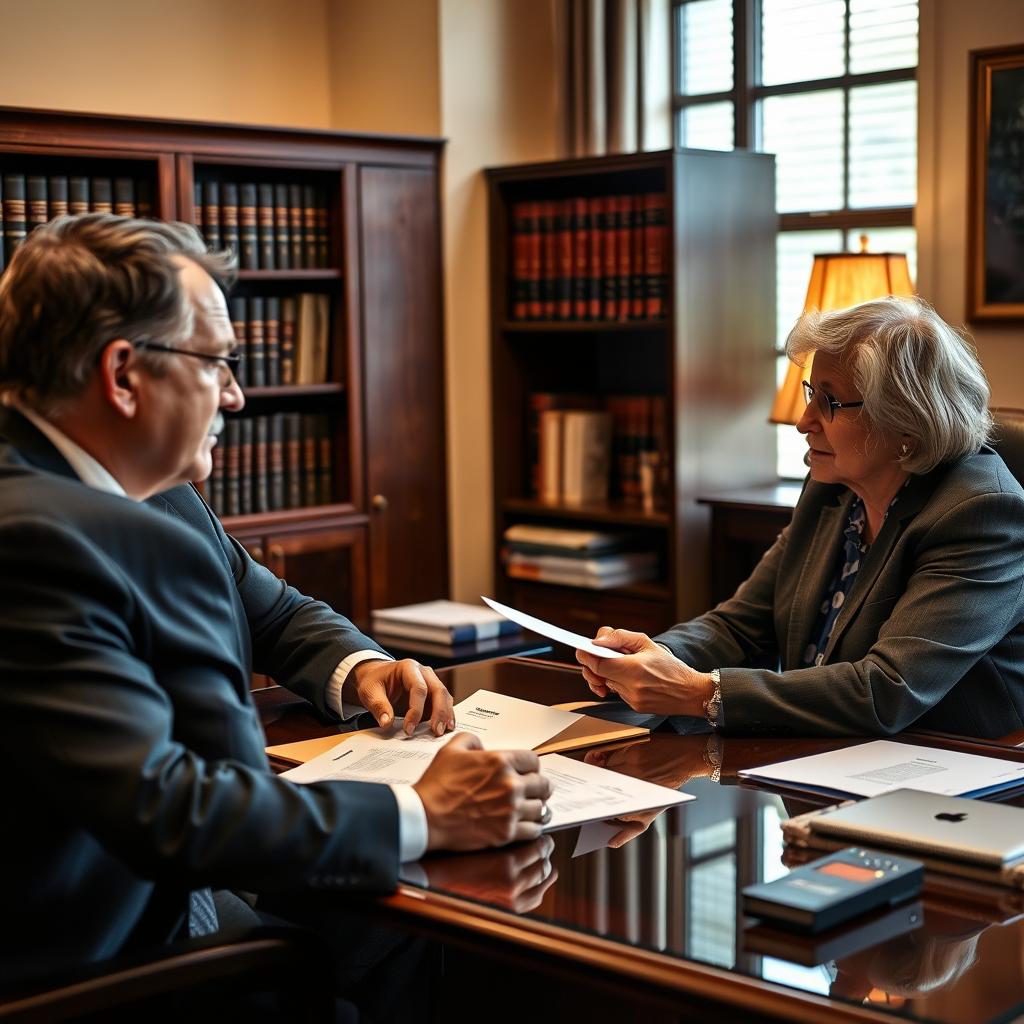
Retirement Account Division Lawyer Loudoun County, VA
When a Virginia marriage ends, the division of retirement accounts like 401(k)s, IRAs, government pensions, and military retirement benefits can raise some of the most significant financial issues in the divorce. These assets frequently represent a substantial share of a couple’s marital wealth, and the rules that govern how they are valued, classified, and divided are spelled out in Virginia’s equitable distribution statute—Va. Code § 20-107.3. The Loudoun County Circuit Court, located at 18 East Market Street in Leesburg, has exclusive jurisdiction over divorce and property division cases. At Law Offices Of SRIS, P.C., Mr. Sris and his Of Counsel handle retirement-account-division matters throughout Loudoun County, including Ashburn, Sterling, Leesburg, Purcellville, South Riding, Brambleton, and the surrounding communities. They work to help clients protect their fair share of marital retirement assets while navigating the technical requirements of qualified domestic relations orders (QDROs), the 2019 revisions to Va. Code § 20-107.3(g), and the practical challenges that arise when one spouse’s retirement plan is governed by federal law. To discuss how your retirement accounts might be treated in a Loudoun County divorce, call (888) 437-7747. Law Offices Of SRIS, P.C. – Advocacy Without Borders.
How Retirement Accounts Are Divided in Virginia Divorce
Virginia is an equitable distribution state, not a community property state. That means the court divides marital property fairly, but not necessarily equally, after applying the eleven statutory factors listed in Va. Code § 20-107.3. Retirement accounts are treated as a form of property subject to division if they were accumulated, at least in part, during the marriage. The court first classifies each account as marital, separate, or hybrid. Contributions made before the marriage, and any growth on those premarital contributions that can be traced, are generally separate property and not subject to division. Contributions made during the marriage—together with associated earnings—are marital property, even if only one spouse’s name is on the account. Once the marital share is determined, the court can order a division by directing a percentage of the account to be paid to the non-employee spouse. For many private-sector plans, this requires a QDRO. For federal civil-service pensions, a court order acceptable for processing by the Office of Personnel Management is needed. Military pensions are divided under the Uniformed Services Former Spouses’ Protection Act and require a special form of order.
Loudoun County divorces involving retirement assets often require careful coordination with plan administrators, actuaries, and, in complex cases, forensic accountants. The Circuit Court at 18 East Market Street, Leesburg, has seen a growing number of high-net-worth cases in which the values at stake—especially with tech-sector 401(k)s, government thrift savings plans, and defined-benefit pensions—can run into six or seven figures. Mr. Sris and his Of Counsel have extensive experience with the procedural and valuation issues that arise in these matters, including the preparation of QDROs, the application of the 2019 revision to subsection (g) of Va. Code § 20-107.3 (which Mr. Sris testified in support of before the Virginia House Courts of Justice Committee), and the tactical decisions about whether to seek a present-value offset rather than a future division of a pension that will not be in pay status for many years.
Frequently Asked Questions
How does Virginia law handle the division of a 401(k) in divorce?
Virginia treats a 401(k) as marital property to the extent the account was funded during the marriage. The court determines the marital portion, often with the help of a statement that separates premarital and marital contributions, and then awards a percentage to the other spouse. Because 401(k) plans are governed by ERISA, a QDRO is typically required before the plan administrator will pay any benefits directly to an alternate payee. The Loudoun County Circuit Court has jurisdiction to enter the QDRO as part of the final divorce decree.
What is a QDRO and when is it necessary?
A Qualified Domestic Relations Order is a court order that creates or recognizes an alternate payee’s right to receive all or a portion of a participant’s benefits under a private retirement plan. It is necessary for most employer-sponsored plans covered by ERISA, including 401(k)s, profit-sharing plans, and some defined-benefit pensions. The QDRO must meet specific technical requirements and be accepted by the plan administrator. At Law Offices Of SRIS, P.C., Mr. Sris and his Of Counsel prepare QDROs in Loudoun County divorce matters and work with the plan administrator to obtain approval.
Can an IRA be divided without a QDRO?
Yes. Individual retirement accounts are not subject to ERISA, so a QDRO is not required. Instead, the division is accomplished through a transfer incident to divorce under Internal Revenue Code § 408(d)(6). The divorce decree or separation agreement must clearly state that the transfer is made pursuant to a divorce, and the IRA custodian processes the transfer directly to the other spouse’s IRA without triggering early withdrawal penalties or income tax at the time of transfer.
How is a military pension divided in a Loudoun County divorce?
A military pension is divided under the Uniformed Services Former Spouses’ Protection Act, 10 U.S.C. § 1408. The state court must have jurisdiction over the service member, and the former spouse must have been married to the member for at least ten years while the member performed at least ten years of creditable military service to receive direct payment from the Defense Finance and Accounting Service. Even when the ten-year test is not met, the court may still award a share of the pension as part of equitable distribution, but the payment must be arranged between the parties rather than coming directly from DFAS. Mr. Sris and his Of Counsel are familiar with these federal overlay rules and ensure that the divorce order meets the requirements for direct payment when applicable.
What role did the 2019 revision to Va. Code § 20-107.3(g) play?
The 2019 revision to subsection (g) of the equitable distribution statute, enacted through HB 635, addressed certain procedural issues surrounding the division of retirement plans. Mr. Sris testified before the Virginia House Courts of Justice Committee in support of HB 635 (chief patron Del. David Bulova). The amendment clarified aspects of the court’s authority to direct payment of a marital share from qualified retirement plans, which can help streamline the QDRO process in cases where the plan administrator previously raised objections about the court’s authority. In Loudoun County, this revision has been applied in Circuit Court cases to facilitate more efficient resolution of retirement-account-division disputes.
How is a federal Thrift Savings Plan divided?
A TSP account is not a qualified plan under ERISA, so a standard QDRO is not used. Instead, the TSP requires a specific retirement benefits court order that meets the requirements of 5 C.F.R. Part 1650. The order must clearly identify the account, the amount or percentage awarded, and the payee. The TSP will not process an order that awards a lump sum or that requires the plan to make calculations beyond its administrative capability. In Loudoun County, many federal employees and contractors reside in the area, and Law Offices Of SRIS, P.C. handles TSP division in divorce as part of its family law practice.
Does Virginia law require a 50/50 split of retirement accounts?
No. Virginia is an equitable distribution state, meaning the court divides marital property based on what is fair under the circumstances, not necessarily equally. The eleven factors in Va. Code § 20-107.3 guide the court’s discretion. A retirement account might be divided unequally if, for example, one spouse made significantly greater nonmonetary contributions to the marriage or if one spouse dissipated assets. The Loudoun County Circuit Court has broad authority to fashion a division that reflects the unique facts of each case.
How long does retirement account division take in a Loudoun County divorce?
The timeline depends on whether the parties agree on the valuation and division method or whether the matter is contested. An uncontested divorce with a signed property settlement agreement that addresses retirement accounts can be completed within a few months after the required separation period. When the parties disagree, the process may extend through discovery, valuation by a forensic accountant, and a final hearing. Complex cases involving multiple retirement plans, business valuation, or military pension issues can take longer. Circuit Court scheduling also affects the timeline.
About Mr. Sris and His Of Counsel Team
Mr. Sris, Owner and Founder of Law Offices Of SRIS, P.C., has been handling family law matters in Virginia since 1997. A former prosecutor, he brings experience in courtroom advocacy and a practical understanding of how high-stakes financial disputes play out in the Loudoun County Circuit Court. In 2019, Mr. Sris testified before the Virginia House Courts of Justice Committee in support of HB 635, the legislation that revised Va. Code § 20-107.3(g) to strengthen the court’s authority to divide retirement plans. Alongside his Of Counsel team, he represents clients in retirement-account-division cases, equitable distribution litigation, and the full range of family law matters across Loudoun County, including Ashburn, Leesburg, Sterling, Purcellville, South Riding, Brambleton, and the surrounding communities. Together, Mr. Sris and his Of Counsel bring over 120 years of combined legal experience and have achieved 4,739+ documented firm-wide results. Results may vary.
To discuss your specific circumstances, call (888) 437-7747 to schedule a consultation.
Family law representation in nearby counties:
Family Law Lawyer Fairfax County, VA |
Family Law Lawyer Prince William County, VA |
Family Law Lawyer Stafford County, VA |
Family Law Lawyer Arlington County, VA
Virginia primary sources:
Va. Code § 20-107.3 – Equitable Distribution |
Virginia Code Title 20, Chapter 6 – Divorce, Affirmation and Annulment |
Loudoun County Circuit Court
Attorney advertising. Prior results do not guarantee a similar outcome.
Results may vary.
Case results depend on a variety of factors unique to each case.