
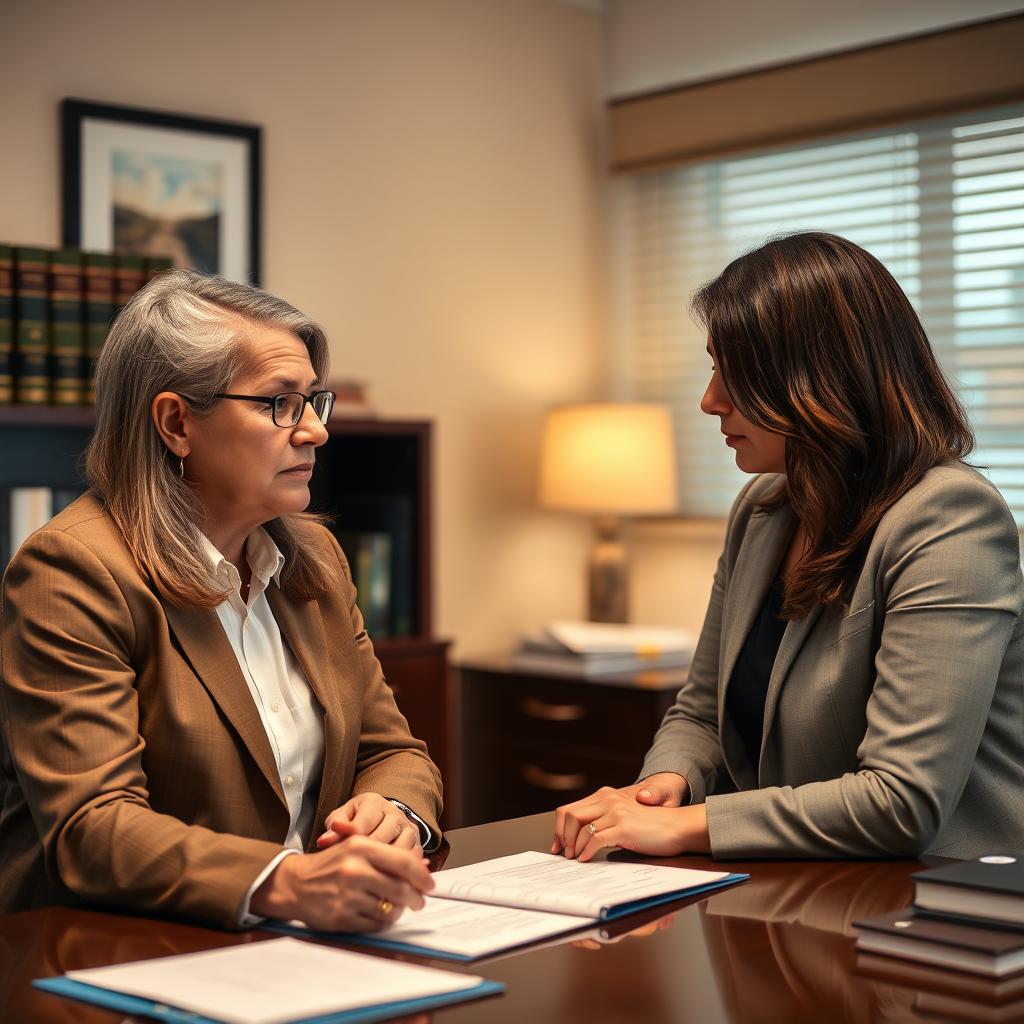
Service Member Divorce Lawyer Arlington County, VA
Divorce involving an active-duty or retired service member raises legal issues that do not arise in a typical civilian divorce. In Arlington County, Virginia — home to the Pentagon, Fort Myer, and thousands of military families — these matters often intersect with the Servicemembers Civil Relief Act (SCRA), the Uniformed Services Former Spouses’ Protection Act (USFSPA), and the equitable distribution framework of the Virginia Code. Mr. Sris and his Of Counsel team represent service members and their spouses in divorce proceedings before the Arlington County Circuit Court, handling jurisdictional questions, military pension division, and custody arrangements that account for deployment schedules. Law Offices Of SRIS, P.C. has concentrated on family law since its founding in 1997 and serves clients throughout Northern Virginia. To discuss your situation, reach our Arlington location at (888) 437-7747. Law Offices Of SRIS, P.C. — Advocacy Without Borders.
Law Offices Of SRIS, P.C. — practicing since 1997 · admitted in Virginia, Maryland, the District of Columbia, New Jersey, and New York · by appointment only · 1655 Fort Myer Dr, Suite 700, Room 719, Arlington, VA 22209 · languages spoken: English, Spanish, Tamil.
What Service Member Divorce Means in Arlington County
In Virginia, a military divorce is governed by the same statutory grounds as any other divorce — Va. Code § 20‑91 provides both fault-based and no‑fault grounds — but several federal laws overlay the proceeding. The SCRA grants a service member the right to request a stay of civil proceedings during periods of active duty that materially affect the ability to participate in the case, and it limits the entry of a default judgment absent compliance with specific procedural safeguards. The USFSPA determines whether a military pension is divisible as marital property, and if so, the Virginia court may render that division through a qualifying domestic relations order under Va. Code § 20‑107.3(g). Arlington County Circuit Court at 1425 N. Courthouse Rd, Suite 2400, Arlington, VA 22201 has exclusive original jurisdiction over the dissolution of the marriage, while the Arlington County Juvenile and Domestic Relations District Court handles companion matters of child custody, visitation, and support.
Arlington County General District Court is currently presided over by Hon. Jason S. Rucker. Court hours: Mon‑Fri 8:00AM–4:00PM. Counsel appearing on family law matters should plan filings accordingly.
Because military families frequently relocate, the threshold question of domicile and residency can be more complex than in a civilian divorce. Va. Code § 20‑97 requires that at least one party be an actual bona fide resident and domiciliary of Virginia for six months before suit. A service member stationed in Arlington County who intends to remain may satisfy that test even if the military home of record is elsewhere. Whether a service member chooses to file in Virginia or in the state of legal residence has important consequences for the ultimate division of property and retirement accounts. Mr. Sris and his Of Counsel analyze these jurisdictional factors at the outset so that the proceeding is filed in the proper venue and the court’s authority is not later challenged.
How Mr. Sris and His Of Counsel Handle Service Member Divorce Cases
Every military divorce begins with an assessment of the client’s military status — active duty, reserve, retired — because that status dictates which federal protections attach. If the service member is deployed or receiving orders, the SCRA may require a stay; if the marriage has lasted ten years or more overlapping with ten years of creditable military service, the former spouse may be eligible for direct payment of a portion of the retirement pay from the Defense Finance and Accounting Service. The firm’s attorneys work with forensic accountants and pension valuators when necessary to calculate the marital share of a military pension and to identify whether any disability compensation — which is not divisible under federal law — should be carved out of the marital estate.
In contested cases, the team addresses custody and visitation schedules that must accommodate the parent’s military obligations. Virginia’s best‑interest factors under Va. Code § 20‑124.3 permit the court to consider deployment history and the support system available to the child. If the parties can negotiate a comprehensive separation agreement, the case may proceed on Virginia’s six‑month no‑fault separation ground under § 20‑91(9)(b) when no minor children are involved, or on the one‑year separation ground under § 20‑91(9)(a) if children are present. Mr. Sris and his Of Counsel advise clients on the strategic advantages of each approach, always mindful that a service member’s career timeline can compress the period available for litigation.
About Mr. Sris and His Of Counsel Team
Mr. Sris, Owner and Founder of Law Offices Of SRIS, P.C., is a former prosecutor who has practiced law since 1997. He is admitted to the bars of Virginia, Maryland, the District of Columbia, New Jersey, and New York — a five‑jurisdiction credential that gives the firm the flexibility to represent military families who may have connections to multiple states. Mr. Sris testified before the Virginia House Courts of Justice Committee in support of 2019 HB 635 (chief patron Del. David Bulova), a bill that clarified the equitable distribution of retirement benefits under Va. Code § 20‑107.3(g). Mr. Sris and his Of Counsel bring over 120 years of combined legal experience and have achieved 4,739+ documented firm-wide results. Results may vary. They are joined by a team of Of Counsel attorneys who contribute their own backgrounds — including prior service as a prosecutor and a Virginia State Trooper — to the strategic handling of complex family law matters.
Frequently Asked Questions
How long does a divorce take in Arlington County, Virginia?
Uncontested divorces in Virginia typically resolve within two to six months after filing, provided the mandatory separation period has run and the parties have a signed agreement. Contested divorces — including those in which custody, support, or property division is disputed — routinely extend from nine to eighteen months. When a service member is deployed or protected by an SCRA stay, the timeline adjusts to accommodate the military obligation. The schedule in any case depends on the Arlington County Circuit Court’s calendar and the complexity of the issues. For a consultation, reach Mr. Sris and his Of Counsel at (888) 437-7747.
How much does a divorce cost in Arlington County, Virginia?
The Arlington County Circuit Court charges an approximate filing fee of $86 when the initial pleading is presented for filing. Additional costs arise for service of process — roughly $12 through the sheriff’s office or $50 to $100 through a private process server — and for pendente lite motions, mediation sessions, or the appointment of a Guardian ad Litem in custody matters. Attorney fees vary by case and depend on the complexity of the dispute. Reach Law Offices Of SRIS, P.C. at (888) 437-7747 to discuss the likely costs
Is Virginia a community property state?
No. Virginia follows an equitable distribution model under Va. Code § 20‑107.3. Marital property is divided fairly but not necessarily equally. The Arlington County Circuit Court evaluates eleven statutory factors — including the duration of the marriage, the contributions of each spouse, and the liquid or non‑liquid character of the assets — when fashioning an equitable award. Separate property, such as assets owned before the marriage or received by gift or inheritance, is excluded from the divisible estate. In a military divorce, the marital share of a pension is frequently the largest asset and requires careful valuation.
How is child custody decided in Arlington County, Virginia?
Custody and visitation are determined by the best interests of the child under Va. Code § 20‑124.3. The Arlington County Juvenile and Domestic Relations District Court handles standalone custody petitions, while custody issues within a divorce are resolved by the Circuit Court. The court evaluates ten factors, including each parent’s role in the child’s life, the child’s relationship with each parent, and any history of abuse. For a service member, the possibility of deployment or relocation is a relevant practical consideration that the court takes into account under the catch‑all factor. For guidance on your specific situation, contact Law Offices Of SRIS, P.C. at (888) 437-7747.
What effect does the SCRA have on a service member divorce?
The Servicemembers Civil Relief Act allows an active‑duty service member to request a stay of the divorce proceeding if military duties materially affect the ability to participate. The act also prohibits a default judgment from being entered against a service member unless the court appoints an attorney to represent the absent service member’s interests and makes certain factual findings. These protections are not automatic; they must be raised timely. An experienced family‑law attorney can evaluate whether the SCRA applies in a given case and can help ensure that the service member’s rights are preserved while the divorce moves forward.
What are the grounds for divorce in Virginia?
Virginia recognizes both fault and no‑fault grounds under Va. Code § 20‑91. No‑fault grounds require a separation of one year, or six months if the parties have no minor children and have entered into a written separation agreement. Fault grounds include adultery, cruelty, willful desertion for one year, and conviction of a felony with a sentence of more than one year. A fault‑based divorce does not require a separation period, but the alleging party must present sufficient proof. The choice of ground can affect spousal support and equitable distribution, making it a critical strategic decision.
Arlington County Family Law Resources
- Family Law Lawyer Fairfax County, VA
- Family Law Lawyer Prince William County, VA
- Family Law Lawyer Stafford County, VA
- Family Law Lawyer Fauquier County, VA
- Family Law Lawyer Loudoun County, VA
Primary legal authority: Virginia Code · Arlington County Circuit Court
Attorney advertising. Prior results do not guarantee a similar outcome. Results may vary.
Case results depend on a variety of factors unique to each case.