
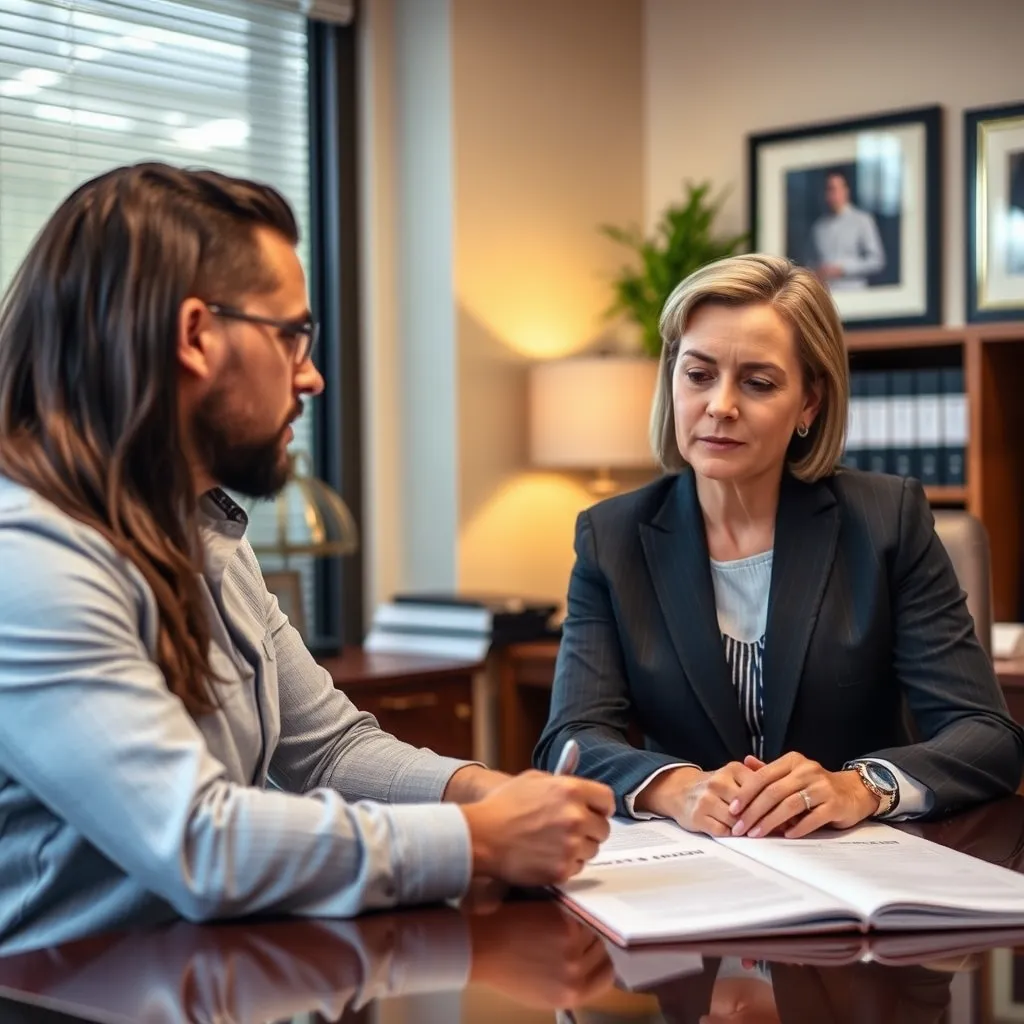
Service Member Divorce Lawyer Falls Church, VA
Military divorce involves unique considerations — from the Servicemembers Civil Relief Act (SCRA) to the division of a military pension and the impact of deployment on child custody. For service members and their spouses in Falls Church, Virginia, having counsel who understands both family law and the protections service members are entitled to receive is important. Mr. Sris, a former prosecutor and the Owner and Founder of Law Offices Of SRIS, P.C., represents clients in divorce proceedings at the Falls Church Circuit Court and the Falls Church Juvenile and Domestic Relations District Court. His practice concentrates on Virginia equitable distribution, spousal support, and custody arrangements shaped by military service. The firm’s Fairfax location serves Northern Virginia, and Mr. Sris works alongside his Of Counsel team, which brings over 120 years of combined legal experience to family law matters. Results may vary. To request a consultation about your divorce, call (888) 437‑7747. Law Offices Of SRIS, P.C. — Advocacy Without Borders.
What Service Member Divorce Means in Falls Church, Virginia
In Falls Church, divorce cases involving a service member follow the same overall structure as any Virginia divorce but with federal and state protections layered on top. The Falls Church Circuit Court, located at 300 Park Avenue, Suite 151W, has jurisdiction over divorce, equitable distribution, and spousal support. Falls Church Juvenile and Domestic Relations District Court handles standalone custody, visitation, child support, and protective orders. Because Virginia is an equitable distribution state, marital property — including military retirement benefits — is divided fairly, not necessarily equally, under Va. Code § 20‑107.3.
The Servicemembers Civil Relief Act (SCRA) can pause court proceedings when a service member’s duty materially affects the ability to participate. This means a Virginia divorce may be stayed, and a default judgment cannot be entered against an absent service member without specific safeguards. Virginia’s divorce grounds include no‑fault separation as well as fault grounds such as adultery, cruelty, and desertion; the separation period required before filing depends on whether minor children are involved and whether a written separation agreement exists. Understanding how the SCRA interacts with Virginia’s procedural timeline is essential for both the service member and the civilian spouse.
How Mr. Sris and His Of Counsel Handle Service Member Divorce Cases
Mr. Sris begins by reviewing the service member’s duty station, deployment history, and the couple’s financial picture. He identifies whether the SCRA applies, what separation period has already run, and which court — Circuit or Juvenile and Domestic Relations — should hear the matter. His team then works to resolve the case efficiently, often through a negotiated separation agreement that addresses division of the military pension under the Uniformed Services Former Spouses’ Protection Act, child support calculated under Virginia’s guidelines, and a parenting plan that reflects deployment cycles.
When a case cannot be settled, Mr. Sris and his Of Counsel present a well‑prepared case built on verified evidence, respecting procedural rules that affect service members. They seek pendente lite orders for temporary support and custody where necessary, always mindful of the SCRA’s right to a stay. Throughout the process, the firm appears at the Falls Church courts, advocating for outcomes that recognize both the service member’s obligations and the family’s long‑term welfare. Fees vary by case, and payment options are discussed during the initial consultation.
About Mr. Sris and His Of Counsel Team
Mr. Sris, Owner and Founder of Law Offices Of SRIS, P.C., established the firm in 1997. He is a former prosecutor with experience in criminal trial work, which informs his approach to family law disputes. Admitted in Virginia, Maryland, the District of Columbia, New Jersey, and New York, he has practiced across multiple jurisdictions. Mr. Sris testified before the Virginia House Courts of Justice Committee in support of 2019 HB 635 (chief patron Del. David Bulova), a bill that revised Virginia’s equitable distribution statute.
His Of Counsel colleagues include attorneys with backgrounds in prosecution, law enforcement, and complex litigation. Together, Mr. Sris and his Of Counsel bring over 120 years of combined legal experience, with 4,739+ documented firm-wide results. Results may vary. The firm has documented 24 case results in Falls Church City across all practice areas, with favorable outcomes in every reported case.
Frequently Asked Questions
How does military service affect divorce in Virginia?
Military service triggers federal protections under the SCRA, which can stay court proceedings and prevent default judgments while a service member is on active duty. Virginia’s equitable distribution statute covers military retirement benefits, and courts consider deployment schedules when setting custody and visitation. The process follows the same Virginia divorce grounds, but the presence of a military pension and potential relocation adds complexity.
How is child custody decided when one parent is a service member?
Virginia courts use the trusted‑interests factors in Va. Code § 20‑124.3, regardless of a parent’s military status. A service member’s deployment or potential relocation is weighed alongside the child’s relationship with each parent, stability, and the ability to support the child. Parenting plans often include provisions for virtual visitation, family care plans, and procedures for modifying custody if deployment orders change.
What is the Servicemembers Civil Relief Act and how does it protect me during divorce?
The SCRA protects active‑duty service members from certain civil proceedings moving forward while they are unable to participate due to military duty. In a Virginia divorce, a service member may request a stay of proceedings for at least 90 days, with additional stays possible. The law also requires that a default judgment cannot be entered without an attorney appointed to represent the service member’s interests.
Can a service member file for divorce in Virginia if they are stationed elsewhere?
Yes, if the service member or the spouse meets Virginia’s residency requirement of being a domiciliary and resident for at least six months before filing. A service member who claims Virginia as their state of legal residence may file in the Falls Church Circuit Court, even if currently stationed out of state. A civilian spouse may also file if they meet the residency threshold.
How is a military pension divided in a Virginia divorce?
Virginia treats the marital share of a military pension as marital property subject to equitable distribution. The court may award a portion of the pension to the non‑member spouse using a formula or a set percentage. A Qualified Domestic Relations Order (QDRO) or a Military Retired Pay Division Order is typically required to direct the Defense Finance and Accounting Service to pay the former spouse directly.
Do I need a lawyer for a service member divorce in Falls Church?
While you are not required to have a lawyer, service member divorces involve statutes and procedural protections — such as the SCRA and the division of a military pension — that can be difficult to navigate without experienced counsel. An attorney can help protect your rights, prepare a separation agreement, and ensure that any court orders comply with both Virginia law and federal requirements. For guidance on your specific situation, reach Law Offices Of SRIS, P.C. at (888) 437‑7747.
See also: Family Law Lawyer Fairfax County | Family Law Lawyer Fairfax City | Family Law Lawyer Prince William County
Virginia legal resources: Virginia Code Title 20 (Domestic Relations) · Falls Church Circuit Court · SCC Business Filings
Attorney advertising. Prior results do not guarantee a similar outcome.
Results may vary.
Case results depend on a variety of factors unique to each case.