
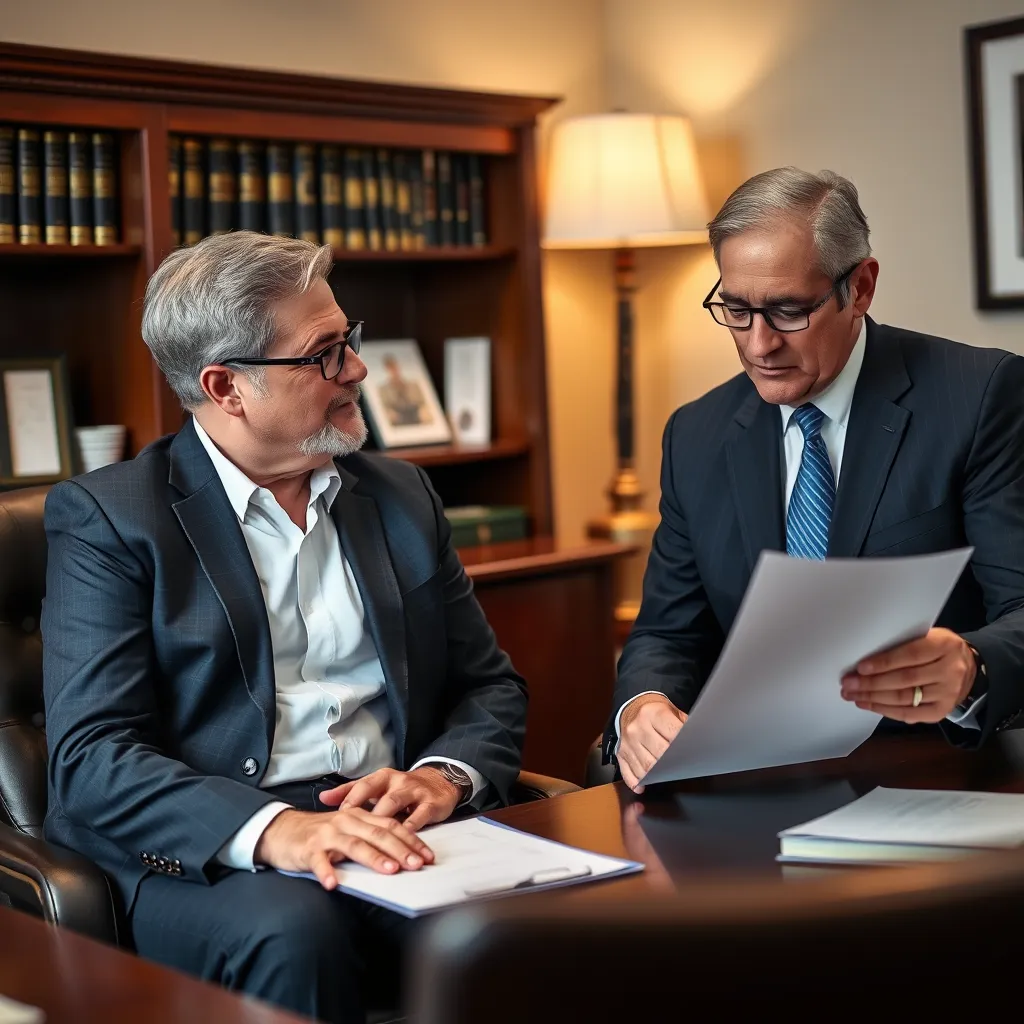
Support Contempt Lawyer Falls Church, VA
When a court-ordered spousal support or child support obligation goes unpaid, the recipient has a right to seek enforcement through a contempt proceeding in the Virginia courts. Conversely, an obligor facing a contempt allegation—often with the possibility of jail time, fines, or wage garnishment—needs a clear-eyed defense. Law Offices Of SRIS, P.C. represents clients on both sides of support contempt matters in the Falls Church, Virginia area, from filing a show-cause motion to litigating a contempt hearing in the Falls Church (City) Juvenile & Domestic Relations District Court or the Falls Church (City) Circuit Court. Mr. Sris and his Of Counsel bring a practiced, multi-jurisdictional perspective to these disputes, which frequently intersect with the complex statutory frameworks for child support under Va. Code § 20-108.1 and spousal support under Va. Code § 20-107.1. To discuss your situation, call (888) 437‑7747.
Law Offices Of SRIS, P.C. – Advocacy Without Borders.
Falls Church General District Court is currently presided over by Hon. Jason S. Rucker. Court hours: Mon-Fri 8:00AM‑4:00PM. Counsel appearing on family law matters should plan filings accordingly.
What Support Contempt Means in Falls Church, Virginia
In Virginia, support contempt is the legal mechanism by which a party enforces a court order for spousal or child support. The authority to hold a person in contempt derives from Va. Code § 18.2-456, which empowers a court to impose sanctions—including jail time, work release, and fines—when a party willfully disobeys a lawful order. In the family-law context, the underlying support obligation is typically established by a final decree of divorce or a separate support order. The Falls Church courts have the jurisdiction to hear contempt petitions on these orders: if the support obligation arises from a divorce, the matter is heard in the Falls Church Circuit Court; standalone child‑support or spousal‑support orders not tied to a divorce are within the jurisdiction of the Falls Church (City) Juvenile & Domestic Relations District Court.
The legal standard is straightforward: the moving party must prove a valid court order, knowledge of that order by the alleged contemnor, and a willful violation. The responding party then has the opportunity to present evidence of inability to pay, mistake, or other defenses. Because Virginia is an equitable distribution state (Va. Code § 20-107.3), issues of spousal support are often intertwined with property division, making contempt proceedings particularly fact‑intensive. For those in the Falls Church area, proximity to the court means that hearings at 300 Park Avenue are a short drive from our Fairfax location, and our attorneys are familiar with the local practice, including the docketing procedures of the Seventeenth Judicial District.
Our firm concentrates its family law practice on guiding clients through the entire contempt process—from drafting and filing the show‑cause motion to presenting evidence at the hearing. Whether you are a custodial parent whose child support has lapsed for months or a former spouse who believes the obligor has the means but not the will to pay, a contempt action can be a powerful tool. We also represent individuals accused of contempt, ensuring that their financial circumstances and good‑faith efforts are fully presented to the court.
How Mr. Sris and His Of Counsel Handle Support Contempt Cases
Mr. Sris, the Owner and Founder of Law Offices Of SRIS, P.C., brings the insight of a former prosecutor to support contempt litigation. He understands how to marshal documentary evidence—pay stubs, bank records, tax returns, and appointment-of-counsel orders—to construct a compelling narrative for the judge. His approach is systematic: first, a thorough review of the underlying support order and the history of payments; second, an assessment of the obligor’s financial capacity; third, a strategy session to outline the likelihood of success and the potential defenses. Mr. Sris works in collaboration with his Of Counsel team, each of whom contributes extensive litigation experience. Together, they have appeared in the Falls Church courts on matters ranging from straightforward arrears calculations to complex cases involving self‑employment income, hidden assets, and cross‑jurisdictional enforcement.
In a typical support contempt case, the firm begins by filing a rule to show cause with the appropriate court—J&DR District Court or Circuit Court. The petition details the amount of arrears, the dates of missed payments, and the obligor’s apparent ability to pay. Once the show‑cause order is issued, the obligor is served and a hearing date is set. At the hearing, the moving party’s attorney presents evidence of the violation and argues for the appropriate remedy. If the court finds contempt, sanctions may include a suspended jail sentence conditioned on payment, income deduction orders, or the imposition of a judgment for the arrears. For obligors, the defense often centers on demonstrating that the failure to pay was not willful—a lost job, a medical emergency, or a misunderstanding of the order’s terms. Our attorneys advise clients on what the court will expect and prepare them for testimony.
Because support contempt matters can move quickly, and the consequences of a finding of contempt can be severe, we encourage potential clients to reach out as soon as they believe enforcement or a defense may be necessary. The firm’s representation is grounded in a thorough knowledge of Virginia’s statutory framework: the factors for spousal support in Va. Code § 20-107.1, the child‑support guidelines under Va. Code § 20-108.1, and the contempt authority in § 18.2-456. We do not guarantee a particular outcome, but we work to present the most persuasive case possible at every stage.
About Mr. Sris and His Of Counsel Team
Mr. Sris, Owner and Founder of Law Offices Of SRIS, P.C., has practiced law since 1997. He is admitted in Virginia, Maryland, the District of Columbia, New Jersey, and New York. Prior to founding the firm, he served as a former prosecutor, an experience that gave him a thorough understanding of courtroom dynamics, evidence presentation, and the pressure of high‑stakes hearings. Mr. Sris testified before the Virginia House Courts of Justice Committee in support of 2019 HB 635 (chief patron Del. David Bulova), a measure that addressed procedural aspects of equitable distribution under Va. Code § 20-107.3. He manages each family law matter with a hands‑on approach, and his work is supported by a team of experienced Of Counsel attorneys who bring decades of combined litigation experience.
Mr. Sris and his Of Counsel bring over 120 years of combined legal experience, supported by 4,739+ documented firm-wide results. Results may vary. The firm’s attorneys are well acquainted with the Falls Church courts, including the Juvenile & Domestic Relations District Court and the Circuit Court, and understand the procedural expectations of the judges and clerks. When you engage the firm, you benefit from a collaborative approach: Mr. Sris and his Of Counsel team review the facts together, share strategic insights, and ensure that every legal option is explored. Consistent with Virginia law, we charge on a fee‑for‑service basis for family law matters, with an initial consultation to discuss the scope and cost of representation.
Frequently Asked Questions
What is support contempt in Virginia family law?
Support contempt is a court proceeding to enforce a spousal or child support order when the obligor has willfully failed to pay. Under Va. Code § 18.2-456, a court may hold a party in contempt and impose sanctions such as jail, fines, or income withholding until the arrears are paid. The proceeding requires proof of a valid order, knowledge of the order, and a willful violation. In the Falls Church area, these cases are heard in the J&DR District Court or the Circuit Court, depending on the origin of the support order.
How do I enforce a support order in Falls Church, Virginia?
To enforce a support order, you (or your attorney) file a petition for a rule to show cause with the court that issued the order. The petition sets out the amount of arrears and the dates of missed payments. Once filed, the court issues a show‑cause order that is served on the obligor, directing them to appear and explain why they should not be held in contempt. Our firm prepares the petition, gathers the necessary financial documentation, and represents you at the hearing.
Can an obligor go to jail for not paying support in Virginia?
Yes, a Virginia court can impose jail time as a sanction for civil contempt when the obligor has the present ability to pay but willfully refuses to do so. In practice, judges often use a suspended jail sentence—conditioned on a payment schedule—as a means to encourage compliance without immediate incarceration. However, if the obligor is truly unable to pay due to unemployment or disability, the court may not impose jail time and will instead work to modify the support obligation.
What defenses are available to a support contempt charge?
The primary defense is lack of willfulness: the obligor must show that the failure to pay resulted from circumstances beyond their control, such as job loss, illness, or a good‑faith mistake about the order’s terms. Another defense is that the underlying order is void or unenforceable. Evidence of inability to pay—pay stubs, termination letters, medical records—is critical. Sometimes, a petition to modify the support order down to a manageable level is a more practical remedy than contesting the contempt outright. An attorney can assist in evaluating which strategy best fits the facts.
Do I need a lawyer for a support contempt case in Falls Church?
While you are not legally required to have an attorney, support contempt proceedings involve complex evidentiary standards, statutory interpretation, and the risk of incarceration. An experienced family law attorney can help you present a well‑organized case, cross‑examine witnesses effectively, and navigate the local court rules. For obligors facing contempt, the stakes are especially high. For those seeking enforcement, an attorney ensures that the petition is correctly drafted and that the evidence of arrears is properly documented. For guidance on your specific situation, reach Law Offices Of SRIS, P.C. at (888) 437‑7747.
How does support contempt intersect with modification of support in Virginia?
Often, a contempt case exposes the need to modify the underlying support order. If an obligor’s income has decreased substantially since the order was entered, they may petition the court to reduce future payments while still being held accountable for past arrears. The two proceedings—contempt and modification—can be heard together or separately. Our firm evaluates whether modification is a more efficient path to resolving the dispute and advises clients accordingly. The same court that handles the contempt action can also entertain a petition for modification under Va. Code §§ 20‑108.1 (child support) or 20‑107.1 (spousal support).
Attorney advertising. Prior results do not guarantee a similar outcome.
Results may vary.
Case results depend on a variety of factors unique to each case.