
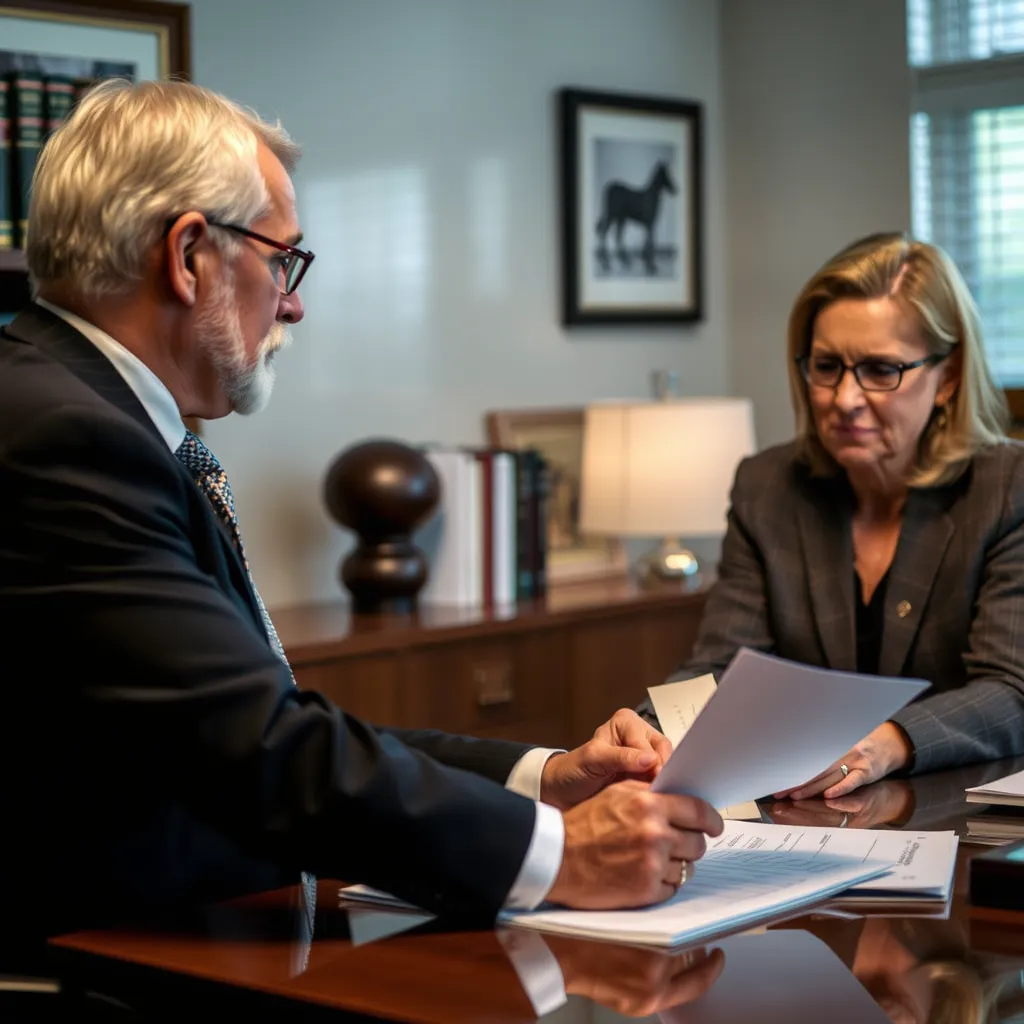
Trial Separation Lawyer Alexandria, VA
You and your spouse have reached a crossroads. You are not ready to file for divorce, but living together has become strained, and you need space to evaluate your next steps. A trial separation — a period of living apart while you assess the future of your marriage — can provide that clarity. In Alexandria, Virginia, a trial separation is not just a personal decision; it carries legal weight. How you structure the separation, what agreements you put in place, and how long you remain apart can directly affect property division, spousal support, child custody, and the grounds for divorce if you ultimately choose to go that route. Mr. Sris and his Of Counsel at Law Offices Of SRIS, P.C. represent clients in Alexandria and throughout Northern Virginia in separation matters. Reach our firm at (888) 437-7747 to schedule a consultation. Law Offices Of SRIS, P.C. — Advocacy Without Borders.
Strategy Options for Your Trial Separation
There is no single form of trial separation in Virginia. Some couples choose an informal arrangement — one spouse moves out, and they quietly live separate lives for a period. Others put a written separation agreement in place that addresses child custody, visitation schedules, spousal support, use of the marital home, and division of household expenses during the separation. Under Virginia law, a written separation agreement signed by both parties is more than a practical tool — it can serve as the foundation for a no-fault divorce if the separation ultimately becomes permanent. A well-drafted agreement can also reduce conflict and avoid litigation over temporary support or custody while you are apart.
Mr. Sris and his Of Counsel work with clients to evaluate which approach fits their circumstances. For some, an informal separation is appropriate. For others with children, real estate, retirement accounts, or business interests, a comprehensive separation agreement offers protection and predictability. The Alexandria Circuit Court and the Alexandria Juvenile and Domestic Relations District Court each play distinct roles in separation-related matters, and understanding which court handles what can shape your strategy from the outset.
What to Expect During a Trial Separation in Alexandria
A trial separation in Alexandria involves practical and procedural dimensions. From a practical standpoint, you and your spouse will need to address living arrangements, parenting schedules, and financial obligations during the separation period. From a legal standpoint, the separation may begin to establish the timeline required for a no-fault divorce under Virginia law — a factor that becomes significant if reconciliation does not occur.
Alexandria family law matters are handled in two courts: the Alexandria Circuit Court, located at 520 King Street, 2nd Floor, Alexandria, VA 22320, has jurisdiction over divorce, equitable distribution, and spousal support; the Alexandria Juvenile and Domestic Relations District Court handles custody, visitation, child support, and protective orders that may arise during a separation. If you need temporary custody orders or child support while you are separated, those petitions are filed in the Juvenile and Domestic Relations District Court. If a divorce complaint is later filed, the Circuit Court takes over. Mr. Sris and his Of Counsel appear in both courts and can guide you through the procedural requirements specific to each.
How a Trial Separation Affects Your Legal Rights
A trial separation in Virginia can have significant legal implications, particularly if the separation leads to divorce. The duration of your separation, whether you have a written agreement, and how you conduct your financial affairs during this period all matter. Virginia is an equitable distribution state, meaning marital property is divided fairly — though not necessarily equally — based on factors set out in . The date of separation can be an important reference point for classifying property as marital or separate, and disputes over the separation date are common in contested divorces.
Under Virginia law, a no-fault divorce may be granted after a separation of one year, or after six months if the parties have no minor children and have entered into a written separation agreement.
Source: Va. Code § 20-91(9). Virginia Code § 20-91
Reviewed by Mr. Sris, admitted in VA/MD/DC/NJ/NY.
If fault grounds are at issue — such as adultery or cruelty — a trial separation does not extinguish those grounds. And if one spouse relocates during the separation, custody and visitation arrangements may need to be modified, which the Alexandria Juvenile and Domestic Relations District Court can address. A trial separation is not a legal status in Virginia the way it is in some other states; rather, it is a factual period of living apart that can carry legal weight depending on how long it lasts and what agreements govern it.
Attorney Credentials — Mr. Sris and His Of Counsel
Mr. Sris, Owner and Founder of Law Offices Of SRIS, P.C., has practiced law since 1997. A former prosecutor, he is admitted in Virginia, Maryland, the District of Columbia, New Jersey, and New York. Mr. Sris has testified before the Virginia House Courts of Justice Committee in support of 2019 HB 635 (chief patron Del. David Bulova). His Of Counsel team includes attorneys with backgrounds in prosecution, law enforcement, and child welfare proceedings — experience that informs the firm’s approach to family law matters in Alexandria and across Northern Virginia. Mr. Sris and his Of Counsel bring over 120 years of combined legal experience and have achieved 4,739+ documented firm-wide results. Results may vary.
For a complete statutory analysis of Virginia separation and divorce law, see our comprehensive overview at srislawyer.com.
Frequently Asked Questions About Trial Separation in Virginia
Do I need a written separation agreement for a trial separation in Virginia?
You are not legally required to have a written separation agreement to begin living apart from your spouse. However, a written agreement can provide clarity on custody, support, and property use during the separation and may allow you to pursue a no-fault divorce after six months rather than one year if you have no minor children. Without a written agreement, even a long separation may not satisfy the shorter waiting period under Va. Code § 20-91(9)(b). For guidance on your specific situation, reach Law Offices Of SRIS, P.C. at (888) 437-7747.
How does a trial separation differ from a legal separation in Virginia?
Virginia does not recognize “legal separation” as a formal court-ordered status the way some other states do. A trial separation in Virginia is fundamentally a factual arrangement — you and your spouse live apart, with or without a written agreement. There is no separate court petition for a legal separation. The separation period does, however, serve as a statutory prerequisite for a no-fault divorce, which is why documenting the separation and understanding its legal significance matters. Mr. Sris and his Of Counsel can explain how Virginia law treats separation in your particular circumstances.
Can a trial separation affect child custody in Alexandria?
Yes. During a trial separation, the parenting schedule you establish may influence later custody determinations. Virginia courts consider the role each parent has played in the child’s life when deciding custody under Va. Code § 20-124.3. If you and your spouse cannot agree on custody or visitation during the separation, you may petition the Alexandria Juvenile and Domestic Relations District Court for temporary orders. The court’s decisions are guided by the best interests of the child, and the arrangements you make during a trial separation can shape the court’s view of what arrangement serves those interests.
What happens to our property during a trial separation?
Property acquired during a trial separation but before divorce may still be classified as marital property in some circumstances, particularly if acquired with marital funds. The date of separation can be a contested issue in equitable distribution proceedings under . Income earned after separation is generally treated as separate property, but the classification of assets purchased during separation depends on the source of funds and the specific facts of the case. To discuss the details of your matter, contact Law Offices Of SRIS, P.C. at (888) 437-7747.
Is a trial separation enough to file for divorce later?
A period of living apart can satisfy the separation requirement for a no-fault divorce in Virginia, provided the separation meets the statutory duration: one year, or six months if the parties have no minor children and a written separation agreement. The separation must be continuous and accompanied by the intent to remain apart permanently — though a trial separation that begins with hopes of reconciliation can later become the basis for a no-fault divorce if reconciliation does not occur and the statutory period is met.
What if my spouse does not want a separation agreement?
You cannot force a spouse to sign a separation agreement. If your spouse is unwilling to negotiate terms, you may still live apart. Without a signed agreement, the longer one-year separation period applies for no-fault divorce. You may also petition the Alexandria Juvenile and Domestic Relations District Court for temporary custody and support orders during the separation, even without your spouse’s cooperation. These court orders can establish structure while you remain apart. A family law attorney can advise you on your options when one party is uncooperative.
Should I move out of the marital home during a trial separation?
Moving out is a significant decision with legal implications. It can affect claims to the marital home in equitable distribution, influence custody arrangements, and may be interpreted as abandonment if done without agreement. Before moving out, it is generally advisable to have at least a basic written understanding with your spouse about the move. If domestic violence is a concern, the Alexandria Juvenile and Domestic Relations District Court can issue protective orders. Each situation is different, and the timeline and approach depend on the specific facts of your matter.
Does Virginia require us to live in separate residences to be considered separated?
Virginia law generally requires that spouses live separate and apart, which typically means maintaining separate residences. However, living under the same roof while ceasing marital cohabitation may qualify as separation in some circumstances recognized by Virginia courts. The key factor is whether the parties have ended their marital relationship and are living as separate individuals. This can be a fact-intensive determination. For a consultation, reach Mr. Sris and his Of Counsel at (888) 437-7747.
Request a Consultation
If you are considering a trial separation in Alexandria or anywhere in Northern Virginia, Mr. Sris and his Of Counsel at Law Offices Of SRIS, P.C. are available to discuss your situation. Our Arlington location serves clients throughout Alexandria, Old Town, Del Ray, and Kingstowne. Reach our firm at (888) 437-7747 to schedule a consultation. Phones are answered 24 hours a day, seven days a week.
Law Offices Of SRIS, P.C.
Arlington Location
1655 Fort Myer Dr, Suite 700, Room 719
Arlington, VA 22209
(888) 437-7747
Virginia legal resources: Virginia Code Title 20 (Domestic Relations) · Alexandria Circuit Court · Virginia Judicial System
Attorney advertising. Prior results do not guarantee a similar outcome. Results may vary. Case results depend on a variety of factors unique to each case. Engaging Law Offices Of SRIS, P.C. Requires a signed engagement agreement. Consultation by appointment. By appointment only. Call (888) 437-7747 to schedule.