
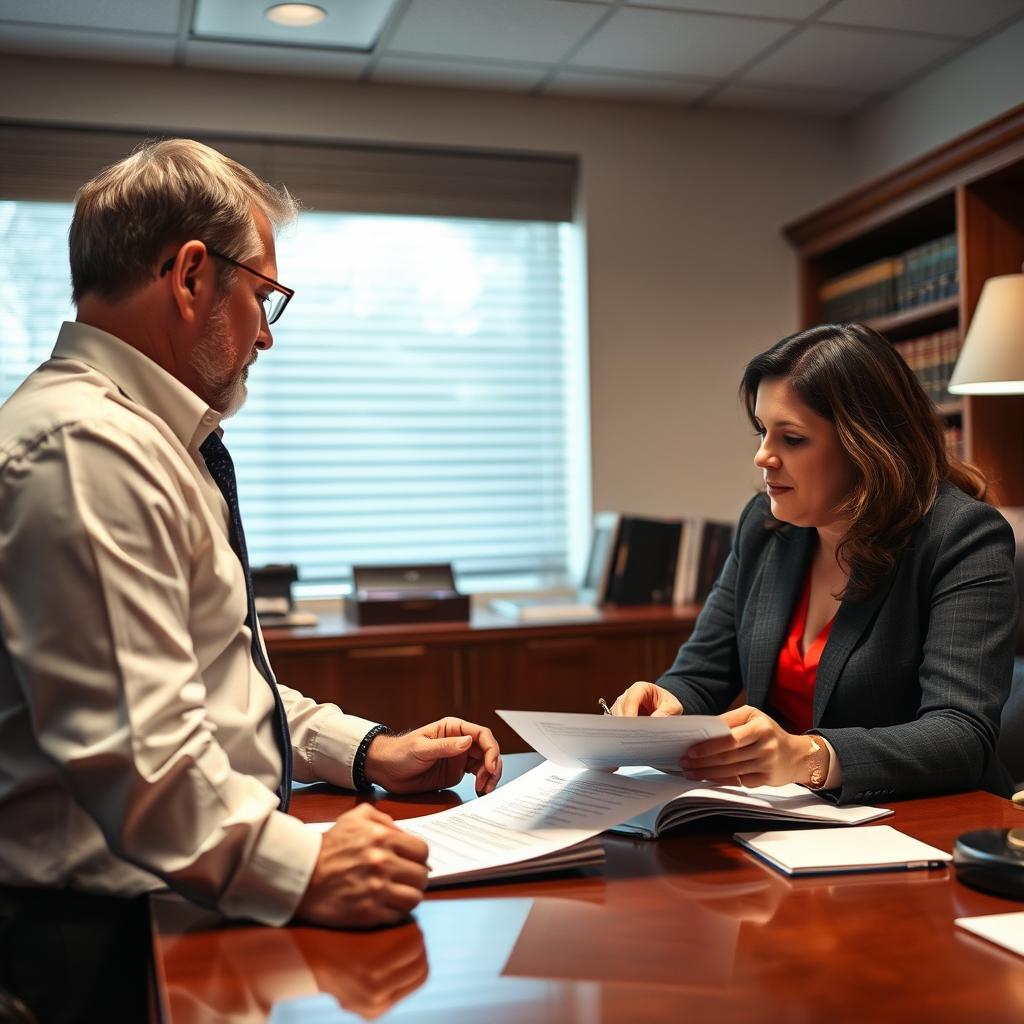
Visa/Permit/Document Fraud lawyer Fairfax, VA
You answered a knock at your door early one morning to find two federal agents from Homeland Security Investigations standing on your porch. They asked about visa petitions you helped complete for a small group of overseas workers at your company three years ago. Or maybe your call came at the office — a special agent with the FBI’s fraud unit asking to schedule an interview about employment documents you submitted to a Virginia agency. The conversation is polite, but the subtext is clear: someone has accused you of visa, permit, or document fraud, and a federal investigation is underway. The thought of facing federal prison, active U.S. Attorney’s Office prosecutors, and the United States District Court for the Eastern District of Virginia can be terrifying. You need to understand what you’re up against and what steps to take immediately. If you are facing visa, permit, or document fraud allegations in Fairfax, Virginia, reach Law Offices Of SRIS, P.C. at (888) 437-7747. Law Offices Of SRIS, P.C. – Advocacy Without Borders.
Strategy Options When Federal Agents Are Investigating
Federal document fraud investigations build slowly. Agents often compile months of records — employment petitions, visa applications, corporate filings, financial statements — before making their first move. The charging decision rarely turns on one single paper. Instead, prosecutors examine patterns: whether you knowingly submitted false information, omitted material facts, or used false documents to obtain a legal benefit. Mr. Sris and his Of Counsel begin by identifying the precise statute the government is eyeing. For visa and immigration-related document fraud, the primary federal charge is often 18 U.S.C. § 1546, which covers fraud and misuse of visas, permits, and other documents. Alternate theories may proceed under 18 U.S.C. § 1341 (mail fraud) or § 1343 (wire fraud) when an alleged scheme used the mail or electronic communications. Each statute carries different elements, different defenses, and different sentencing ranges.
Early intervention matters. When the investigation is still in its early stages — before an indictment is returned — Mr. Sris and his Of Counsel may be able to communicate with the Assistant U.S. Attorney and the case agent to present exculpatory evidence, explain the documentation process, or negotiate a declination of prosecution. In situations where an indictment has already been filed, the strategy shifts to challenging the sufficiency of the government’s proof. Was the misrepresentation truly “material”? Did the government rely on it? Did the client act with the required criminal intent? Every answer shapes the pretrial motion practice, potential plea discussions, and the eventual defense at trial in the U.S. District Court for the Eastern District of Virginia.
What To Expect In A Federal Document Fraud Case In Fairfax
Federal criminal procedure differs sharply from the state courts most people encounter in Fairfax County General District Court or Circuit Court. The U.S. District Court for the Eastern District of Virginia — with courthouses in Alexandria, Richmond, Norfolk, and Newport News — handles all federal felonies arising in Northern Virginia. The process begins with a grand jury investigation, often conducted in secret over many months. If the grand jury returns an indictment, the defendant is brought before a federal magistrate judge for an initial appearance and a detention hearing. Prosecutors may ask for pretrial detention, particularly if the case involves allegations of serious fraud that could expose the defendant to a guideline sentence of years in prison.
After indictment, discovery unfolds under the Federal Rules of Criminal Procedure. The government is required to produce evidence favorable to the defense (the Brady rule) and any prior statements of witnesses (Jencks material). Evidence in document fraud cases commonly includes thousands of pages of business records, government forms, email chains, and witness interviews. Mr. Sris and his Of Counsel work to identify inconsistencies, missing documents, and chains of custody that can undermine the prosecution’s case. Pretrial motions — to suppress evidence, to dismiss counts, or to sever defendants — shape what the jury hears. Many federal cases resolve through negotiated plea agreements, but the decision to accept an offer or go to trial must be grounded in a thorough assessment of the evidence and the sentencing exposure under the United States Sentencing Guidelines.
Penalty Overview — Visa, Permit, and Document Fraud Under Federal Law
Federal document fraud convictions carry heavy consequences. While the exact penalty depends on the statute charged and the defendant’s criminal history, imprisonment is a real possibility in nearly every case. For example, a conviction under 18 U.S.C. § 1546 for visa fraud may result in a sentence measured in years, not months. The United States Sentencing Guidelines provide a numerical range that the court must consider, and judges in the Eastern District of Virginia take fraud offenses seriously. Additional penalties can include terms of supervised release, restitution orders, and substantial monetary fines. There is no parole in the federal system — a defendant serves the sentence imposed, less limited good-time credits. Perhaps the most overlooked consequence is immigration vulnerability: a federal fraud conviction can trigger removal proceedings for noncitizens and can affect naturalization applications for lawful permanent residents.
Because so much is at stake, retaining counsel who understands the interplay between federal criminal law and immigration law is essential. Mr. Sris and his Of Counsel handle federal fraud matters with an awareness of the broader impact on a client’s family, employment, and immigration status.
Attorney Credentials — Who Handles Your Federal Fraud Matter
Mr. Sris, Owner and Founder of Law Offices Of SRIS, P.C., founded the firm in 1997 and has built a multi-state practice admitted in Virginia, Maryland, the District of Columbia, New Jersey, and New York. A former prosecutor, Mr. Sris brings insight into how federal prosecutors build their cases — insight he uses to identify weaknesses in the government’s proof and to craft a thorough defense for every client. He testified before the Virginia House Courts of Justice Committee in support of 2019 HB 635 (chief patron Del. David Bulova).
The firm’s Of Counsel attorneys contribute additional depth in criminal defense, including former state prosecutors and attorneys with decades of courtroom experience. Together, Mr. Sris and his Of Counsel have handled federal criminal matters throughout the Eastern District of Virginia, representing individuals accused of a wide range of fraud offenses as well as other federal crimes.
Frequently Asked Questions
What is visa, permit, or document fraud under federal law?
Federal visa, permit, or document fraud generally refers to knowingly making a false statement, using a false document, or engaging in a scheme to obtain a visa, employment authorization, or other government benefit through deception. The main criminal statute is 18 U.S.C. § 1546, though mail fraud (18 U.S.C. § 1341) and wire fraud (18 U.S.C. § 1343) may also apply when communications crossed state lines. These are serious felony charges prosecuted by the U.S. Attorney’s Office in the Eastern District of Virginia.
How does a federal defense lawyer in Fairfax approach a visa fraud charge?
Defense starts with a careful review of the charging documents and the government’s evidence. The attorney examines whether the alleged false statement was material, whether the client acted with criminal intent, and whether the government can prove each element beyond a reasonable doubt. In many cases, defense counsel communicates with prosecutors before an indictment to present mitigating information. For guidance on your specific situation, reach Law Offices Of SRIS, P.C. at (888) 437-7747.
What should I do if I learn I am under federal investigation for document fraud?
Do not discuss the case with anyone except your attorney. Preserve all records — electronic and physical — but do not destroy or alter anything. If a federal agent contacts you, you have the right to remain silent and to request a lawyer. Contact a federal criminal defense lawyer promptly. Early engagement helps protect your interests before an indictment issues.
Is a federal document fraud charge different from a state fraud charge in Virginia?
Yes, in significant ways. Federal fraud cases are prosecuted by the U.S. Attorney’s Office, not a local Commonwealth’s Attorney. Federal sentencing guidelines apply, and there is no parole. Investigations typically involve federal agencies such as the FBI, Homeland Security Investigations, or the U.S. Postal Inspection Service. The procedural rules — from grand jury to trial — are federal, not state. An attorney experienced in federal criminal practice is critical.
How do I find a visa/ permit/ document fraud lawyer in Fairfax, Virginia?
Look for an attorney who is admitted to practice in the U.S. District Court for the Eastern District of Virginia and who has experience defending federal fraud charges. A consultation allows you to discuss the facts, ask about the lawyer’s familiarity with the local federal court, and understand potential strategies. To discuss the details of your matter, contact Law Offices Of SRIS, P.C. at (888) 437-7747.
Contact Law Offices Of SRIS, P.C. — Fairfax Location
Federal investigations move fast. A prompt, informed response can materially affect the course of a federal fraud case. To request a consultation, call (888) 437-7747. Our Fairfax Location at 4008 Williamsburg Court, Fairfax, VA 22032 serves clients throughout Northern Virginia, including Fairfax City, Fairfax County, Arlington, Alexandria, and the surrounding communities. By appointment only. Call (888) 437-7747 to schedule.
Attorney advertising. Prior results do not guarantee a similar outcome. Results may vary.
Case results depend on a variety of factors unique to each case.