
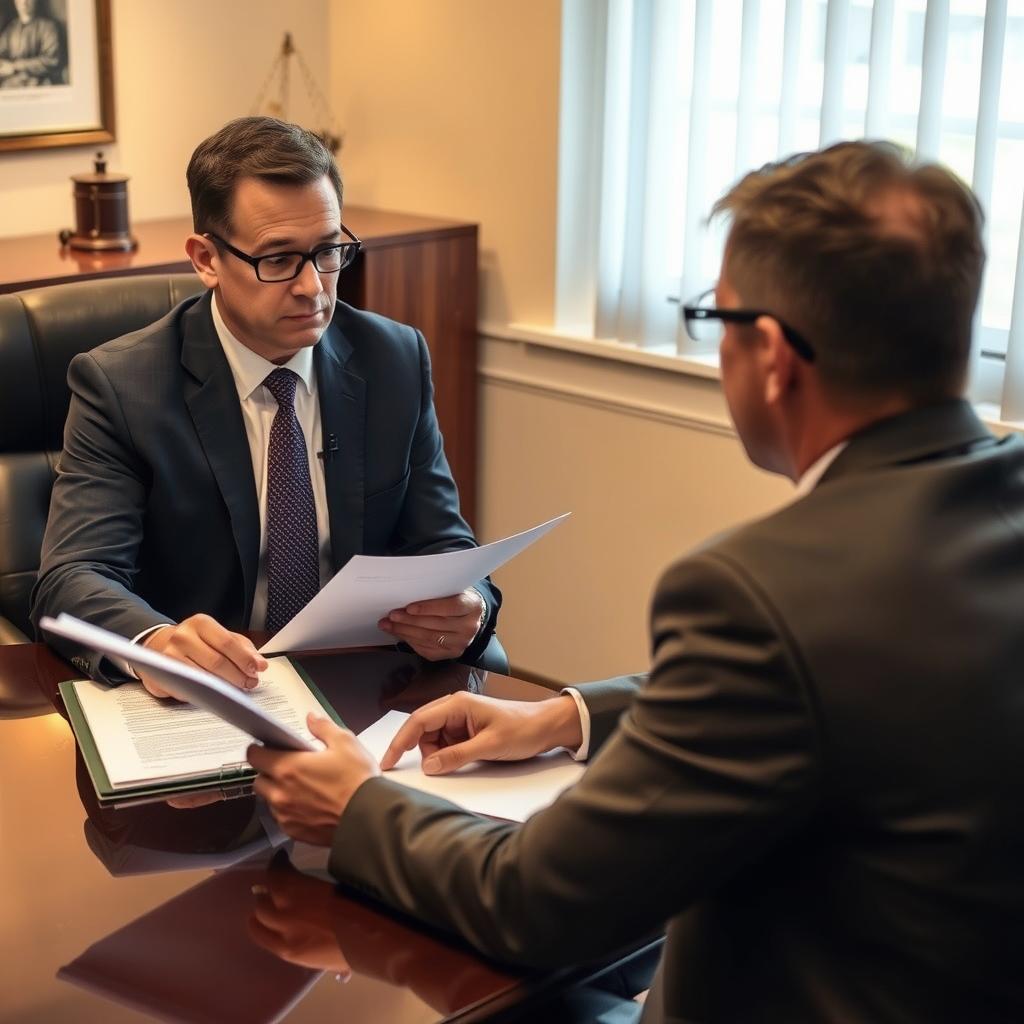
Witness Tampering lawyer Loudoun County, VA
You receive a call from a federal agent—FBI, DEA, or ATF—or a grand jury subpoena arrives at your door. The allegation is witness tampering. In an instant, your world shrinks to a single count under Title 18 of the U.S. Code. For someone living or working in Loudoun County, Virginia, that charge will not play out in a local courthouse. It will proceed in the Alexandria Division of the U.S. District Court for the Eastern District of Virginia, where Assistant United States Attorneys pursue convictions with the full weight of federal resources. Law Offices Of SRIS, P.C. provides representation to clients in Ashburn, Leesburg, Sterling, and throughout Northern Virginia who are facing federal witness tampering allegations. Reach our firm at (888) 437-7747.
What to Expect When Facing Federal Witness Tampering Charges in Loudoun County
Federal witness tampering is not a disorderly-conduct charge. Prosecutors treat any interference with a witness—whether through threats, persuasion, or offers of benefit—as a direct attack on the integrity of the justice system. Cases are built by federal investigators over weeks or months before an arrest or summons. The government will often have recorded conversations, electronic messages, and cooperating witnesses who have already given statements.
Loudoun County residents do not go to state General District Court for these matters. Federal cases fall under the Eastern District of Virginia, which has a reputation for swift dockets and high conviction rates. The investigative agencies involved can include the FBI, DEA, Internal Revenue Service Criminal Investigation (IRS‑CI), and the Bureau of Alcohol, Tobacco, Firearms and Explosives. An indictment is obtained through a federal grand jury, and the Speedy Trial Act pushes the case toward trial within roughly seventy days of indictment, subject to excludable delays. Early engagement with experienced defense counsel is often the single most important step a person can take.
Because the federal system has no parole, a sentence of even a few years means day-for-day incarceration, with only limited good-time credits available. The U.S. Sentencing Guidelines will heavily influence the ultimate penalty, weighing both the offense level and the defendant’s criminal history. Understanding how those guidelines apply—and where downward departures or variances may be argued—requires a firm command of federal sentencing practice.
How Mr. Sris and His Of Counsel Approach Witness Tampering Defense
A federal witness tampering charge does not mean conviction is inevitable. Mr. Sris and his Of Counsel evaluate every piece of evidence the government discloses. They probe whether the government can prove the essential elements—that the defendant knowingly used intimidation, threats, corrupt persuasion, or misleading conduct with the specific intent to influence, delay, or prevent the testimony of a person in an official proceeding. The mere fact that a witness changed his or her story, or that the defendant spoke with a witness, is not alone sufficient to sustain a conviction.
Defense work in these cases often begins before an indictment is returned. If an investigation is ongoing, counsel can interact with agents and prosecutors to present exculpatory information, challenge the credibility of complaining witnesses, and, where appropriate, seek a declination of prosecution. After a charge is filed, the focus shifts to motion practice—challenging the sufficiency of the indictment, suppressing evidence obtained in violation of federal law, and pressing for disclosure of Brady material. Throughout the pretrial and trial stages, Mr. Sris and his Of Counsel work persistently to test the government’s proof while protecting the client’s constitutional rights at every step.
About Mr. Sris and His Of Counsel Team
Mr. Sris is a former prosecutor who founded Law Offices Of SRIS, P.C. in 1997. His firsthand experience in criminal courtrooms informs the defense strategies the firm employs. He has been admitted to practice in Virginia, Maryland, the District of Columbia, New Jersey, and New York. Mr. Sris testified before the Virginia House Courts of Justice Committee in support of 2019 HB 635 (chief patron Del. David Bulova), a measure that revised the equitable‑distribution framework in the Commonwealth.
Mr. Sris works alongside an Of Counsel team whose attorneys have decades of collective litigation experience. Together, they bring extensive combined legal experience to federal criminal defense. Results may vary. The team’s familiarity with the Eastern District of Virginia—from initial appearance and detention hearings before a magistrate judge to sentencing proceedings before a district judge—enables them to guide clients through a process that can otherwise feel overwhelming.
Frequently Asked Questions
What is federal witness tampering and how is it charged?
Federal witness tampering is defined primarily in 18 U.S.C. § 1512. It encompasses knowingly using intimidation, threats, corrupt persuasion, or misleading conduct toward another person with the intent to influence, delay, or prevent testimony in an official proceeding. The offense can also include harming a witness or attempting to do so. A related statute, 18 U.S.C. § 1503, criminalizes obstruction of justice more broadly. Charges are brought by the U.S. Attorney’s Office and prosecuted in federal district court.
How does a Virginia lawyer defend against witness tampering charges?
An experienced federal criminal defense attorney will carefully examine the government’s evidence for constitutional or procedural weaknesses. Defenses may include lack of corrupt intent—showing the defendant did not act knowingly or with the purpose of interfering with a proceeding—or that the alleged conduct did not amount to “corrupt persuasion.” Counsel may also challenge the credibility of government witnesses, argue that the defendant’s statements were taken in violation of Miranda, or demonstrate that the alleged victim recanted prior allegations. Each case’s defense is built on the unique facts and the strength of the prosecution’s proof.
What should I do if I am facing witness tampering charges in Loudoun County?
First, do not discuss the allegations with anyone other than your attorney. Do not post about the matter on social media, and do not attempt to contact any witness or potential witness—even to explain your side. Preserve all documents, emails, text messages, and other records that may relate to the matter. Contact a federal criminal defense lawyer immediately. Early intervention can shape how the government views the case and may affect pretrial release arguments and the direction of the investigation.
What is the difference between state and federal criminal charges?
State charges are prosecuted by a local Commonwealth’s Attorney in a Virginia General District or Circuit Court. Federal charges are brought by a U.S. Attorney in a U.S. District Court. The federal system uses sentencing guidelines that often produce longer sentences than state court for comparable conduct, and there is no parole. Federal prosecutors also typically have more investigative resources—FBI, DEA, and other agencies—and a higher conviction rate. When a charge crosses into federal jurisdiction, the defense strategy must account for these structural differences.
How do federal sentencing guidelines apply to witness tampering?
The U.S. Sentencing Guidelines assign a base offense level for obstruction of justice, with enhancements depending on whether the offense involved threats of physical injury, property damage, or a substantial expenditure of government resources. The defendant’s criminal history category is then cross‑referenced with the adjusted offense level to produce a guideline range. While the guidelines are advisory after United States v. Booker, judges in the Eastern District of Virginia accord them significant weight. Arguments for a downward variance or departure—such as acceptance of responsibility or substantial assistance to the government—are critical components of a thorough sentencing presentation.
Do I need a lawyer for federal witness tampering charges in Northern Virginia?
Retaining counsel as early as possible is strongly advisable. The stakes in a federal witness tampering case are high; a conviction can lead to years in federal prison and a permanent felony record. The procedural rules, evidentiary standards, and sentencing practices in the Eastern District of Virginia are unique. An attorney who regularly appears in that court is positioned to advise on plea negotiations, pretrial motions, and trial strategy. While no outcome can be past results do not guarantee a similar outcome, having an experienced federal defense team gives you a voice in a system that moves quickly and decisively.
For further reading on the statutory framework governing federal criminal offenses, see our comprehensive federal criminal practice overview.
Additional federal criminal defense resources for nearby Virginia counties:
Fairfax County Federal Criminal Lawyer |
Prince William County Federal Criminal Lawyer |
Arlington County Federal Criminal Lawyer
Attorney advertising. Prior results do not guarantee a similar outcome. Case results depend on a variety of factors unique to each case. Results may vary.